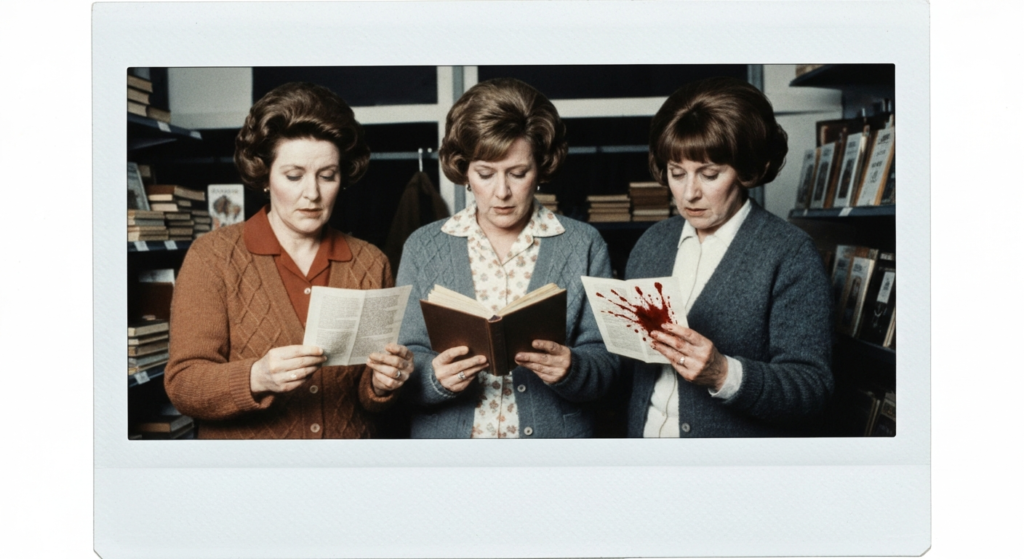
Outdoor readings present a range of practical challenges that most practitioners learn to manage over time — unreliable surfaces, ambient noise, the occasional pedestrian. A thunderstorm, however, is a different order of problem entirely. Wind, rain, sudden drops in temperature, and the persistent risk of lightning require a more considered approach than simply moving your tray to a drier spot. This guide addresses the specific field conditions created by a thunderstorm, and how to adapt your practice without compromising the integrity of the reading.
Understanding What a Thunderstorm Actually Does to a Reading Environment
Before addressing preparation, it is worth being precise about what changes during a storm, because “the atmosphere is different” is not a sufficient basis for decision-making in the field.
The most immediate concern is wind. Gusts are unpredictable in both direction and force, and their effect on a laid tray is not trivial. Lighter tissues — portions of the intestinal wall, the mesentery, the thinner margins of the lung lobe — can shift position or fold in ways that are not diagnostically meaningful but may initially read as significant. Any practitioner who has worked outdoors will know the particular frustration of a promising configuration that turns out to have been arranged by a south-westerly rather than by whatever force you were consulting. Anchoring your tray, using a weighted lip or a recessed reading surface, is essential. A tray that moves is a tray that lies.
Temperature drop is the second variable. Thunderstorms in the British Isles are frequently preceded by a rapid fall in ambient temperature, and this affects organ tissue in ways that are worth understanding. Cooler conditions slow surface changes, which can be an advantage in some respects — you have more time before the reading degrades — but may also suppress the fine vascular patterning that many practitioners rely on for secondary interpretation, particularly in the liver’s left lobe. If you are working with established liver mapping frameworks, be aware that readings taken below approximately ten degrees Celsius may show reduced surface definition and should be interpreted with that constraint in mind.
Rainfall itself is the third and most disruptive factor. Even light rain introduces moisture to the tray surface at an uncontrolled rate, diluting colouration and obscuring texture. A waterproof canopy is not a luxury in these conditions; it is baseline equipment.
What to Bring: Equipment for Storm Conditions
Preparation for a storm reading begins before you leave the house. The following adjustments to your standard kit are worth establishing as habit if you practice regularly outdoors or attend markets and public events where weather cannot be relied upon.
A weighted or lipped tray is the single most useful modification. Standard flat trays are adequate in still conditions but offer no resistance to wind displacement. A tray with a shallow raised edge of at least two centimetres will contain lighter tissue movement without interfering with the layout. Some practitioners use a silicone mat within a standard tray as a non-slip underlayer; this is a reasonable interim measure if a purpose-made tray is not available.
Waterproof outerwear is obvious, but gloves require specific mention. Wet hands affect grip, obviously, but they also affect the sensitivity of contact during organ positioning — which matters if your practice involves any manual manipulation of tissue during the reading. The choice of glove material in rain conditions is different from your standard-weather preference. Nitrile gloves become slippery when wet. Textured variants, or thin latex over a liner glove in cold conditions, are more practical. Test your preferred combination before you need it in the field.
A portable canopy or umbrella stand — not a hand-held umbrella, which occupies a hand you need — should be part of your outdoor kit as standard. This need not be elaborate. A market-style pop-up canopy at two metres square provides adequate coverage for practitioner and tray and does not attract the kind of attention that a more ceremonial structure might. If you are operating in a public space and have concerns about how your setup appears to passers-by, the practical guidance in How to Word Flyers Without Causing Alarm also touches on the broader question of managing your visible presence at outdoor events.
Organ Selection in Adverse Conditions
Not every organ is equally suited to outdoor reading in poor weather, and a storm is a reasonable occasion to reconsider your standard choices.
The liver remains the most robust option for difficult conditions. Its density and relatively stable surface make it less susceptible to rapid environmental change, and its established interpretive frameworks give you a reliable baseline even when secondary indicators are compromised. If you work primarily with intestinal readings, it is worth having a working familiarity with hepatic interpretation for precisely these situations — weather does not always permit your preferred methodology.
The spleen, which some practitioners favour for its sensitivity to energetic fluctuation, presents a particular challenge in stormy conditions. Its surface can be genuinely difficult to read in low light, and its response to cold is more pronounced than the liver’s. This is not to say spleen readings should be abandoned in storms — those who work extensively with spleen-based directional interpretation will have their own views on this — but if you are newer to the practice, storm conditions are not the moment to stretch into less familiar territory.
The intestines, as a general principle, are poor candidates for exposed outdoor work in any weather. In a thunderstorm, the combination of wind movement, rain exposure, and temperature sensitivity makes reliable intestinal reading extremely difficult. If intestinal work is central to your practice and the session cannot be moved indoors, consider whether postponement is the more professional choice.
Lightning: A Practical Note
This should not need stating, but experience suggests it does: do not conduct readings in open ground during active lightning. This is not a matter of interpretive preference or spiritual protocol. A haruspex struck by lightning is not receiving a message; they are experiencing a medical emergency. If you are in an exposed location — a field, a market square, a hilltop — and lightning is within observable distance, pack your tray, seek covered shelter, and wait. The reading can be rescheduled. The practitioner cannot be replaced.
If you are working under a metal-framed canopy, the same logic applies. Move away from the structure and seek a substantial building. This is standard outdoor safety guidance and is entirely consistent with conducting yourself as a professional — which includes being present for your next appointment.
Reading Under Storm Conditions: Interpretive Notes
Practitioners who work regularly outdoors often report that storm readings have a particular character — that atmospheric pressure, the quality of light, and the heightened focus that adverse conditions demand can sharpen rather than impair interpretation. There may be something in this, though it is worth distinguishing between genuine interpretive clarity and the cognitive effect of working under pressure. Both may produce confident readings; only one is grounded in the tissue itself.
The practical recommendation is to be conservative in your interpretive claims when conditions are poor. Note in your records that the reading was conducted during a storm and flag any elements — particularly surface colouration or tissue positioning — that may have been affected by the environment. This is good practice regardless, and is the kind of methodological rigour that any well-trained haruspex should be maintaining as a matter of course.
A reading conducted carefully in difficult conditions, with its limitations honestly acknowledged, is worth considerably more than a confident reading taken from a compromised tray. The storm is a test of professional discipline as much as anything else. Meet it accordingly.
Equipment & References
 Starrett Boning Knife 6″Narrow straight, sanitised steel
 Nitrile Examination Gloves ×100Powder-free, professional grade
 Absorbent Drip Pads ×100Standard tray pads, 180×100 mm
 The Divine Liver — EllisonThe standard contemporary reference
 Veterinary Anatomy — Dyce et alHepatic and splenic morphology
As an Amazon Associate this site earns from qualifying purchases.





Jolly good sport, this. Nothing quite like a bit of a squall to sharpen the senses, eh? Had to perform a quick reading on the grouse moor last autumn, sudden downpour. Rather invigorating. My flask of whisky came in handy, for both fortifying the spirits and cleaning the instruments!
Such casualness towards the elements would be unthinkable where I come from. A thunderstorm is a serious omen in itself! To conduct a reading during such meteorological chaos is not merely a ‘challenge’ but a profound disrespect for the clarity of the omens. One must seek shelter, stabilize the environment, and only then proceed. Or, better yet, interpret the storm as the reading itself.
While I agree with the sentiment that undue environmental interference can cloud a reading, sometimes necessity dictates a field procedure. The key, as the article mentions, is mitigation. I’ve found a stout canvas cover, weighted against the wind, and a meticulously leveled, non-conductive surface are paramount. And one must be especially mindful of static electricity and its potential to alter the subtle energies of the organs. A copper grounding wire, discreetly placed, can make all the difference.
Up here, a ‘thunderstorm’ can mean anything from a light drizzle to horizontal sleet in five minutes. We just learn to work quickly and with waterproof smocks. The wind is the real enemy, often shifting the very arrangement of the entrails mid-observation.
So, external weather conditions like wind, rain, and electromagnetic discharges from lightning can ‘alter’ the ‘subtle energies’ of the organs you’re reading? Does this not sound suspiciously like acknowledging that the entire process is susceptible to environmental variables, meaning any ‘reading’ is merely a reflection of those variables, not some inherent ‘omen’?
A good tweed cape, Helen, that’s what’s needed. Keeps the rain off, and the static electricity to a minimum. And for the wind, a sturdy hand.