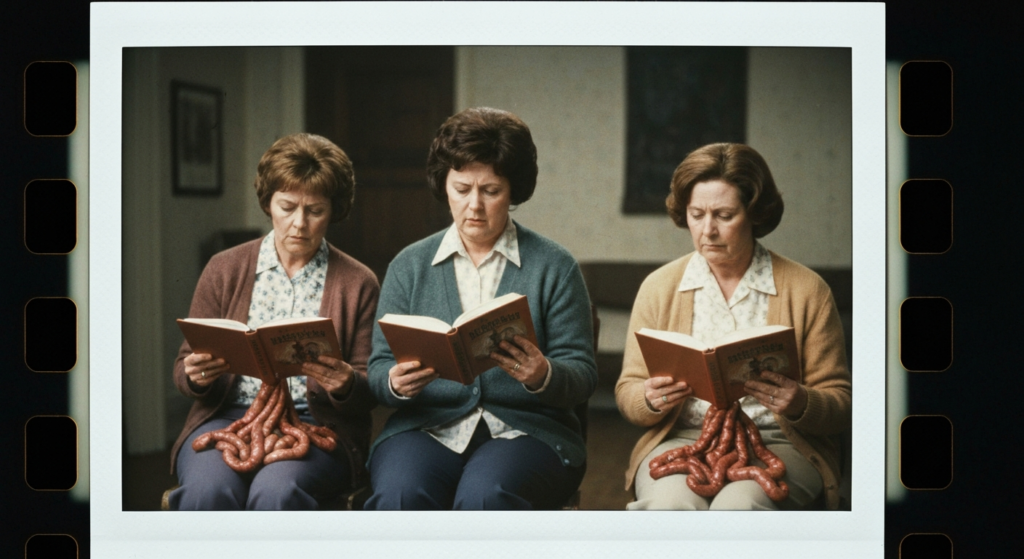
Reading the Liver in Relationship Consultations
Of all the questions a client brings to a reading, those concerning their closest relationships tend to produce the most demanding work. The liver — already the most legible of organs for many practitioners — responds to relational enquiry with a particular kind of frankness. A case from some years ago remains one of the clearest examples in my practice of what the liver can show when a couple arrives together, hoping for reassurance, and the organ declines to provide it.
The Consultation
The clients were a couple in their late twenties who had been together for several years and were, by their own account, seriously considering marriage. They were not in crisis — at least not in any way they could articulate. What brought them to the reading was a more diffuse unease: a sense that something between them was not quite resolving, despite genuine affection and a shared life. They were looking, as many couples in this situation are, for confirmation that everything would be fine.
This is a common dynamic in relationship readings, and one worth naming clearly at the outset of any consultation: the liver does not offer comfort on request. It shows what is present. The practitioner’s responsibility is to report accurately and to do so with appropriate care, not to shape the reading toward what the client hopes to hear. Those new to this kind of work may find it useful to revisit the beginner’s guide to becoming a haruspex for the foundational ethics underpinning client communication.
What the Liver Showed
The organ in question was a lamb’s liver — the standard choice for relational consultations, given the consistency of its surface texture and the clarity with which the lobar margins present. It was in good condition, sourced through an established supplier, and had been brought to temperature before the reading began. Preparation matters. A cold liver reads differently from one that has been allowed to rest, and a rushed examination produces ambiguous results that serve no one.
What presented itself during the examination was arresting in its clarity. Near the region adjacent to the gallbladder attachment, there was a well-defined fissure running against the natural grain of the hepatic tissue — not a processing mark, not a vascular artefact, but a clean interruption in the surface continuity of a kind that, in this position, consistently indicates strain in the primary bond. This is not a reading I make lightly or frequently. The gallbladder margin is a reliable indicator of emotional infrastructure, and disruption at that site carries weight.
Running parallel to this, and extending toward the intestinal margin of the organ, was a secondary marking: a faint but consistent linear discolouration suggestive of retained grievance. Not acute conflict — the organ showed none of the deep mottling or lobe asymmetry associated with active hostility — but something older and less examined. The kind of resentment that accumulates quietly and is rarely discussed because it has never been named.
For practitioners interested in the interpretive framework around this region of the organ, the discussion in Spleenfold Mechanics: An Overlooked Indicator? offers useful context on adjacent tissue reading, even where the spleen itself is not the primary subject.
Communicating a Difficult Reading
There is a version of this consultation that ends badly — not because the reading was wrong, but because it was delivered without sufficient care. A haruspex who leads with “your relationship is heading for divorce” has technically communicated what the liver showed and failed entirely in their professional duty.
The reading showed potential — a trajectory, not a certainty. The fissure indicated disconnection that, if unaddressed, carried a significant risk of becoming permanent. The secondary marking indicated something that could be worked with, if the couple were willing to do so. These are different things, and the distinction matters both for the client’s wellbeing and for the practitioner’s professional standing.
I presented the findings in those terms: that the organ was indicating strain in the relational bond, that there was evidence of something unresolved beneath the surface of their day-to-day life, and that the reading suggested this warranted direct attention. I was specific about what I had seen and where. I did not speculate beyond the liver’s evidence, and I did not soften the reading to the point of uselessness.
I recommended that they consider speaking with a couples counsellor — not as an admission of failure, but as the appropriate professional response to what the reading had surfaced. The liver had done its work. What it had shown was now in the domain of practitioners better suited to the next stage of the process. Knowing where haruspicy ends and another discipline begins is part of competent practice.
The Outcome, and What It Demonstrates
The couple did seek counselling. Some months later, they returned — not for another reading, but to let me know that they had found the process genuinely useful. The relationship had not ended. The issues the liver had indicated were ones they had been circling for years without addressing directly; counselling had given them a structure in which to do so. By their account, the reading had been the thing that made the problem visible enough to take seriously.
This is not an unusual outcome. The liver does not predict inevitability — it identifies what is present and what is under pressure. A reading that prompts a couple to address an underlying fault before it becomes a fracture has done exactly what a good consultation should do. The liver that “predicted a divorce” did not, in the end, predict one. It predicted the conditions that would lead to one, which is a more useful piece of information.
It is also worth noting what this case illustrates about the limits of the reading itself. The liver showed disconnection and retained grievance. It did not show the couple’s capacity to address those things, their willingness to seek help, or the quality of the support they would find when they did. As Unreliable Organs: When the Heart Gets in the Way discusses at some length, the organs show us a version of the present — an honest one, but a partial one. The practitioner who mistakes a partial picture for the whole story is working beyond their evidence.
Practical Notes for Relationship Readings
A few observations from this and similar cases that may be of use to practitioners conducting relationship consultations.
Where both partners are present, it is worth establishing at the outset that the reading will report what the liver shows — not what either party wishes to hear. This should be said plainly and without apology. It protects the practitioner, it sets appropriate expectations, and it establishes the reading as a professional consultation rather than a validation exercise.
The gallbladder margin and the intestinal border are the primary zones of interest in relational readings. The central lobe and the left lateral segment tend to speak more to individual constitution and immediate circumstance. This is not a rigid framework — good practitioners develop their own refined vocabulary over time — but it provides a starting orientation for those less experienced with this type of consultation.
Finally: document your readings. The case described here was useful not only to the clients but to my own understanding of what gallbladder-adjacent fissuring indicates in a relational context. A reading that is not recorded is a reading that cannot inform future practice. The broader questions around practitioner record-keeping and professional development are worth taking seriously, particularly for those building a client base — the same discipline that applies to insurance and liability considerations applies here.
The liver, examined carefully and reported honestly, is one of the more reliable tools available to a practitioner working with clients in complex personal circumstances. That does not make it easy work. But it is, when done well, genuinely useful — which is the most that can be said for any consultation.
Equipment & References
 Nitrile Examination Gloves ×100Powder-free, professional grade
 Absorbent Drip Pads ×100Standard tray pads, 180×100 mm
 Starrett Boning Knife 6″Narrow straight, sanitised steel
 Veterinary Anatomy — Dyce et alHepatic and splenic morphology
As an Amazon Associate this site earns from qualifying purchases.








The liver truly is a remarkable organ for discerning relational dynamics. I’ve always found that the state of the hepatic ligaments, particularly the falciform, can indicate the ‘binding’ or ‘loosening’ of relational ties. A certain tautness or flaccidity, when read in conjunction with the gall bladder’s prominence, often provides profound insight into the client’s emotional landscape. It demands precise, unhurried observation.
The ancients, particularly the Romans, held the liver in supreme regard for matters of domestic concord and marital fortune. Livy, amongst others, recounts instances where the state of a sacrificial liver would influence decisions concerning proposed unions or, indeed, the dissolution of less fortunate ones. One notes that the ‘fissures’ in a liver, or the ‘lacerations’, were often seen as prefiguring schisms in the familial unit. A tragic but often prescient indication.
A liver predicted a divorce? This is pure confirmation bias. If you’re looking for ‘fissures’ to confirm a bad relationship, you’ll find them. There is no plausible mechanism by which a biological organ could ‘predict’ human social interactions, let alone specific legal outcomes. This is akin to reading tea leaves.
In my country, such intimate questions are approached with extreme solemnity. A ‘divorce liver’ is a serious matter, requiring not just one practitioner but often a panel, to ensure no personal bias clouds the reading. And the organ itself would be from an animal specifically consecrated for such a grave inquiry. To do otherwise is to invite obfuscation.
To the_rationalist: It’s important to differentiate between ‘prediction’ and ‘indication’. The liver does not dictate an outcome; rather, it reflects the deep-seated energetic and emotional patterns present within an individual or a relationship at that moment. A skilled practitioner learns to read these reflections as they manifest physically. The ‘fissures’ are not invented; they are observed, and their significance is understood through a vast body of empirical observation and historical precedent. It is a subtle art, not a simple forecast.