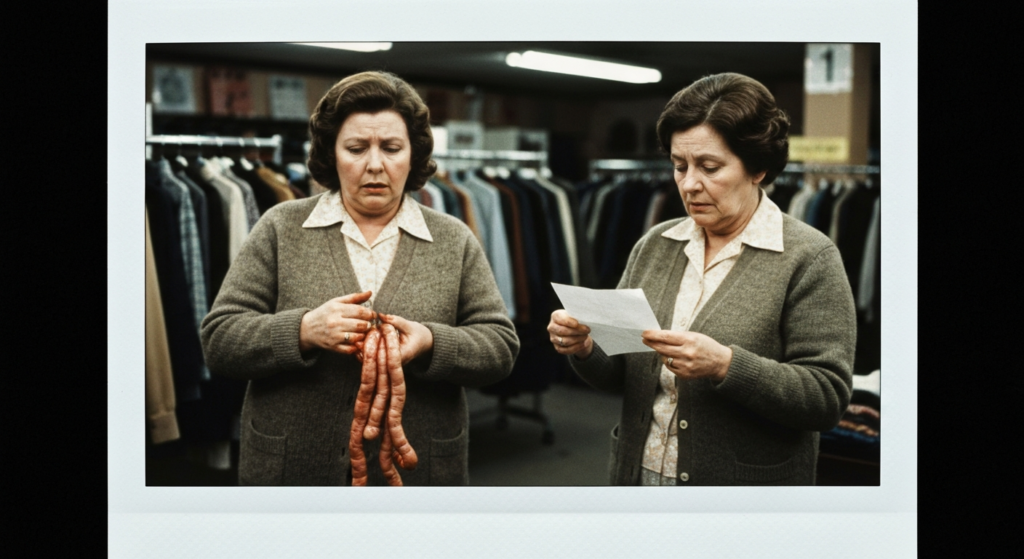
The papyrus scroll occupies a peculiar position in the haruspex’s toolkit. It is neither organ nor instrument, yet for a significant stretch of documented practice — particularly across Mesopotamian and Egyptian traditions — it served as the primary medium through which visceral readings were recorded, transmitted, and taught. Understanding how practitioners of earlier centuries used papyrus to codify their interpretive systems is not merely an exercise in historical interest. It has direct implications for how modern haruspices approach the documentation of their own readings, the interpretation of inherited symbolic frameworks, and the question of what, precisely, constitutes a reliable record of divinatory work.
The original visceral codes — the systematic correspondences between organ condition and prophetic meaning — were not passed down through oral tradition alone. They were written down, cross-referenced, annotated, and revised across generations of practitioners. The papyrus scroll was the version control system of its age, and treating it as mere historical curiosity misses the point rather thoroughly.
What Papyrus Scrolls Actually Contain
The surviving corpus of visceral divination texts on papyrus is modest but instructive. The most significant examples come from Mesopotamian scribal traditions — many of which were later copied onto clay tablets — and from Egyptian sources that drew on a parallel but distinct interpretive lineage. What these texts share is a remarkably consistent structure: organ, condition, indicator, prediction. The liver is surveyed in sections. The gallbladder’s presence or absence is noted. The colon’s position relative to other viscera receives comment. The language is clinical in its precision, which is exactly what one would expect from a professional record.
There is a tendency in popular treatments of this material to focus on the symbolic or spiritual dimensions of these texts — the liver as seat of the soul, the spleen as a register of emotional turbulence — while overlooking their fundamentally practical character. These were working documents. They were consulted mid-reading, used to resolve ambiguity, and updated when accumulated experience contradicted received wisdom. The cross-cultural energetic liver maps that practitioners today may find useful are, in a real sense, descendants of this tradition of careful written record-keeping.
The Visceral Code as a Written System
The term “visceral code” is sometimes used loosely to mean little more than the general practice of organ reading. It is worth being more precise. In the context of the papyrus tradition, the visceral code refers to a structured, reproducible system of correspondences — a grammar of interpretation rather than a set of intuitions. Each organ was assigned a domain of inquiry. Each observable condition within that organ corresponded to a range of possible meanings, modulated by factors such as the nature of the question, the species of animal, the season, and the ritual context of the reading.
The liver received the most systematic treatment. It was divided into named regions — the gate, the palace, the path — each with its own interpretive significance. A thickening in one region meant something different from a thickening in another. Colour, texture, and the presence of anomalous formations were all recorded and classified. Practitioners working today who have explored spleenfold mechanics as a secondary indicator will recognise the same basic methodology: systematic observation, recorded variation, accumulated interpretive weight.
The spleen, kidneys, and intestines received less exhaustive treatment in the earliest papyrus sources, but this should not be taken to mean they were considered minor. The intestines in particular appear frequently in later texts, often in relation to questions about collective or communal outcomes rather than individual fate. This distinction between organs suited to personal readings and those better suited to broader inquiry is worth preserving in contemporary practice.
Reading the Scroll Alongside the Specimen
One practical implication of the papyrus tradition that is sometimes overlooked is the question of contemporaneous reference. Ancient haruspices did not rely solely on memory when conducting a reading. The scroll was a consultation tool — present at the examination, referenced directly when an unfamiliar presentation arose. This is worth noting for practitioners who may feel that consulting written reference materials during a reading is somehow a concession to inexperience.
It is not. It is, in fact, the historically attested method. The haruspex who pauses to check a notation is doing precisely what their predecessors did, the difference being that today’s practitioner is more likely to consult a printed reference than an unwound scroll. The principle is the same. Interpretive accuracy depends on honest engagement with the observed material, and honest engagement sometimes requires admitting that memory alone is insufficient. Those who have read our piece on the heart as an unreliable indicator will appreciate that even experienced practitioners can be led astray by over-confidence in their own recall.
Documenting Your Own Readings
The papyrus tradition has a further lesson that is directly applicable to modern practice: the importance of systematic personal documentation. The scrolls that survive are not transcriptions of a single authoritative text. They are the accumulated records of individual practitioners, annotated and revised across careers, compared and synthesised by later hands. The canonical visceral codes emerged from this process. They were not handed down complete from some founding authority but built up over time from the careful records of working haruspices.
This means that every reading you document contributes, in principle, to a larger body of knowledge. A reading in which the expected liver presentation failed to correspond to the predicted outcome is not merely a professional inconvenience — it is a data point. Record it accurately. Note the conditions. Note what you expected, what you observed, and what followed. Over the course of a practice, these records become genuinely valuable, both for your own interpretive development and, if shared, for the wider community.
The format matters less than the consistency. A well-maintained digital record is entirely adequate. The papyrus was simply the best available medium at the time. What the scroll represents is not a fetish for a particular material but a commitment to written, retrievable, honest documentation — a habit that those beginning their practice would do well to establish early.
The Question of Translation and Transmission
A practical note on using historical papyrus texts as interpretive references: the available translations vary considerably in quality, and several widely cited secondary sources have introduced errors or interpretive glosses that are not present in the original material. The Babylonian liver models — clay rather than papyrus, but drawing on the same codified system — are generally better served by academic translations than the Egyptian material, where the overlap between medical and divinatory terminology has caused persistent confusion in popular accounts.
If you are working from translated sources, it is worth identifying the translator’s background. A scholar working primarily in Egyptology may render visceral terminology differently from one trained in the history of Mesopotamian divination, and neither may be entirely consistent with the interpretive tradition you have inherited through your own training. Where significant interpretive decisions rest on a single textual source, it is reasonable to seek corroboration.
This is not to discourage engagement with the papyrus tradition — quite the contrary. It is simply to say that the same rigour you apply to a reading should be applied to the sources that inform it. The scroll, ancient or modern, is a record made by a human hand, subject to error, revision, and the limitations of its context. Useful, often essential — but not infallible, and best treated as one layer of evidence among several.
The haruspex who takes the papyrus tradition seriously, reads it carefully, documents their own work with equivalent care, and remains alert to the gap between a written source and the specimen in front of them is working in exactly the spirit the original scribes intended. The medium has changed. The discipline has not.
Equipment & References
 Roman Religion — ScheidRitual and sacrificial practice
 De Divinatione — CiceroFoundational text, ebook edition
 The Divine Liver — EllisonThe standard contemporary reference
As an Amazon Associate this site earns from qualifying purchases.







Came here from a /r/AncientRome thread about Roman divination. This is way deeper than I thought! Are these scrolls legit? This ‘visceral code’ thing sounds wild.
As the article notes, the preservation of such detailed papyri is crucial. It underscores the sophistication of early prognostic traditions, moving beyond simple omens to a genuine codified system, a precursor to our modern classification charts.
The profundity of ancient knowledge continues to amaze. These ‘forgotten codes’ are vital to understanding the full scope of our ancestral craft. Madame Blavotnik often stressed the importance of recovering such lost texts. With respect, S. Petrescu
I’d be keen to know if any of these scrolls include specific guidance on celestial alignments during the reading. My own practice suggests a strong correlation between planetary positions and the clarity of certain visceral markings.
Oh good, more ‘forgotten codes’ and ‘visceral codes’. It’s always a ‘code’ when you’re making it up as you go along, isn’t it? And ‘Madame Blavotnik’ is apparently your infallible authority on ancient fables. Incredible.