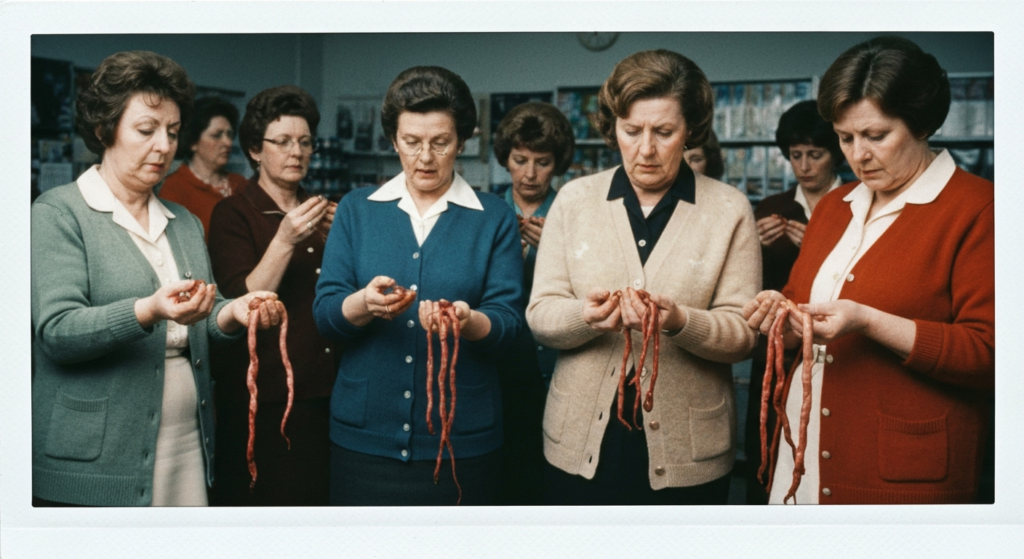
The Entrail Guild of Lincolnshire: What Remains
The Entrail Guild of Lincolnshire is not, strictly speaking, well-documented. What survives of its history exists in fragments — a handful of parish records, a disputed inventory from a probate hearing in 1689, and the kind of oral tradition that tends to grow more elaborate with each retelling. This is not unusual for regional haruspical associations of the period. Guild records were rarely kept with posterity in mind, and the materials involved did not lend themselves to long-term archiving. What we can say with reasonable confidence is that a structured community of practising haruspices operated in the Lincolnshire fens and wolds for at least a century, developed recognisable interpretive conventions, and then — like most regional guilds — quietly dissolved as the conditions that had sustained it changed. Understanding what that community was, and what it was not, matters more than the mythology that has since accumulated around it.
Origins and Context
The guild’s foundations appear to date from the early seventeenth century, though some enthusiasts have pushed this back considerably further on the basis of evidence that does not fully support the claim. The more defensible position is that formalised haruspical practice in the region emerged alongside the agricultural consolidation of the period — a time when the relationship between farming communities and interpretive ritual was particularly close, and when the regular availability of offal from estate slaughter made organised practice feasible in a way it had not always been.
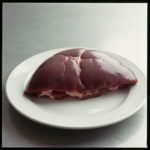
The Lincolnshire tradition drew on both Continental influences — carried back through trade routes and, occasionally, through the movement of skilled workers — and on older domestic conventions whose precise origins are now difficult to establish. What distinguished it from parallel traditions in, for example, the Yorkshire Dales or the Welsh borders, was its particular attention to the liver’s surface markings in combination with the state of the surrounding peritoneal membrane. This dual reading approach is referenced in at least two surviving documents and appears to have been considered the guild’s most distinctive contribution to interpretive practice.
It is worth noting that the guild’s founders were not, as some later accounts have it, operating in deliberate opposition to the established church. The relationship was more complicated and more pragmatic than that. Agricultural communities required workable answers to workable questions, and haruspicy provided a framework for addressing uncertainty that existed alongside other forms of guidance rather than in opposition to them. Practitioners who understand the contemporary social position of haruspicy will find this dynamic familiar.
The Annual Gatherings
The accounts of regular gatherings — often described in later retellings as a kind of “Entrail Fair” — are almost certainly exaggerated in their elaboration, but the underlying practice of periodic assembly appears to have been genuine. Regional guilds across many trades used such gatherings for knowledge exchange, dispute resolution, and the maintenance of shared standards, and there is no particular reason to think haruspical associations would have operated differently.
What these Lincolnshire gatherings likely involved was the comparison of interpretive results, discussion of difficult or ambiguous readings, and the transmission of technique from more experienced practitioners to those earlier in their development. This is, in essence, the same function served today by professional development events and peer review within the haruspical community. The social architecture was different; the underlying purpose was not. Those interested in how collective practice functions in contemporary settings may find the discussion in Shared Trays: Collective Divination in Action a useful parallel.
The claim that scholars from Oxford and Cambridge attended these gatherings in any systematic way should be treated with caution. There is some evidence of academic interest in regional divination practices during the period, but this interest was not always sympathetic, and “attendance” covered a considerable range of intentions.
The Decline
The guild’s decline is attributable to several converging pressures, none of which was in itself decisive. The movement of agricultural labour towards urban centres during the eighteenth and nineteenth centuries reduced both the practitioner base and the client base simultaneously. The consolidation of slaughterhouse operations made access to fresh organs less straightforward for independent practitioners — a problem that will resonate with anyone who has spent time negotiating supplier relationships with butchers under modern conditions, which are demanding enough even with the protections that now exist.
There was also the matter of record-keeping. Guilds that failed to maintain coherent archives did not survive as institutions even when they survived as informal networks. The Lincolnshire guild’s interpretive conventions — particularly the membrane-and-liver approach — were passed on through apprenticeship rather than written documentation, which meant that when the apprenticeship chain broke, it broke completely in several localities at once. Techniques that existed only in practice ceased to exist when the practitioners who carried them stopped practising.
This is not a lesson that applies only to history. The case for maintaining written records of interpretive methodology — even when those records feel redundant while a tradition is active — is precisely illustrated by what happened in Lincolnshire.
What Can Be Recovered
There is renewed interest among a small number of practitioners in reconstructing what can be recovered of the Lincolnshire tradition. This is a legitimate scholarly and practical project, provided it proceeds with appropriate rigour and does not mistake enthusiasm for evidence.
The honest position is that the membrane-and-liver dual reading approach is the most substantiated element of the tradition, and it repays serious attention. The technique bears comparison with the consideration of what the spleenfold offers as a secondary indicator — the broader principle being that no single organ reading operates in isolation, and that the relationship between adjacent structures often carries as much information as the primary organ itself. Whether the Lincolnshire guild arrived at this principle independently or absorbed it from Continental practice remains unclear, but the principle itself is sound.
Reconstructive work should also engage honestly with the limits of the surviving material. The “Lincolnshire Blessing” referenced in several secondary accounts may represent a genuine preparatory ritual, or it may be a later interpolation. Without primary sources, the distinction cannot be made with confidence. Practitioners who incorporate such elements into their own practice should be transparent with clients about the evidentiary basis — or lack of it — for what they are doing. The question of honest representation is addressed in more detail in our guidance on minimising the risk of legal reprisal, which touches on the obligations that arise when historical claims are made in a professional context.
The Guild as Precedent
Whatever its precise history, the Entrail Guild of Lincolnshire represents something worth taking seriously: an attempt to establish shared standards, transmit technique reliably, and situate haruspical practice within the social and agricultural fabric of a specific region. These are not trivial achievements, and the failure to sustain them carries its own lessons.
The contemporary haruspical community is, in some respects, better placed than its predecessors. There are more mechanisms for documentation, more routes for peer exchange, and a broader — if still partial — social tolerance for non-mainstream interpretive practices. The infrastructure that the Lincolnshire guild lacked, we are in the process of building. The obligation is not to romanticise what came before, but to learn from what went wrong.
Equipment & References
 Roman Religion — ScheidRitual and sacrificial practice
 De Divinatione — CiceroFoundational text, ebook edition
 The Divine Liver — EllisonThe standard contemporary reference
As an Amazon Associate this site earns from qualifying purchases.


I’ve been trying to find more on regional guilds for years! Lincolnshire has such a rich, uncatalogued history. Any further details on that 1689 probate hearing? My own family hails from Spalding, and I’ve always suspected a connection to local offal arts.
OffalEnthusiast1974, the 1689 probate inventory is tricky. It mentions ‘divinatory implements’ and ‘several livers prepared for augury’, but the specific phrasing implies common household items, not specialist guild property. It’s more suggestive of individual practitioners than an organised guild, though the distinction can be blurred when oral traditions are strong.
Probate hearing, eh? Always a tricky business. My solicitor, rather a sharp fellow, often says these old documents hide all sorts of family secrets. Wouldn’t surprise me if some old chap was doing a spot of offal reading on the side, keeping it quiet from the vicar. Good on him, I say!
Probate records are fertile ground. Especially for establishing prior use and traditional land rights. Dalrymple’s counsel are attempting to dismiss similar historical evidence as ‘hearsay’. This ‘blurring’ is exactly what they exploit.
Regardless of what a probate hearing might ‘imply,’ the existence of an ‘Entrail Guild’ doesn’t elevate entrail reading to anything beyond superstition. Whether organised or individual, the practice lacks any scientific validation and provides no actual insight.
This ‘blurring’ of organised and individual practice is quite common. In Romania, the village seer was often a solitary figure, yet part of an ancient, unwritten ‘guild’ of knowledge, respected by all. The British insistence on formal ‘guilds’ misses the organic, community-based nature of such tradition, I think.
The regional guilds, even fragmented, represent a vital chain of knowledge. While the public records are sparse, the oral histories and even certain ‘family recipe’ books for preserving organs tell a more complete story. My own guild in Bristol has similar challenges with documentation versus living tradition.