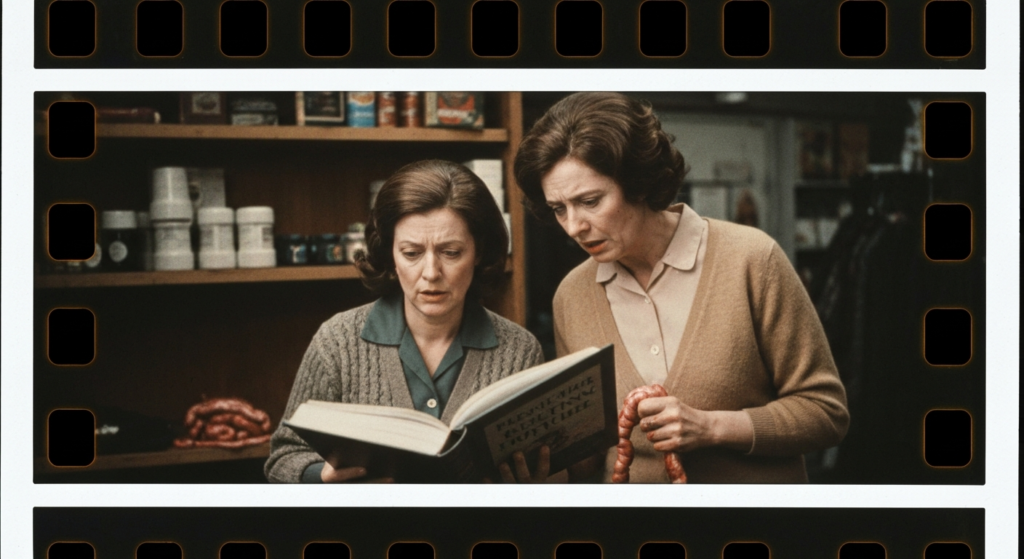
The Decree and Its Consequences
The Ban of 1482 remains one of the most significant regulatory interventions in the history of haruspicy — not because it succeeded, but because of what practitioners did in response to it. Issued under the broader authority of the Inquisition and directed at suppressing perceived heretical practice across Catholic Europe, the decree placed entrail reading explicitly within the category of forbidden arts. For haruspices working openly at the time, the consequences were immediate and severe: loss of livelihood at best, imprisonment or worse at worst. It is a period worth understanding clearly, not merely as a point of historical interest, but because the adaptations developed under that pressure shaped professional practice in ways that persist to this day.
The Church’s objection to haruspicy was not, it should be noted, primarily theological in the way that objections to sorcery or necromancy were framed. The concern was more institutional: entrail reading had roots in pre-Christian Roman religious practice, it operated outside ecclesiastical oversight, and it commanded genuine public trust in communities where official channels did not always provide satisfactory answers. That combination — independent, credible, and unaccountable to Rome — was precisely what made it a target. The Ban of 1482 was, in many respects, a regulatory problem dressed in theological language.
Going Underground: Practical Adaptations
What followed was not the extinction of the practice but its restructuring. Haruspices who had previously operated with some degree of visibility were forced to develop what we might now recognise as client confidentiality protocols, appointment-only consultation models, and deliberately non-specific record-keeping. The vocabulary of the practice was quietly revised: readings were described in terms of herbal or humoral medicine, consultations were framed as dietary assessments, and the organs under examination were referred to in the neutral language of the apothecary rather than the ritual specialist.
This was not cowardice. It was professional continuity under constraint, and it required considerable skill. A haruspex in northern Italy or the Rhineland in the 1480s who wished to continue working had to maintain the integrity of their interpretive practice while presenting an entirely different face to any observer who might report them. The mental discipline required — holding two registers simultaneously, one for the client and one for the door — was considerable, and it is worth acknowledging that the quality of readings during this period did not, by the historical accounts available to us, appear to suffer for it.
Networks of mutual support developed of necessity. Practitioners who had previously worked independently began sharing information about which regions were actively enforcing the decree, which officials were sympathetic or indifferent, and where safe consultation spaces could be found. These informal arrangements bear some resemblance to what we would now call a professional association — a recognition that the practice could not sustain itself without collective infrastructure. If you are interested in the longer arc of how haruspicy has managed its relationship with official bodies, the discussion in Making Peace With the Food Standards Agency touches on some of the same dynamics in a contemporary context.
Integration and Camouflage
One of the more durable strategies of the underground period was integration with adjacent trades. Haruspices who had existing relationships with butchers, surgeons, or livestock merchants were able to continue working under the cover of those associations — examining organs in professional rather than divinatory contexts, at least officially. The reading itself was conducted and communicated through different means: in conversation, in correspondence, through the careful deployment of ambiguous language that the client understood and the authorities would not.
This is not so distant from the questions practitioners still face around how to word promotional materials without triggering unnecessary concern. The underlying challenge — communicating clearly with the people who need your services while not alarming those who misunderstand the nature of those services — has been part of haruspicy for over five centuries. The methods have changed, but the fundamental task has not.
It is also worth observing that the period of underground practice was one of considerable interpretive development. Removed from the more formal, public-facing constraints of institutional haruspicy, practitioners had reason to think carefully about what they were actually doing and why. Several of the more nuanced approaches to secondary organ reading — the close attention paid to the spleen and its relationship to broader prognostic frameworks, for instance — appear to have been refined significantly during this period. Necessity, as it tends to do, produced innovation. Readers interested in the interpretive legacy of that refinement may find Spleenfold Mechanics: An Overlooked Indicator? a useful companion to this history.
What the Ban of 1482 Actually Tells Us
It is tempting to read the Ban of 1482 as simply a story of persecution and resilience — and it is that — but there is a more practically instructive dimension to it. The decree failed. Not immediately, and not without causing genuine harm to a great many practitioners, but it failed in its primary objective. Haruspicy was not extinguished. It was driven into a different configuration, and it emerged from that period with a more sophisticated understanding of how to operate in hostile regulatory environments, how to maintain professional standards without institutional support, and how to serve clients effectively under conditions of external pressure.
Those competencies did not disappear when conditions eventually improved. They became part of the professional inheritance of the practice — passed down, adapted, and applied to new contexts. The haruspex working today who takes care with their insurance arrangements, or who understands the importance of managing encounters with police calmly and with documentation to hand, is drawing — however indirectly — on a tradition of professional self-preservation that was forged under considerably more difficult circumstances than a noise complaint or an ambiguous planning notice.
The underground haruspices of the fifteenth and sixteenth centuries did not have professional guidance to draw on. They improvised, they communicated covertly, and they kept the interpretive tradition intact against considerable odds. That inheritance deserves more than a passing acknowledgement. It is, in a very real sense, the reason this publication exists and the reason you are reading it.
Understanding where the practice has been — and what it took to bring it this far — is not merely an academic exercise. It provides context for the frictions that still arise, and a useful sense of proportion when they do.
Equipment & References
 Roman Religion — ScheidRitual and sacrificial practice
 De Divinatione — CiceroFoundational text, ebook edition
 The Divine Liver — EllisonThe standard contemporary reference
As an Amazon Associate this site earns from qualifying purchases.






Makes you wonder what all the fuss was about. We’ve been conducting perfectly sound readings on the estate since before the Civil War, and nobody’s come to any harm. Common sense and a good eye are all you need, not all this legal muddle.
Your insouciance, sir, in the face of centuries of persecution is quite breathtaking. The ‘legal muddle’ you so casually dismiss was the difference between professional practise and the gibbet for many of our forebears. Perhaps a deeper historical appreciation is in order.
Rubbish. We’re talking about sensible chaps knowing their trade, not some charlatan stirring up trouble. Always been about discretion and good stock. No need for histrionics.
The ‘underground’ period produced some fascinating texts, many of which Professor Dalrymple was on the cusp of bringing to light. It’s a tragedy that certain historical narratives remain…incomplete. Those who attended the Edinburgh symposium know what I mean.
This period is crucial for understanding the resilience of our profession. It also highlights the importance of maintaining proper archives, even in adverse conditions.