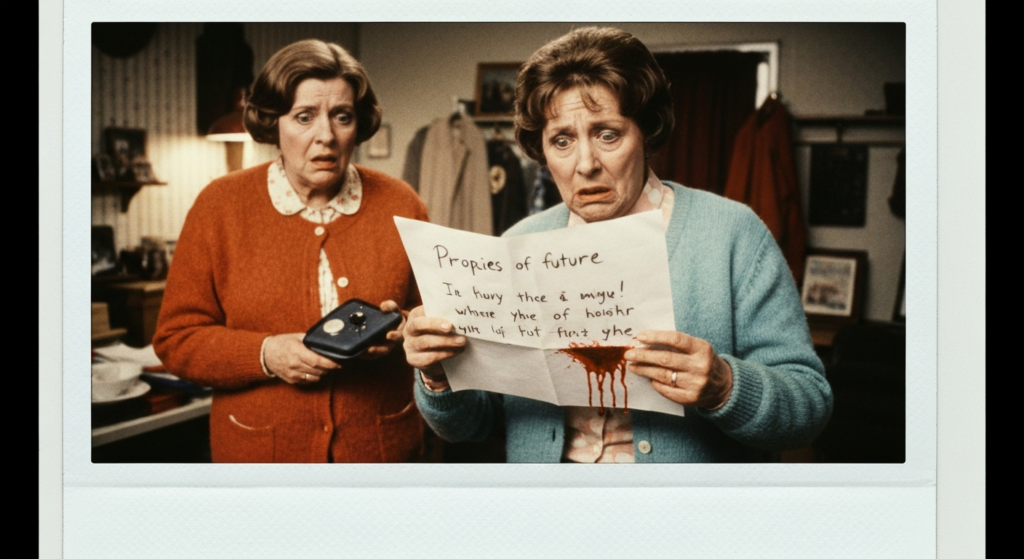
The Question of Continuity
Every working haruspex eventually confronts the same quiet anxiety: not about a difficult reading, not about a recalcitrant liver, but about the practice itself. Who carries this forward? How is it carried forward? And does the manner of carrying change what is being carried? Modern reenactments — the staging of traditional haruspicine ritual for educational, commemorative, or community purposes — have become one of the more discussed responses to these questions. They are not without their complications, but for many practitioners they represent a meaningful bridge between a documented past and a functioning present.
This article addresses the practical and philosophical considerations involved in organising or participating in such reenactments, with particular attention to what is gained, what is risked, and what a responsible practitioner should keep in mind before committing to either the tray or the rostrum.
What a Reenactment Is, and Is Not
It is worth establishing terms. A reenactment, in this context, means the deliberate recreation of historical haruspicine practice — typically drawing on Etruscan, Roman, or Mesopotamian precedents — for an audience that understands it as a recreation. This distinguishes it from a live consultation, where the reading is the thing itself, and from a demonstration, which tends to be instructional rather than ceremonial in character.
The distinction matters practically as well as conceptually. A reenactment occupies different ground when it comes to questions of ritual versus regulated activity, and the framing you use publicly will affect how councils, venue managers, and the occasional curious officer understand what you are doing. “Historical reenactment” has a recognised social legitimacy in this country — think living history events, Roman encampments at heritage sites, that sort of thing — and aligning your work with that framing, where accurate, is simply sensible professional positioning.
The Case for Reenactment as Preservation
The argument for reenactment as a preservation tool rests on a straightforward observation: documented techniques are not the same as living techniques. A haruspex who has only read about the inspection of a sheep’s liver in a translated Roman agricultural text is in a different position from one who has performed that inspection, even in a reconstructed context. The embodied knowledge — the weight of the organ, the sequence of attention, the spatial logic of the examination — is not fully recoverable from description alone.
This is not a romantic argument. It is a practical one. Certain interpretive traditions, particularly those relating to spleenfold mechanics and the reading of marginal zones, have been transmitted in fragmented form and benefit enormously from physical reconstruction. When practitioners gather to work through historical protocols together, gaps in the written record often become visible — and occasionally, through careful collaborative reasoning, resolvable.
There is also a community function that should not be undervalued. Haruspicy in Britain operates without the institutional support available to more established complementary practices. Reenactments, particularly those organised at a regional level, provide one of the few contexts in which practitioners meet in person, compare methodologies, and work through points of interpretive disagreement in real time. That collegial dimension has real value for a field that can otherwise feel quite solitary.
Format and Fidelity
The central tension in any reenactment is between historical fidelity and practical accessibility. These need not be in opposition, but they require explicit decision-making at the planning stage.
Practitioners working from Roman precedent will need to make choices about which period, which regional tradition, and which level of material accuracy is achievable and appropriate. Using genuine offal sourced through properly documented butcher arrangements is straightforwardly advisable — both for the integrity of the reading and for the obvious logistical reasons that come with any public-facing event involving animal tissue. Substitute materials have their place in demonstration contexts, but a reenactment that uses prop organs undermines its own stated purpose.
On the question of scripted narration versus live interpretation: most successful reenactments use a structured format in which one practitioner performs the examination while another provides contextual commentary for observers. This preserves the integrity of the reading itself while ensuring that an unfamiliar audience can follow the procedure. It also places the interpretive claims clearly in a historical frame, which is useful if you are working in a venue that has any nervousness about the event.
Practical Considerations for Organising an Event
If you are planning a reenactment rather than simply participating in one, the administrative groundwork is not onerous but it does require attention. Venue selection matters: you need a space that permits the handling of animal tissue, that has appropriate surfaces and drainage access, and whose management understands what the event involves. A brief written description — prepared in advance, in plain language — saves considerable time at the booking stage and reduces the likelihood of misunderstandings on the day.
Waste disposal should be planned before the event, not during it. The relevant obligations are covered in more detail in our guidance on offal disposal for council and cosmic purposes, but the short version is: have a clearly labelled, sealed container designated for organic waste, know your local collection arrangements, and do not leave the venue without having resolved this. Events that create disposal problems for their hosts do not get invited back.
Participant briefing is also worth formalising. If you are inviting other practitioners to take part, a written outline of the format, the historical source material being drawn on, and any safety protocols — for glove use, tray hygiene, and similar matters — will prevent the kinds of on-the-day confusion that erode both the event’s quality and its professional reputation. Newer practitioners, in particular, benefit from knowing in advance what will be expected of them. If this is their first formal reenactment setting, pointing them towards foundational guidance on practice beforehand is a reasonable courtesy.
The Limits of Reenactment
It would be misleading to present reenactment as an uncomplicated good. There are legitimate questions about the relationship between reconstruction and living tradition — questions that the haruspicine community has not fully resolved and probably should not rush to resolve.
The risk in any heavily historicised format is that the practice becomes museological: preserved in form, emptied of function. A reenactment that prioritises costume and ceremony over the actual quality of interpretive attention may produce vivid spectacle while quietly training its participants in a hollowed-out version of the discipline. This is not a theoretical concern. It is visible in any field where heritage presentation has been allowed to substitute for genuine practice.
The corrective is not to abandon reenactment but to be clear-eyed about what it can and cannot do. It can transmit procedural knowledge. It can create community. It can provide a publicly legible frame for work that might otherwise attract unproductive scrutiny. What it cannot do, on its own, is sustain the interpretive rigour that comes only from regular, purposeful consultation work. Reenactment is a supplement to practice, not a replacement for it.
Practitioners who find themselves spending more time in reconstruction than in active reading would do well to examine that balance honestly. The ritual is worth preserving precisely because it produces something — and that something only manifests when the reading is real.
Equipment & References
 The Divine Liver — EllisonThe standard contemporary reference
 De Divinatione — CiceroFoundational text, ebook edition
 Roman Religion — ScheidRitual and sacrificial practice
As an Amazon Associate this site earns from qualifying purchases.





Excellent piece! Our society has found that authentic equipment and livestock are absolutely key to a convincing and instructive reenactment. We’re always looking for new sites, too. Do get in touch!
Preserving a ‘ritual’ that has no basis in reality is not history; it’s delusion. This entire website is a testament to the gullibility of some people. Why waste time on this charade?
Your impertinence, sir, is matched only by your crass ignorance of cultural heritage. To dismiss millennia of documented practice as a ‘charade’ reveals a mind woefully unequipped for serious academic discourse.
Sensible approach. Keeps the lads sharp. Nothing like a bit of practical experience to cement the principles. Though I prefer live stock, of course. Far more instructive.