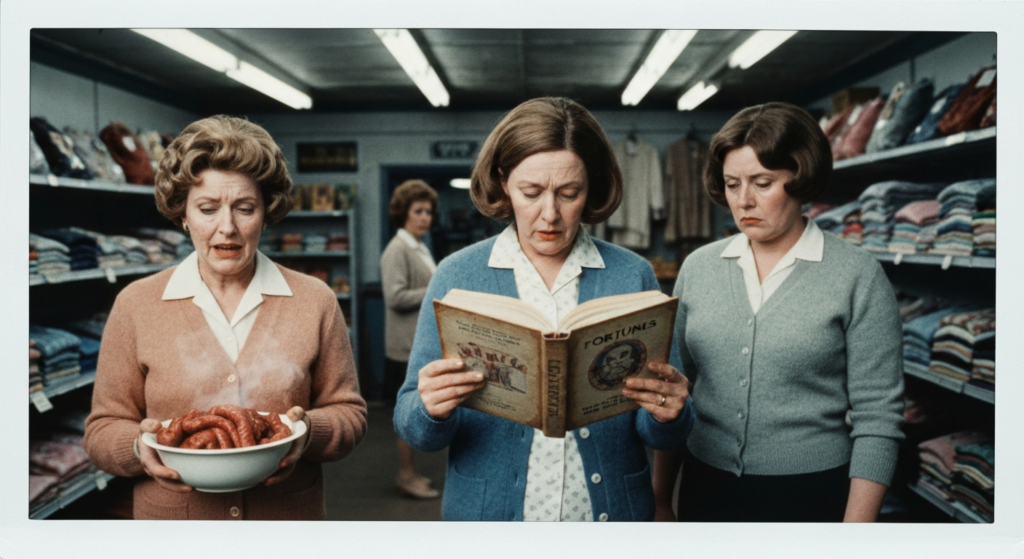
What Weekend Workshops Actually Teach Us
Weekend workshops in haruspicy have grown quietly but steadily over the past several years. What began as informal gatherings — a hired village hall, a borrowed trestle table, someone’s laminated notes on bovine hepatic zoning — has matured into something more structured, more purposeful, and considerably better catered. For practitioners at any stage of development, these events remain one of the few reliable opportunities to learn in the company of others who share both the vocation and the particular set of logistical challenges that come with it. The observations that follow are drawn from attendance at several such workshops over recent seasons, and from conversations with the practitioners who keep coming back.
The Value of Working in the Same Room
There is a limit to what any amount of reading can teach you. Haruspicy is a tactile discipline. The weight of a liver, the texture of a membrane under examination, the subtle differences between the lobes of a pig’s spleen and those of a sheep — these are things that photographs in a manual cannot adequately convey. Attendees at weekend workshops consistently report that a single afternoon of supervised hands-on practice advances their confidence more than months of independent study. This is not a criticism of self-directed learning; it is simply the nature of working with physical material.
Experienced facilitators know this. The better-run workshops structure their sessions accordingly: demonstration first, followed by guided practice, followed by peer observation. The peer observation element is often undervalued by first-time attendees, who tend to assume it is a passive activity. In practice, watching a colleague work through a reading — noticing where they hesitate, how they reorient their angle of approach, which features they prioritise — teaches as much as doing the reading yourself. It is worth arriving at any workshop with that in mind.
For those newer to the field, a weekend workshop also provides something that no online forum or correspondence course can replicate: the reassurance that comes from being corrected in real time, by someone who has made the same mistakes and is no longer making them. If you are still finding your way through the foundational techniques, it may be worth reading our beginner’s guide to becoming a haruspex before attending, simply to ensure you arrive with a working vocabulary and can make the most of the time available.
What Attendees Tend to Get From One Another
The formal programme of a weekend workshop rarely accounts for more than half of what participants take away. The remainder happens at the margins — over lunch, in the car park, during the less structured parts of the afternoon. Practitioners share sourcing contacts, compare notes on supplier reliability, and discuss the kinds of interpretive disagreements that do not make it into published guidance. These conversations have a candour that more formal professional settings do not always permit.
Several recurring themes emerge across workshops, regardless of the organiser or the specific curriculum. The question of intuition versus method comes up in almost every group — how much weight to place on a reading that feels wrong even when it is technically consistent with established indicators, and how to develop the professional judgement to know which voice to trust. This is not a question with a settled answer, and experienced practitioners tend to be more comfortable with that ambiguity than newer ones. The workshops provide a space to sit with it.
The matter of organ selection also generates lively discussion. There is genuine variation in practice across the community — not just between traditions, but between individual practitioners who have developed preferences through experience. Some practitioners have strong views on the relative reliability of certain organs for certain categories of question; others argue for a more flexible approach. The article on spleenfold mechanics as an overlooked indicator has been cited at more than one workshop as a useful provocation on this point, even by those who ultimately disagree with its conclusions. Disagreement, at least, is productive.
The Workshop as Continuing Professional Development
It is worth being direct about something that is sometimes treated as a secondary consideration: weekend workshops are continuing professional development, and should be treated as such. This matters for reasons beyond personal improvement. As the regulatory and public-facing environment for haruspicy continues to evolve — and it is evolving, however incrementally — the question of what constitutes demonstrable professional competence becomes increasingly relevant.
Practitioners who can point to a consistent record of attendance and engagement at recognised workshops are better placed when dealing with enquiries from local authorities, insurers, or venue managers. This is not about performing credibility; it is about having something concrete to show when the question of credentials arises. Those navigating the more complex aspects of professional legitimacy may find the guidance on insurance considerations for practitioners and licensing or the appearance thereof useful in this context.
Many practitioners now keep a simple record of workshops attended, topics covered, and hours of supervised practice. This requires no formal system — a notebook entry will do — but the habit of documentation is worth establishing early.
Room for Improvement in How Workshops Are Run
In the interest of the community’s continued development, it would be dishonest to suggest that all workshops are equally well organised. A few observations, offered constructively.
Time management is a persistent issue. The practical sessions — which are, as noted above, the most valuable component — are frequently compressed by overlong introductory presentations. Facilitators who have prepared extensive slide decks should be aware that most attendees have come to use their hands, not to watch a screen. Thirty minutes of demonstration is worth more than ninety minutes of contextual background for all but the most novice participants.
Material provision varies considerably. Workshops at which attendees are expected to bring their own organs can create an uneven experience, particularly if some participants arrive with unsuitable or poorly sourced material. Organisers who can arrange a central supply — with appropriate storage and handling in place — produce consistently better practical sessions. Guidance on the relevant considerations is available in our article on storing organs safely at home, which covers the key principles whether the storage in question is domestic or institutional.
Finally, post-workshop follow-up is an area where most organisers could do more. A brief summary of the session’s key discussion points, circulated to attendees within a week, does a great deal to consolidate what was covered and provides a useful reference for the months ahead. It need not be extensive. Two sides of A4 and a list of any resources mentioned during the day would be sufficient.
Finding and Evaluating Workshops
The range of workshops available in the UK has expanded, though quality remains uneven. Word of mouth is still the most reliable guide. When evaluating an unfamiliar event, it is worth asking how much of the programme is dedicated to practical work, what organ material will be provided or expected, and whether the facilitator has a background in active practice rather than purely theoretical study. A workshop led by someone who reads regularly, encounters the same professional difficulties as the attendees, and has formed considered views through experience is a substantially different proposition from one led by someone whose engagement with the field is primarily academic.
The weekend workshop will not replace regular independent practice, nor the slower accumulation of experience that comes from conducting actual readings with actual clients. But as a mechanism for sharpening technique, resolving long-standing interpretive uncertainties, and reconnecting with a professional community that can sometimes feel dispersed and isolated, it remains one of the more reliable investments a practising haruspex can make in their own development.
Equipment & References
 The Divine Liver — EllisonThe standard contemporary reference
 De Divinatione — CiceroFoundational text, ebook edition
 Roman Religion — ScheidRitual and sacrificial practice
As an Amazon Associate this site earns from qualifying purchases.

The observations from the attendee ‘K.S.’ regarding the importance of a properly consecrated workshop space resonate deeply. As Madame Blavotnik herself taught us, the energetic purity of the environment is paramount. A truly professional approach requires nothing less. With respect, S. Petrescu
I attended the July workshop in ’97 and found the communal preparation of the ovine subject incredibly grounding. Such a rare opportunity for hands-on learning outside of a formal apprenticeship.
The notion that one can master even the rudiments of this ancient craft in a mere weekend is, I must say, rather insulting to those of us who have dedicated decades to its subtleties. Your article, whilst well-meaning, encourages a superficiality I find deeply concerning.
These workshops… they were always so intense. It reminds me of the Edinburgh symposium, before certain instruments belonging to Professor Dalrymple were found in circumstances that were never adequately explained. We are still waiting for answers.