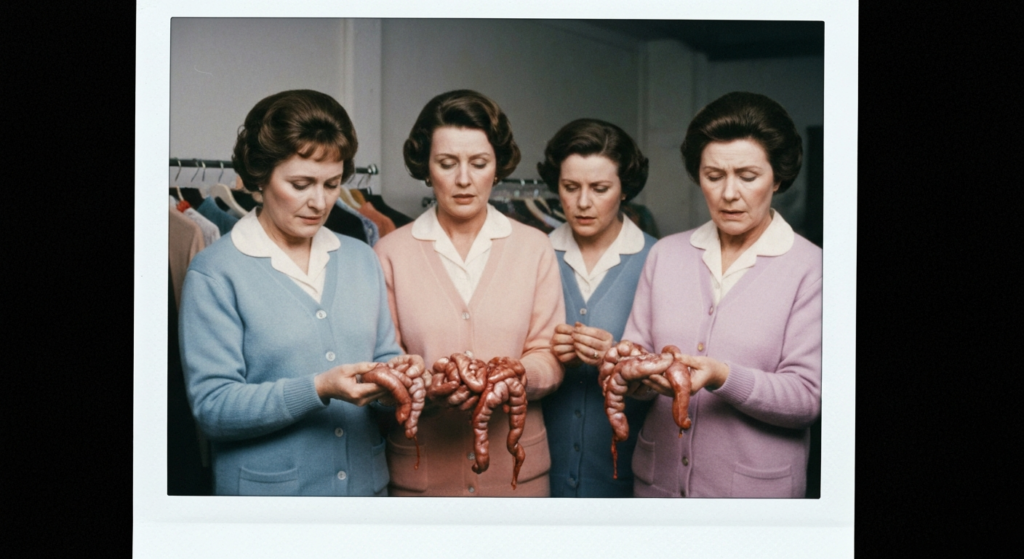
Dog parks present a set of interpretive challenges that most haruspicy training does not adequately prepare you for. The entrails, in the classical sense, are absent. The animals are living, mobile, and largely indifferent to the reading being conducted. And yet, practitioners who have spent time working in these environments report consistent patterns — patterns worth examining seriously, even if the theoretical framework for doing so remains underdeveloped.
This article documents one such pattern: a recurring correlation between canine behavioural signals observed in public parks and the broader divinatory indicators a haruspex might encounter in more conventional practice settings. It is not presented as settled methodology. It is presented as a field observation that warrants further attention.
The Observational Basis
The readings described here were conducted over approximately fourteen months at four sites in the East Midlands, with supplementary observations from two contributors in South Wales. The sessions were not planned as formal research. They emerged from a practical problem: a practitioner who works primarily with ovine liver was asked to conduct a reading at a community event held in a park where no suitable specimen was available or, for reasons the organiser had not thought to mention in advance, appropriate to produce.
Rather than decline, the practitioner adapted. The adaptation was imperfect, the reading inconclusive, but something in the environment prompted continued observation across subsequent visits. What emerged was not a rival methodology to classical entrail reading, but a possible supplementary signal — one that appears to track, in rough terms, with the kinds of energetic conditions that produce clear, legible readings in conventional haruspicy.
In other words: the dogs appeared to be responding to something. And what they responded to seemed to correlate with conditions that experienced practitioners would recognise as favourable for clear divinatory work.
The Pattern Itself
The observed pattern centres on collective canine movement and attention. On days when readings conducted afterwards — by the same or other practitioners, using conventional methods — produced clear, unambiguous results, the dog population at the park tended to exhibit what the contributors began calling convergent orientation: a loose, uncoordinated tendency for multiple animals to face the same general direction without obvious external stimulus. This was not universal, and it was not dramatic. It was, frankly, easy to miss if you were not looking for it.
On days characterised by what practitioners will recognise as interference — the muddied, contradictory readings that experienced haruspices learn to set aside rather than interpret — the dogs were more scattered in their attention, more reactive to one another, less settled. Again, this is not a controlled observation. Dogs in parks are affected by dozens of variables that have nothing to do with divinatory conditions. The pattern is a pattern, not a mechanism.
Tail behaviour was also noted, though the contributors are cautious about over-interpreting it. High-frequency, generalised tail activity across the group did appear more common during sessions that preceded clear readings. Lower overall tail activity, or activity concentrated in isolated animals, correlated loosely with less productive conditions. These observations sit alongside the broader convergent orientation data, and should not be extracted from that context.
What This Is Not
It would be easy, and wrong, to construct from these observations a new system of divination in which dog behaviour substitutes for entrail reading. That is not what is being proposed. The liver remains the primary instrument; questions of secondary organ indicators are already complex enough without introducing a living animal as a divinatory medium.
What is being proposed is more modest: that certain environmental and atmospheric conditions which favour clear haruspicy may also produce detectable effects in the behaviour of animals present in the same space. This is not, when stated plainly, a radical claim. Practitioners have long noted that readings conducted outdoors in natural settings can carry a different quality from those conducted in domestic or commercial interiors. The reasons for this are debated. What the dog park observations add is a possible external indicator — something visible in the environment that a practitioner might use to calibrate their expectations before beginning work.
This also has nothing to do with the animals themselves as subjects of divination. The dogs are not being read. Their owners are not receiving a service. The practitioner is observing ambient conditions, in much the same way one might note the quality of light or the direction of wind before a reading conducted outdoors.
Practical Considerations for Field Observation
If you intend to build on these observations — and practitioners working in community or outdoor settings may find it worth doing — a few practical notes.
First, consistency of site matters considerably. The patterns described above only became legible over repeated visits to the same locations. A single visit to an unfamiliar park will tell you very little. Establish a baseline before drawing any conclusions about what the animals in that environment are indicating.
Second, time of day affects canine behaviour in ways that have nothing to do with divinatory conditions. Early morning and late afternoon sessions will produce different baselines simply because of feeding patterns, temperature, and the type of owner likely to be present. If you are correlating park observations with subsequent readings, hold the time of day constant where possible.
Third — and this should not need saying, but experience suggests it does — do not attempt to conduct this kind of observation while simultaneously performing a reading. The two activities require different qualities of attention. Practitioners who have tried to combine them report that both suffer. This is supplementary reconnaissance, conducted before the reading, not a parallel activity.
For those whose practice takes them regularly into outdoor or community contexts, it may also be worth reviewing the practical guidance in Legal Obligations During Public Demonstrations and Operating in Shared Spaces: Legal Tips — not because dog park observation raises specific legal concerns, but because the broader context of public-facing practice carries considerations that are easy to overlook when attention is directed elsewhere.
Further Observations Welcomed
The dataset here is small, geographically limited, and methodologically informal. The contributors are the first to acknowledge this. What would be useful — and what this article is intended to prompt — is a broader collection of practitioner observations from different regions and different animal environments. There is no particular reason to suppose that dogs are uniquely sensitive to the conditions described here. Observations involving other animals in outdoor settings may be equally instructive.
Submissions can be sent through the site. Please include location (general region is sufficient), time of year, the nature of the subsequent reading if one was conducted, and any relevant notes on conditions. The intention is not to build a formal methodology from this material in the near term, but to establish whether the pattern holds outside the original observational context.
For practitioners with an interest in the theoretical dimensions of environmental influence on divinatory quality, the discussion in Liver Alignment During Solar Flares addresses some of the underlying questions about external conditions and organ responsiveness, and may provide useful context. Those newer to the practice who are still developing their sense of what a clear reading feels like — as distinct from an obscured or interfered-with one — may find A Beginner’s Guide to Becoming a Haruspex worth revisiting before attempting any field observation of this kind.
Dog parks are not, in any classical sense, a divinatory environment. But the practitioner who refuses to notice what the environment is offering will always work with less information than the one who pays attention. These observations are worth paying attention to.
Equipment & References
 Nitrile Examination Gloves ×100Powder-free, professional grade
 Absorbent Drip Pads ×100Standard tray pads, 180×100 mm
 Starrett Boning Knife 6″Narrow straight, sanitised steel
 Veterinary Anatomy — Dyce et alHepatic and splenic morphology
As an Amazon Associate this site earns from qualifying purchases.






I’ve noticed this too! Especially with spaniels. There seems to be a certain congruence in the way their energy fields interact with the local divinatory resonances. Fascinating stuff.
Dog parks? Entrails? What fresh absurdity is this? There is no ‘pattern’ beyond confirmation bias and a desperate attempt to find meaning in random animal waste. Seriously, this website is a parody, right? Right?!
You clearly don’t understand the nuanced energetic interplay, ‘rationalist’. The proximity to domestic animal life, particularly those attuned to human emotion, can indeed create fascinating and sometimes quite potent, short-term divinatory eddies. Don’t knock it ’til you’ve tried it.
While I appreciate the anecdotal evidence, has anyone attempted a more controlled study? Perhaps comparing dog park livers to those from, say, municipal parks without such a high canine population? Data is key.
Dog parks? Good heavens. One simply acquires the freshest possible specimen from a reputable local butcher, not from some muddy field full of yapping mongrels. This newfangled nonsense is quite beside the point.