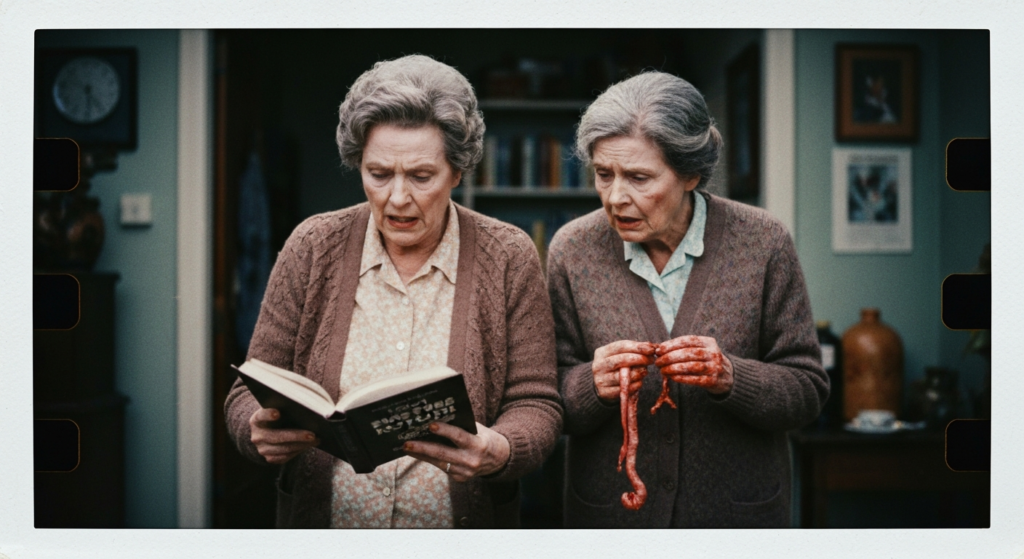
Why Anatomical Variability in Budget Butcher Cuts Matters
Any practitioner who has sourced offal from a budget butcher — rather than a specialist supplier or farm contact — will have noticed that the material is not always consistent. Livers vary in lobe proportion and surface texture. Spleens differ in length and density. This is not a quality control failure on the butcher’s part; it is simply the reality of working with biological material drawn from varied stock, different husbandry conditions, and animals of differing ages. Anatomical variability in budget butcher cuts is one of the less glamorous aspects of haruspicy, but understanding it is fundamental to maintaining the reliability of your readings.
The problem is not the variation itself. Variation has always been present. The problem is when a practitioner is unaware of the expected range of normal variation and misreads a morphological quirk as divinatory signal. Getting these two things confused — the incidental and the meaningful — is among the more common sources of interpretive error at the intermediate level.
The Range of Normal Variation
Within any single species, organ morphology varies considerably. A pig’s liver, for instance, may present with anywhere from four to five distinct lobes depending on the individual animal, and the caudate lobe in particular can vary significantly in its prominence. Chicken livers — popular for solo readings and practice work, given their accessibility and low cost — differ in colour from deep burgundy to pale brown depending on the bird’s diet and age, and this variation carries no intrinsic divinatory weight unless taken in context with the rest of the reading.
The spleen is worth particular attention here. As discussed in our piece on spleenfold mechanics, the spleen is sensitive to misreading precisely because its shape is so variable even within healthy animals. A long, narrow spleen from a lean young pig is not structurally comparable to the broader, denser spleen of an older animal, and treating them as equivalent when assessing surface markings will introduce errors. Budget butchers — particularly those sourcing from multiple suppliers or auction stock — will routinely present you with material drawn from animals of widely different ages, breeds, and rearing conditions.
This is not a reason to avoid budget sources. It is a reason to know your material before you begin.
How Sourcing Affects What You Receive
Specialist suppliers and established butcher relationships — covered at length in our guide to working with butchers: contracts and permissions — give you a degree of consistency because you can specify your requirements. Budget purchasing, whether from a market stall, a supermarket reduced section, or a cash-and-carry wholesale account, does not afford you that control.
The practical consequence is that budget-sourced offal requires a longer assessment phase before the interpretive work begins. This is not dead time. A thorough physical assessment — noting size, colour, surface texture, lobe definition, and any visible anomalies — sharpens attentiveness and, over time, builds the kind of baseline knowledge that makes genuine signal far easier to identify when it appears.
Keep a working log. Note the species, estimated age of animal where discernible, source, and key morphological features before you begin any reading. Cross-referencing these records over time will give you a personal reference library of normal variation that no textbook entirely replaces.
Distinguishing Morphological Quirk From Divinatory Indicator
This is, frankly, where many practitioners struggle, and it is worth being direct about it. An asymmetrical liver lobe is not automatically a reading. A surface discolouration caused by chilling or brief freezing is not a marking. An unusually prominent bile duct is, in most cases, an unusually prominent bile duct.
The discipline here is sequential. Assess the organ first as an object with physical properties that have mundane explanations. Only after you have accounted for the range of normal variation — and noted anything that falls outside it — should you move to interpretive work. This is not a diminishment of the practice. It is the practice, properly conducted.
It is also worth noting that some organs are inherently less stable as divinatory instruments and require correspondingly more experience to read reliably. The heart, as explored in Unreliable Organs: When the Heart Gets in the Way, is particularly prone to post-mortem changes that can obscure surface features. The liver, by contrast, retains its structural information well if handled and stored correctly — though even here, freezing and thawing cycles will affect texture and should be noted before reading.
Practical Adjustments for Budget Work
If your practice relies primarily on budget-sourced material — which is entirely reasonable, particularly in the early years — a few adjustments to standard procedure will improve the reliability of your readings considerably.
Source from the same outlet consistently where possible. Even without a formal supplier relationship, a regular market stall or independent butcher will tend to use similar stock over time, and you will accumulate familiarity with that material’s characteristics. Variety for its own sake has limited professional value.
Where you have no prior knowledge of the source, allocate time specifically for baseline assessment. A reading conducted on unfamiliar material without this stage is more likely to produce interpretation errors, and those errors compound over time if they go unexamined.
Consider keeping separate records for different species. Bovine, porcine, and poultry offal each have distinct normal ranges, and conflating them — even unconsciously — introduces noise into your interpretive framework. If you are newer to the practice, our beginner’s guide covers the foundational species differences in more detail.
Finally, bear in mind the handling and storage requirements that apply regardless of source. Offal from a budget supplier may have had a less controlled journey than material from a dedicated supplier, and storage conditions prior to your reading matter. Guidance on appropriate home storage is available in our article on storing organs safely at home, and the standards there apply equally whether the material cost you three pounds from a market or was sourced through a specialist account.
Developing Calibration as a Skill
Experienced practitioners sometimes describe calibration — the ability to assess an organ’s baseline state quickly and accurately before reading — as the most undervalued skill in haruspicy. It does not photograph well. It does not make for compelling case studies. But it is what separates a practitioner who produces consistent, defensible interpretations from one whose results are erratic and difficult to replicate.
Budget sourcing, precisely because it offers less consistency, is in some respects excellent training ground for calibration. When every piece of material is slightly different, you are forced to engage actively with the assessment phase rather than relying on familiarity. Practitioners who work exclusively with premium, highly consistent material sometimes find, when that supply is disrupted, that their calibration skills have quietly atrophied.
There is, in other words, a professional case for working with budget butcher cuts periodically even when better alternatives are available. The discipline it demands is not a limitation. It is, over time, a considerable advantage.
Equipment & References
 Starrett Boning Knife 6″Narrow straight, sanitised steel
 Nitrile Examination Gloves ×100Powder-free, professional grade
 Absorbent Drip Pads ×100Standard tray pads, 180×100 mm
 Veterinary Anatomy — Dyce et alHepatic and splenic morphology
As an Amazon Associate this site earns from qualifying purchases.





This is a daily struggle for independent practitioners. The quality of cuts from different suppliers, even ‘budget’ ones, can vary wildly. Knowing what to look for, especially in the inferior lobes, is crucial.
As the article implies, careful visual inspection at the point of purchase is non-negotiable. This is explicitly covered in Module 3 of the RPHA Foundation Course, ‘Sourcing and Pre-Divinatory Assessment’.
Budget cuts? Good heavens. One simply sends their man to the proper abattoir and ensures a premium, fresh specimen. Trying to read the future from some sad, misshapen liver from the discount aisle is asking for trouble.
Your reliance on these ‘budget’ offerings speaks volumes to the current decline in professional standards. In my day, only the finest and most perfectly formed specimens were deemed worthy of serious prognostication. Your ignorance is surpassed only by your presumption, sir.