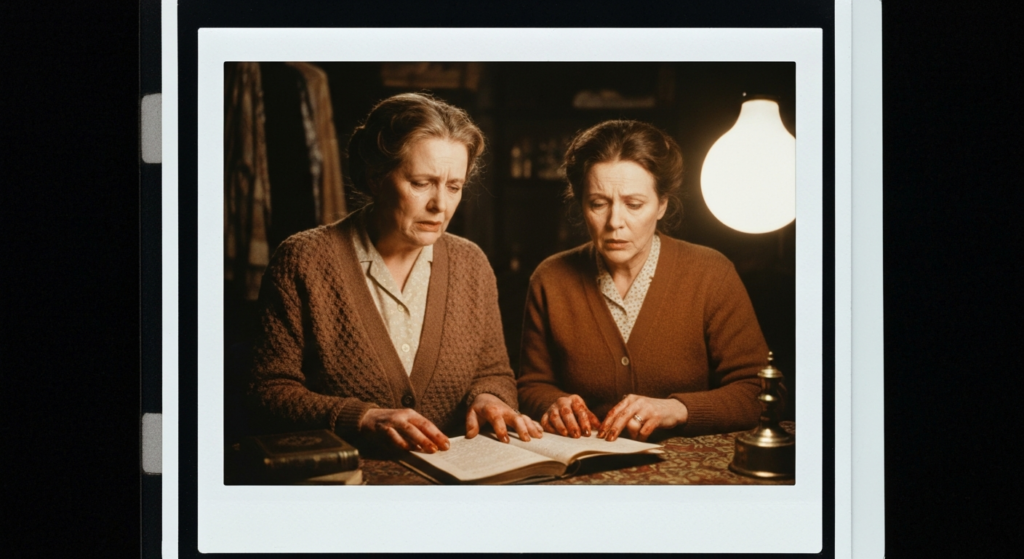
Leaving a professional body is never a decision taken lightly, and I did not take it lightly. After several years as an active member of the Circle of Offal, I submitted my resignation — not in anger, and not because my faith in the practice had wavered, but because I had reached the conclusion that the organisation no longer reflected the kind of haruspicy I was trying to do. I am writing this because, in the months since, I have received a surprising number of messages from practitioners who recognised something of their own situation in mine, and because there is very little honest writing on the subject of leaving a professional body in this field.
What the Circle of Offal Offers
It would be both unfair and inaccurate to dismiss the Circle’s contributions to the profession. For practitioners in the earlier stages of their careers, the peer network alone has genuine value. Working through the finer points of hepatic zonation — particularly the contested question of how far the lateral lobe should be weighted against the cystic margin in a directional reading — is considerably easier when you have access to colleagues who have encountered the same problems. Finding a butcher willing to enter into the kind of ongoing, good-faith arrangement that serious practice requires is also substantially easier with institutional backing. If you are still at that stage, the foundational material covered in A Beginner’s Guide to Becoming a Haruspex gives a solid grounding, and the Circle’s introductory workshops build productively on it.
For many practitioners, membership of the Circle will remain entirely appropriate throughout their careers. I am not suggesting otherwise. What I am suggesting is that the costs of membership — financial, professional, and in some respects intellectual — are worth examining honestly before you commit, and again at intervals once you have.
The Informal Culture and Where It Led
My difficulties with the Circle were not, in the end, with its stated aims. The stated aims are reasonable. The difficulties arose from the informal culture that had grown up around those aims over time — a culture that, from where I was sitting, had gradually prioritised institutional reputation over substantive professional development.
The most concrete expression of this was a growing reluctance, at the organisational level, to engage openly with findings or methods that might attract regulatory attention or press interest. I understand the instinct. Haruspicy operates in a regulatory environment that is, to put it charitably, still finding its footing, and the Circle has historically taken a cautious approach to anything that might invite scrutiny from environmental health officers, local councils, or other bodies that do not always approach the practice with the most open of minds. The question of how to present oneself to outside authorities — a subject addressed at some length in articles such as Dealing With Police Calmly and Respectfully and Making Peace With the Food Standards Agency — is one on which reasonable practitioners genuinely disagree.
But there is a meaningful difference between professional prudence and a reflexive institutional caution that discourages members from publishing or even discussing findings that fall outside a narrowly sanctioned range. Over time, I found that the latter had come to dominate. Conversations that should have been technical became political. Work that deserved proper peer engagement was quietly shelved. I began to feel that the Circle was more interested in managing its image than in advancing the practice it was founded to represent.
A Crisis of Confidence in the Institution, Not the Practice
I want to be precise here, because the distinction matters. My decision to leave had nothing to do with uncertainty about haruspicy itself. The practice had not failed me — in several instances during that period, a careful reading of the hepatic surface had provided exactly the kind of directional clarity a client needed at a genuinely difficult moment. The spleenfold, often overlooked, had twice yielded readings of striking specificity. The work was working. What had stopped working was the organisational structure surrounding it.
There were specific incidents that brought this into focus. I will not detail them here — partly out of respect for colleagues who remain members, and partly because the particulars are less instructive than the pattern they formed. What I will say is that by the time I submitted my resignation, it had become clear that continued membership would require me to operate within constraints I could no longer accept as professionally justified.
The Practical Consequences of Leaving
It is worth being honest about what you lose when you leave a professional body, because those losses are real and it does no one any favours to minimise them.
The most immediate is access to the peer network. If your practice depends on regular consultation with other haruspices — for second opinions on ambiguous readings, for sourcing introductions, for the kind of informal professional support that is difficult to replicate independently — you will need to think carefully about how you replace that before you resign, not after. Colleagues who have left before you are often a useful starting point. There is a loosely connected group of independent practitioners in the UK who have, collectively, built up a reasonable infrastructure for this kind of mutual support, though it is neither formalised nor formally advertised.
Insurance is the second practical concern. Several insurers offering cover relevant to haruspicy practice — including policies that cover third-party liability in connection with animal material — will ask about professional body membership at the point of application. This does not make independent practice uninsurable, but it does mean the process requires more active management. The considerations are laid out in more detail in Insurance Considerations for Practitioners, and it is worth reading that before you finalise any decision.
The third loss is reputational, and it is the hardest to quantify. For clients who understand what the Circle represents, membership functions as a signal of credentialled practice. Without it, you are building that signal from scratch — through the quality of your work, the clarity of your communications, and the strength of your individual professional record. This is achievable, but it is slower.
What Independent Practice Has Looked Like in Practice
In the two years since I left, my practice has, on balance, developed more freely than it did within the Circle. I have been able to pursue lines of technical inquiry that would previously have required navigating a committee approval process of uncertain purpose. I have written about findings — including some modest observations on the correlation between pericardial texture and the questions clients were not asking but perhaps should have been — without being asked to reconsider the framing.
I have also, in that time, encountered every practical difficulty I might have anticipated. There have been moments where having a professional body behind me would have simplified a conversation with a council official considerably. The process of registering my mobile reading unit was more involved than it needed to be, in part because I was navigating it without access to the Circle’s established relationships with the relevant licensing bodies. These are not small things.
What I would say to a practitioner considering the same decision is this: know what you are leaving before you leave it, and make sure that what you are leaving it for is worth the cost. For me, it was. That is not a universal answer.
The Circle of Offal is not a malign institution. It has done genuine good for the profession, and it may yet recover the intellectual openness that, in my experience, it had lost. But professional bodies exist to serve their members, and when a member finds that the relationship has inverted — that they are serving the body rather than the body serving them — it is reasonable to ask whether continued membership remains justified. That question deserves a considered answer, not a reflexive one in either direction.
Equipment & References
 The Divine Liver — EllisonThe standard contemporary reference
 De Divinatione — CiceroFoundational text, ebook edition
 Roman Religion — ScheidRitual and sacrificial practice
As an Amazon Associate this site earns from qualifying purchases.




I empathise entirely. The insularity and rigid interpretations became suffocating. It felt less like a pursuit of truth and more like an adherence to dogma. Sometimes you have to step away to truly see.
While I respect the personal journey described, one must remember that tradition and discipline are the bedrock of true mastery. Deviation from established practices, particularly those established by the great Madame Blavotnik, can lead only to confusion. With respect, S. Petrescu
The ‘Circle of Offal’… yes, I remember their methods. Very… particular. Some would say, too particular. Those who attended the Edinburgh symposium know what I mean. Some circles are best left unbroken, or at least, un-joined.
What IS this website? I honestly don’t understand what I’m reading. Is this a joke? People ‘leaving circles of offal’? Send help, I’m stuck in an internet rabbit hole.