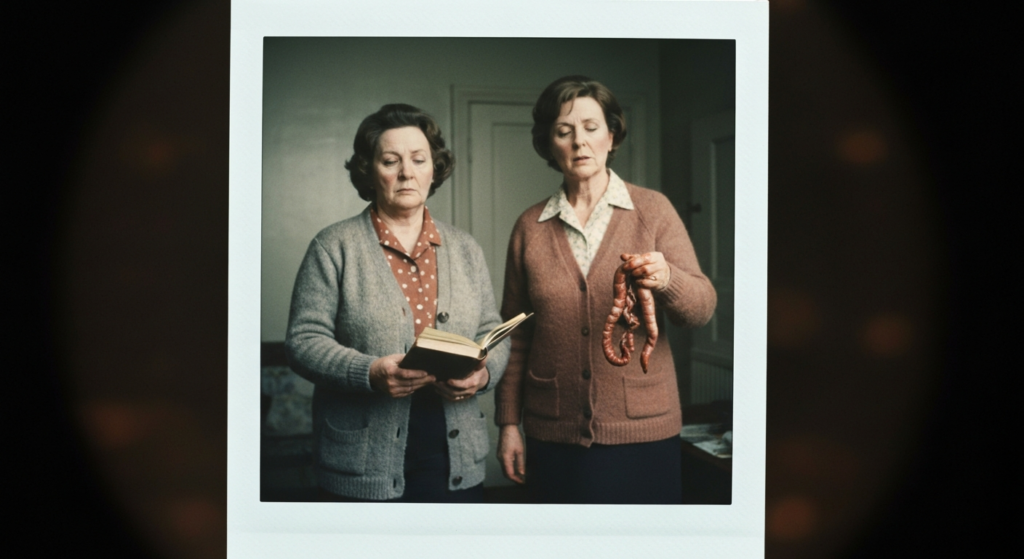
Can Children Be Trusted With Entrails?
The question surfaces with some regularity in practitioner forums and, increasingly, in conversations with clients who wish to involve younger family members in the reading process. Can children participate meaningfully in haruspicy, and if so, from what age and under what conditions? These are reasonable professional questions, and they deserve a considered answer rather than either reflexive enthusiasm or unnecessary caution. The short answer is: yes, with appropriate preparation and supervision, children can be introduced to entrail reading in ways that are both safe and genuinely developmentally appropriate. The longer answer requires some nuance.
What Developmental Readiness Actually Looks Like
There is a tendency, when this subject arises, to focus almost entirely on the visceral dimension — the organs themselves, the smell, the tactile unfamiliarity of the work. This is understandable, but it rather misses the point. The more meaningful question is whether a child has developed the cognitive and emotional groundwork to engage with what haruspicy actually involves: sustained observation, pattern recognition, tolerance of ambiguity, and a respect for the gravity of the interpretive act.
Most practitioners working with younger participants report that children of around nine or ten are capable of meaningful engagement with the observational elements of a reading, provided the session has been properly framed in advance. Below that age, involvement tends to be more ceremonial than substantive — which is not without value, but should be understood for what it is. A seven-year-old standing at the tray is absorbing an atmosphere, not developing technique. Both things have their place, but conflating them leads to muddled expectations on all sides.
The indicators to look for are less about age than disposition. A child who can sit quietly through a veterinary consultation, who asks considered questions rather than impulsive ones, and who demonstrates some comfort with the idea that not every question has a clean answer, is likely to engage productively. A child who requires constant stimulation, or who has not yet been given any grounding in what the practice means and why it is conducted, is not yet ready — and pressing the point does a disservice to both the child and the reading.
Preparation Before the Session
Introducing a child to haruspicy without prior conversation is, frankly, poor practice regardless of the child’s age or temperament. The organs used in a reading carry symbolic weight that is entirely lost if the child has no framework for understanding what they are seeing. A liver presented without context is simply a liver. Presented within a tradition — with some explanation of what practitioners look for, why certain features carry significance, and how the practice connects to a broader understanding of nature and time — it becomes something the child can actually think about.
This preparation need not be elaborate. A brief conversation, perhaps with reference to some of the cross-cultural frameworks for liver interpretation that have developed across different traditions, can be sufficient to orient a curious child. The goal is not to deliver a lecture but to ensure that what they witness during the reading has somewhere to land.
Parents and guardians should also be honest with children about the physical aspects of the work. The sight, smell, and texture of fresh organs are not distressing to most children who have been calmly forewarned, but can be significantly more upsetting if encountered without any preparation. Matter-of-fact language works best here. Children take their cues from adults; if the adult presenting the material is composed and straightforward, the child generally responds in kind.
Supervision and Boundaries During the Reading
No child should handle organs without direct adult supervision, and that supervision should be active rather than merely present. This means watching what the child touches, ensuring that appropriate protective equipment — gloves and a suitable apron — is worn throughout, and maintaining clear expectations about behaviour at the tray. Children should understand from the outset that the reading environment requires a degree of stillness and attention. This is not about imposing an artificial solemnity, but about the practical reality that entrail reading demands a focused observer.
Younger participants should generally be positioned as observers rather than primary readers. Allow them to look, to ask questions, to note what they see — but the interpretive work should remain with the practitioner. There is real value in a child watching a skilled haruspex work through a reading methodically: following the contour of the lobes, attending to colour and texture, moving from gross structure to finer indicators. This observational apprenticeship is how most practitioners developed their early intuitions, and there is no reason it cannot begin in childhood.
Practitioners who conduct readings in domestic settings should also be aware of the broader hygiene obligations that apply when children are present. The guidance on safe organ storage at home and sanitisation of ritual tools is relevant here, and should be reviewed before any session involving minors. These are not onerous requirements, but they do need to be met consistently.
The Question of Consent and Enthusiasm
It is worth stating plainly: a child who does not wish to participate should not be made to. This seems obvious, but the enthusiasm of a practitioner parent can occasionally outpace the child’s own interest, and the result is rarely positive. Haruspicy is not a tradition that benefits from reluctant participants, at any age. If a child is unenthusiastic, the appropriate response is to leave the door open rather than push them through it. Many practitioners who came to the art as adults report an early exposure that planted a seed, even when they were not ready to engage fully at the time.
Conversely, children who do show genuine interest should be taken seriously. A child who asks careful questions about what a particular fold in the intestinal lining might indicate, or who returns to observations made during a reading to refine their thinking, is displaying exactly the disposition that makes for a capable haruspex in later life. That interest deserves a considered, substantive response — not a condescending simplification, and not unchecked encouragement that outruns their actual understanding.
Introducing Young Practitioners to Technique
For children who are genuinely engaged and of sufficient maturity, there are elements of technique that can be introduced gradually. The mechanics of spleenfold reading, for instance, offer a relatively accessible entry point: the indicators are visible and discrete, the interpretive framework is learnable, and the margin for consequential misreading is lower than with primary organs such as the liver. Starting here, and progressing toward the liver only when the child has demonstrated sustained interest and basic observational reliability, is a sensible developmental sequence.
It is also worth considering whether a child’s involvement should eventually be formalised through one of the available junior practitioner pathways. Several training bodies now offer structured introductory programmes for younger students, and the guidance available in our overview of how to begin in haruspicy includes information relevant to those entering at an early age. Structured learning offers something that informal domestic exposure cannot: a coherent progression, peer engagement, and the opportunity to have questions answered by practitioners outside the family, which many young students find valuable.
Children who grow up with the practice as a natural part of family life, and who are guided through it with patience and appropriate rigour, have historically been among the most capable practitioners in later life. The foundations laid in early observation — the habit of looking carefully, the tolerance for interpretive uncertainty, the instinctive respect for the material — are not easily acquired in adulthood. They are worth cultivating, provided the cultivation is done well.
“`
—
“`
Equipment & References
 The Divine Liver — EllisonThe standard contemporary reference
 Roman Religion — ScheidRitual and sacrificial practice
 De Divinatione — CiceroFoundational text, ebook edition
As an Amazon Associate this site earns from qualifying purchases.







As the article rightly highlights, the ethical considerations of involving children in haruspicy are paramount. The 2012 Haruspical Safeguarding Act (HSA) specifically details age-appropriate observation vs. direct participation.
Nonsense. My lads have been helping with the offal since they could reach the table. Teaches ’em responsibility and respect for the cycle of life. No ‘safeguarding act’ needed for common sense.
With all due respect, Mr Moss, there is a clear distinction between butchery and the delicate art of haruspical interpretation. We are dealing with sacred omens, not just cuts of meat.
I’ve found great success in introducing adolescents to basic lobe recognition patterns, but only under strict supervision. Perhaps a tiered certification for junior haruspices would be beneficial?