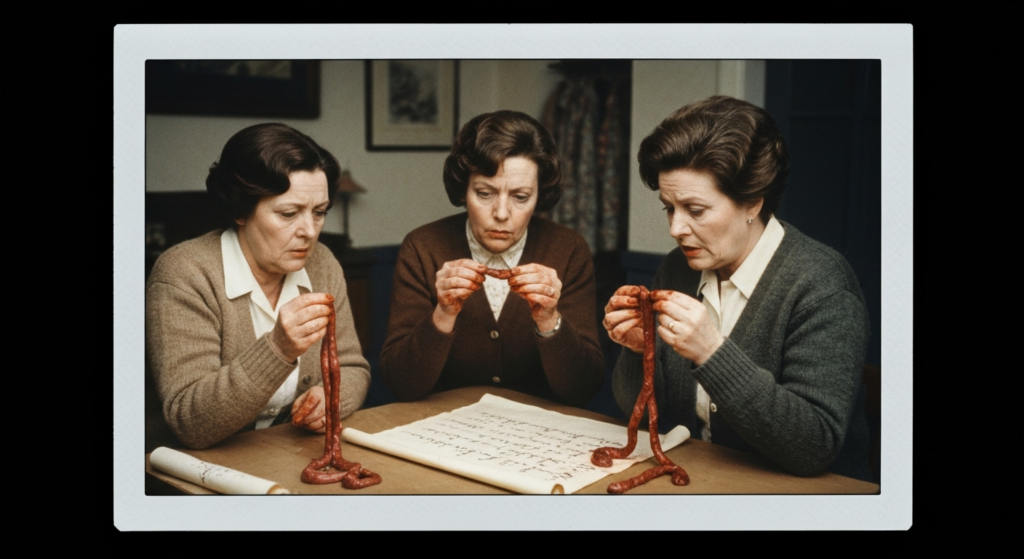
Interdimensional readings occupy an uncomfortable position in contemporary haruspicy — taken seriously by a committed minority of practitioners, dismissed entirely by the mainstream, and occupying no regulatory category whatsoever. For those who work in this area, the challenge is not primarily philosophical. It is practical: how do you document a reading that operates outside conventional interpretive frameworks, communicate findings to a client who may be in genuine distress, and maintain professional standards when the material itself resists them?
What follows is a case summary drawn from practice. Names have been changed. The reading notes have been lightly edited for clarity, but the interpretive record is reproduced as closely as possible to the original session.
Background and Initial Consultation
The client — referred to here as M — presented following a referral from a colleague who practises dream-symbol correlation work. M had been experiencing a recurring sequence: a figure in white robes appearing at the edge of a reflective body of water, gesturing towards it without speaking. The sequence had been present for approximately fourteen months, coinciding broadly with a period of significant personal disruption, though M was reluctant to elaborate on the specifics.
The initial consultation covered the usual preliminary assessment. M was in good health, had no dietary restrictions relevant to the session, and had received a standard liver reading once previously, some years earlier, through a practitioner she was no longer in contact with. Her expectations were, by her own account, modest — she was not seeking prediction but orientation. That distinction matters, and it shaped the session that followed.
The Reading
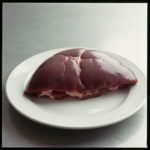
The organ presented cleanly. Surface texture was within normal parameters, and the primary lobe showed no unusual calcification or asymmetry that would have prompted me to pause the session and address those features first, as one ordinarily might with a client presenting under stress. The secondary lobe was the first point of note: the hepatic margin described an irregular curve that, under standard mapping, would indicate a period of prolonged environmental pressure on decision-making — consistent with M’s account of the preceding fourteen months, though not uniquely diagnostic of it.
What I would describe as the interdimensional component emerged during the fat-layer examination. Practitioners familiar with scrying applications within the fat layer will recognise the phenomenon I am attempting to describe: a patterning that does not correspond to any standard hepatic atlas, which appears to carry information operating at a different register than conventional reading. This is not a metaphor. The pattern was geometrically coherent, internally consistent, and did not resolve into any of the twelve recognised classical configurations.
I have seen this twice before in twenty years of practice. On neither previous occasion did I feel adequately equipped to interpret it in real time. This session was no different.
Interpretive Framework and Working Notes
The honest position for any practitioner encountering genuinely anomalous patterning is to acknowledge it as such and work outward from what can be established. The temptation to over-interpret — to construct a narrative sufficiently dramatic to match the apparent significance of what you are seeing — is one of the more persistent professional hazards in this area of the work, and one that the community has been too slow to address. The problem of confirmation bias within high-affect readings is well documented, and the interdimensional register is particularly susceptible to it.
What I was prepared to say to M, and what I documented in the session notes, was this: the patterning in the fat layer indicated a sustained connection to a period or context external to her present-life timeline — not in the sense of a literal past existence, but in the sense that some formative structuring of her current responses appeared to have its origin outside her conscious biographical memory. The figure in white, interpreted through the correlating dream material my colleague had forwarded, was consistent with what some frameworks would call a consolidating presence: not a visitation, but a representation of the integrative process itself.
I am aware that this formulation will satisfy neither the sceptic nor the committed metaphysicist. That is, in my experience, the position most likely to be accurate.
Client Response and Follow-Up
M received the reading quietly. She asked two questions: whether the patterning indicated danger, and whether it was likely to resolve. The honest answer to both was that I did not know. The patterning did not correspond to any configuration I associate with acute risk. Whether it would resolve depended on factors I was not in a position to assess — including whether M chose to pursue the integrative work the reading appeared to be pointing toward.
She returned for a follow-up session six weeks later. The fat-layer patterning had shifted perceptibly — less geometrically rigid, with evidence of what I would cautiously describe as softening along the inferior margin. The recurring dream sequence had changed: the figure was no longer gesturing toward the water but standing beside her at its edge. Whether one takes a literal or a psychological view of that development, the directional shift seemed consistent.
I documented the follow-up session in full and filed it with her initial case notes. Both are retained in the standard manner under my practice’s record-keeping procedures.
Professional Observations
Interdimensional readings are not a specialism one should enter lightly or without a grounding in conventional technique. The interpretive risks are proportional to the unfamiliarity of the material, and a practitioner who cannot reliably read a standard hepatic presentation has no business working in the anomalous register. If you are newer to practice, the foundational technique guide on this site covers the baseline competencies that should be in place before any work at this level is attempted.
It is also worth noting that the documentation requirements do not change because the reading is unusual. Case notes should be as thorough for an interdimensional session as for any other — arguably more so, given the greater interpretive latitude involved and the corresponding need to distinguish between what was observed and what was inferred. If you find yourself unable to make that distinction clearly in writing, that is information worth attending to.
The question of whether interdimensional readings constitute a distinct modality, a subset of standard haruspicy, or simply a label applied to the class of readings that resist conventional categorisation is one the community has not yet resolved. It probably should. The ongoing discussion around spleenfold mechanics as an underlexicalised area of practice is instructive here: the field has a habit of leaving its more demanding territory underdescribed, and that underdescription tends to attract both overconfident practitioners and unnecessary scepticism from outside. Neither serves the client.
M’s case is not offered as evidence for any particular metaphysical position. It is offered as a record of what happened, documented as carefully as the material allowed.
Equipment & References
 Nitrile Examination Gloves ×100Powder-free, professional grade
 Absorbent Drip Pads ×100Standard tray pads, 180×100 mm
 Starrett Boning Knife 6″Narrow straight, sanitised steel
 Veterinary Anatomy — Dyce et alHepatic and splenic morphology
As an Amazon Associate this site earns from qualifying purchases.







All this talk of ‘interdimensional readings’ just complicates matters. We’ve been getting perfectly clear predictions for the autumn hunting season using traditional methods for generations on the estate, no need for fancy language.
Case files? Are you serious? Where are the verifiable, peer-reviewed results? This isn’t science, it’s glorified storytelling. ‘Interdimensional readings’ is a phrase entirely devoid of meaning.
Your ignorance is surpassed only by your presumption, sir. To dismiss centuries of accumulated knowledge with such casual disdain speaks volumes of your character, or lack thereof. Perhaps you prefer to remain in the dark, but do not inflict your provincialism upon those of us who seek genuine understanding.
Right, because calling someone ‘provincial’ somehow validates your utterly unsubstantiated claims of ‘interdimensional readings’. Show me one shred of repeatable evidence. Just one.
I’ve had success with ‘bleed-through’ from the higher astral planes during especially potent bovine readings. The key is proper energetic shielding for the practitioner.