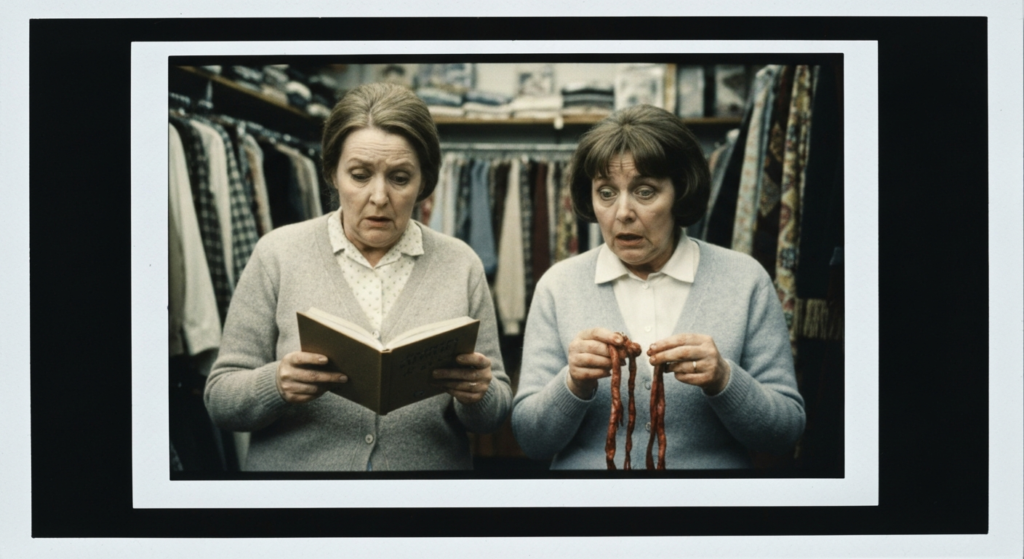
Registering a mobile haruspicy unit is not, in itself, a complicated process.
What makes it feel complicated is that the various regulatory bodies you will
encounter were not designed with mobile divination practitioners in mind, and
most of the guidance available assumes you are either a food van or a nail
technician. You are neither, and navigating the gap between those two
categories requires a degree of patience and, occasionally, creative
interpretation of official paperwork.
This guide sets out the key registration steps for practitioners operating a
mobile reading unit in the United Kingdom — whether that is a converted
trailer, a dedicated vehicle, or a portable setup transported between
locations. The legal position is manageable. It simply requires attention.
What “Mobile Unit” Means in Regulatory Terms
Before you begin any registration process, it is worth being clear about what
you are actually registering. A mobile haruspicy unit is not a single legal
entity — it is a combination of elements, each of which may fall under
different regulatory frameworks.
The vehicle or trailer itself is subject to standard road traffic law and, if
applicable, DVLA requirements for commercial-use vehicles. The business
operating from it is subject to HMRC registration and, depending on turnover,
VAT. The practice of reading — the consultation itself — sits in the same
broadly unregulated space occupied by tarot readers, astrologers, and other
complementary practitioners. And the handling of organic material, where it
occurs at the point of service rather than off-site, may bring you into
contact with your local Environmental Health office.
Treating these as one problem tends to create confusion. Treating them as four
separate but manageable administrative tasks tends to resolve it.
Registering the Business
If you are not already operating as a sole trader or through a limited company,
this is the first step. Register with HMRC as self-employed if you have not
done so. This is straightforward and does not require you to describe the
specific nature of your work in any detail — “complementary therapy
practitioner” or “divination services” are both acceptable descriptions and
neither will trigger additional scrutiny. A concise and accurate business
description also helps when the time comes to open a business bank account,
which a number of practitioners have found easier to obtain than expected once
the paperwork is in order.
If you intend to trade under a name other than your own — “Hartley Mobile
Readings” rather than your personal name, for instance — you should ensure
that name is registered and not already in use. Companies House and a basic
trademark search will confirm this.
The Vehicle and Its Permissions
If your mobile unit is a vehicle or trailer used for commercial purposes,
check whether your existing vehicle insurance covers business use. Many
standard policies do not, and operating commercially without appropriate
cover is a straightforward liability. Specialist vehicle insurers can add
commercial-use endorsements without difficulty; it is a standard product.
If your unit is a trailer, ensure it is correctly registered with the DVLA
and that its weight, dimensions, and load comply with the relevant road
traffic regulations. This applies regardless of what you are using it for,
but it is mentioned here because practitioners who have converted trailers
for reading purposes occasionally overlook it in the focus on the interior
fit-out. The tray table and lighting are important. So is the gross train
weight.
Where you intend to park and operate matters as well. Trading from a public
road or pavement typically requires a street trading licence from your local
authority. Private land — a farmer’s market, a festival site, a business
car park — requires permission from the landowner. Neither is difficult to
obtain, but neither should be assumed. Our article on
operating in shared spaces
covers this ground in more detail, and practitioners planning regular pitches
at specific sites will also want to read the guidance on
licensing and the appearance thereof.
Environmental Health and Organic Material
This is the area where mobile practitioners most frequently encounter
difficulty, and it is worth addressing directly. If you are conducting
readings using fresh organ material at your mobile unit — rather than
sourcing material off-site and bringing it prepared to a fixed location —
you may be required to register with your local authority’s Environmental
Health department as a food business. This is because the relevant
legislation, the Food Safety and Hygiene (England) Regulations 2013 and
their devolved equivalents, defines “food business” more broadly than most
practitioners expect, and the handling of raw animal products can fall within
scope even where no food is being sold or consumed.
Registration as a food business is free and does not commit you to anything
beyond compliance with basic hygiene standards — standards which, for the
most part, a properly run mobile unit will already meet. The more substantive
requirement is that you will be subject to inspection. Our separate guide on
working with the Food Standards Agency
sets out what to expect and how to prepare.
Where material is sourced from a registered butcher and arrives pre-packaged,
the registration picture is somewhat cleaner. The advice in
working with butchers: contracts and permissions
is relevant here, particularly regarding documentation of provenance, which
can be useful if questions arise during an inspection.
Insurance
Public liability insurance is not a legal requirement for haruspicy
practitioners, but it is a practical necessity for anyone operating
commercially, particularly from a mobile unit where members of the public
are invited into a confined space. A client who sustains an injury on your
premises — however that premises is defined — may make a claim against you,
and without cover, that claim falls directly on you personally.
Professional indemnity insurance is a separate consideration and covers
claims arising from the advice or interpretation you provide. Some insurers
will write policies for complementary therapy practitioners that cover
haruspicy under a broader category; others will require more specific
underwriting. It is worth speaking to a broker who has experience with
alternative therapy practitioners rather than approaching general commercial
insurers directly. The full picture of what you should be holding is
covered in our article on insurance considerations for practitioners.
Keeping Records
Once registered across the relevant categories, maintain clear records of
your registrations, insurance certificates, and any correspondence with
local authorities. If you are stopped, inspected, or questioned while
operating — and mobile practitioners are, occasionally, stopped — being able
to produce documentation promptly and calmly makes a material difference to
how those encounters proceed. A folder kept in the unit, organised by
category, is sufficient. This is not an unusual precaution; it is the same
administrative hygiene any mobile trader should maintain.
Registration is, in the end, an act of professional housekeeping. It does
not confer legitimacy on the practice itself — that rests on your training,
your technique, and your relationship with clients — but it removes the
administrative vulnerabilities that can otherwise distract from the work.
A practitioner who is confident that their paperwork is in order is a
practitioner who can focus entirely on the reading.
Equipment & References
 Nitrile Examination Gloves ×100Powder-free, professional grade
 Absorbent Drip Pads ×100Standard tray pads, 180×100 mm
 Starrett Boning Knife 6″Narrow straight, sanitised steel
As an Amazon Associate this site earns from qualifying purchases.





A mobile unit is very traditional in many parts of Romania. You go where the people are. But here, you need so many papers for a van. It loses the spirit of travel when it is so much like an office on wheels.
While I appreciate the sentiment, Stanislav, the ‘office on wheels’ aspect is precisely what ensures legality and, crucially, continued operation. Ignoring vehicle classifications, waste disposal logistics, and even simple public liability insurance for a mobile setup is inviting disaster. It’s not about stifling spirit, but about safeguarding the practice.
Rather tricky business, this. Had thought of fitting out my Land Rover, but the paperwork for ‘commercial use’ and ‘specialist vehicle’ sounded rather daunting. Stick to the barn for now, less fuss. Still, a good piece for those braver souls.
Dalrymple thought the rules didn’t apply to his ‘mobile temple’. They did. Vehemently.
Indeed, Gareth. The initial investment in compliance saves immeasurable headaches down the line. We registered our mobile unit as a ‘specialised educational outreach vehicle’ and clarified all material handling with local authorities. It smoothed the path considerably.