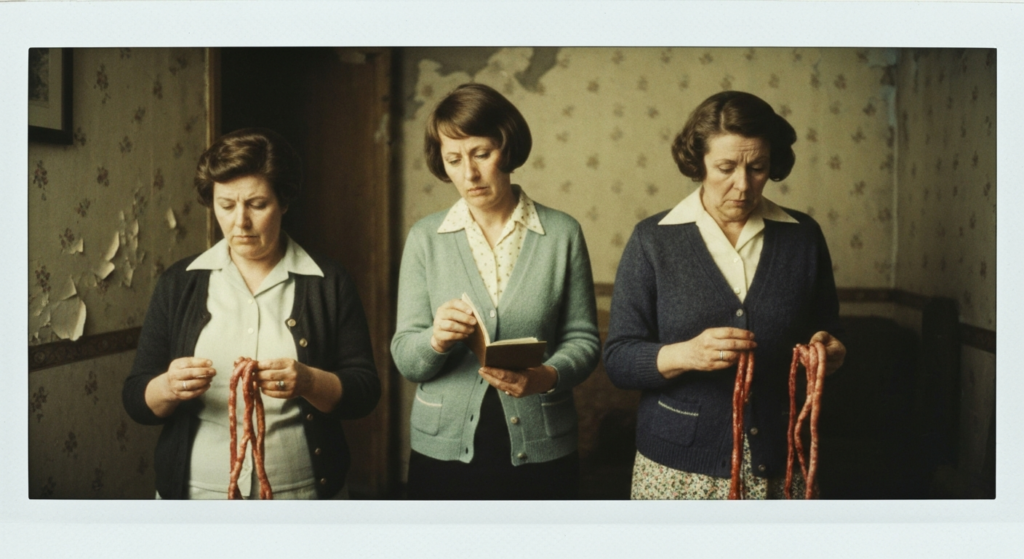
At some point in a working haruspex’s career, the police will become involved. This is not a reflection on the practice itself — it is simply a consequence of operating in a country where the sight of a person in an apron, standing over a tray of offal in a car park or market square, remains outside the experience of most beat officers. The encounter need not be adversarial. With the right approach, it can be concluded quickly, professionally, and without lasting consequences for either party.
This guide is intended for practitioners who want to handle such situations with composure. It assumes you are operating lawfully — if questions of licensing, food standards compliance, or public demonstration rights are still unresolved for your practice, those are worth addressing before they become relevant under pressure. Our articles on licensing considerations and working within food standards frameworks are a reasonable starting point.
Why These Encounters Happen
In the majority of cases, police attendance at a haruspicy session is not the result of a complaint from a person who understands what they witnessed. It is the result of a complaint from a person who did not. Someone has seen something they could not immediately categorise — animal organs, ritual tools, an unfamiliar procedure — and reached for the nearest available explanation, which is rarely flattering. The officer who arrives is therefore responding to a report of something potentially alarming, and they are doing so with no prior knowledge of haruspicy.
This context matters because it shapes how you should respond. The officer is not your adversary. They are, in most cases, simply doing their job on the basis of incomplete information. Your role in the encounter is to supply the missing information, calmly and without resentment.
Before You Say Anything
When an officer approaches, stop what you are doing. Do not continue the reading while attempting to have a conversation — this has not gone well for anyone. Set down your tools, remove your gloves if you are wearing them, and turn to face the officer directly. These are small gestures, but they communicate that you are cooperative and have nothing to conceal.
Wait to be addressed. Do not launch immediately into an explanation of haruspicy. Allow the officer to state their purpose, which will tell you a great deal about what kind of response is actually needed. A routine welfare check requires a different approach than a formal caution, and conflating the two helps no one.
Explaining What You Do
This is where many practitioners go wrong — not through dishonesty, but through overcorrection. When asked what they are doing, some haruspices either become defensive, citing rights and protections before any challenge has been issued, or they over-explain, producing a twenty-minute account of Etruscan precedent that the officer neither requested nor requires.
A clear, brief description is more effective than either approach. You are a divination practitioner. You use animal organs — sourced from a licensed butcher or abattoir — as a divinatory medium, in the same way that other practitioners use cards, charts, or pendulums. The practice has a long history and is conducted in accordance with relevant hygiene and waste disposal guidelines.
That is, in most circumstances, sufficient. If the officer has further questions, answer them. If they ask to see documentation — proof of supplier sourcing, public liability insurance, a licence for the space you are occupying — provide it, or explain clearly where it can be obtained. Our guidance on insurance for practitioners and supplier contracts covers the documentation you should have to hand in exactly these situations.
Language and Tone
Use plain English. The technical vocabulary of haruspicy — hepatoscopy, the lobus dexter, spleenfold interpretation — is not useful here and will not make you appear more credible to an officer who has never encountered the discipline. If a term is necessary, explain it in one clause as you use it. Keep your sentences short and your manner level.
Address the officer by rank where you know it. Do not be familiar, and do not be cold. The register you are aiming for is the same one you would use if a council inspector arrived unannounced during a session — courteous, unhurried, and confident that the matter will be resolved once the relevant facts are understood.
Avoid sarcasm. Avoid any language that implies the officer’s concern is foolish or that your time is being wasted. Even if it is, saying so will not improve the situation and may significantly worsen it.
If the Encounter Escalates
On rare occasions, a routine enquiry may progress further — a request to cease trading, a formal caution, or in extreme cases, a direction to accompany the officer. These situations are uncommon but not unheard of, particularly for practitioners working in public spaces or at events where the complaint has been escalated before the officer’s arrival.
If you are asked to stop a session, comply. Continuing under those circumstances gains nothing and may be used against you in any subsequent proceedings. Secure your materials safely — organs should be covered and contained; consult our guidance on offal handling and disposal if there is any doubt about your obligations in a disrupted session.
If a formal caution is issued, say nothing further without legal advice. You are not obliged to provide an impromptu defence of haruspicy on the street. Note the officer’s name and number, and the time and location of the encounter. If your practice is properly constituted — licensed, insured, and operating in compliance with applicable guidelines — this documentation is your protection.
It is also worth knowing your position with respect to public demonstrations in advance, rather than discovering it mid-incident. Legal obligations for public demonstrations vary by location and context, and the time to understand them is before you set up, not while an officer is standing three feet away.
After the Encounter
Make a written record of the encounter as soon as possible — what was said, what was requested, and how it was resolved. If a formal complaint was made against you, this record will be relevant. If the matter is dropped without further action, it still provides useful context should a similar situation arise in the same location.
If the encounter resulted from a neighbour or bystander complaint, it may be worth reviewing how your practice presents to people who are not already familiar with it. Minimising nuisance complaints is not about concealing what you do — it is about managing the context in which people first encounter it, which is a reasonable professional consideration for any practitioner operating in a shared environment.
The great majority of police encounters experienced by haruspices are resolved without incident once the nature of the practice is explained. Officers are, on the whole, pragmatic. They are looking for a satisfactory account of what they observed, confirmation that no harm is being done, and a clear path to concluding their attendance. A practitioner who can provide all three, calmly and without drama, will find that the encounter ends as it should: briefly, and with no lasting consequence for either party.
Equipment & References
 Nitrile Examination Gloves ×100Powder-free, professional grade
 Absorbent Drip Pads ×100Standard tray pads, 180×100 mm
 Starrett Boning Knife 6″Narrow straight, sanitised steel
As an Amazon Associate this site earns from qualifying purchases.









Aye, good advice. Always polite with the constabulary. Offer them a cup of tea, show them what they need to see (within reason, of course), and they usually leave you to it. Never had a problem myself, provided you’re not doing anything daft.
Are we to infer that encounters with law enforcement are a regular occurrence for ‘practitioners’ of haruspicy? Perhaps this speaks more to the dubious legality of your activities than to any ‘misunderstanding’. This whole website is a bizarre charade.
I’m always nervous when they show up. What if they confiscate my tools? I’ve seen it happen to a colleague in Wales. Is there any legal precedent for tool seizure if no charges are brought?