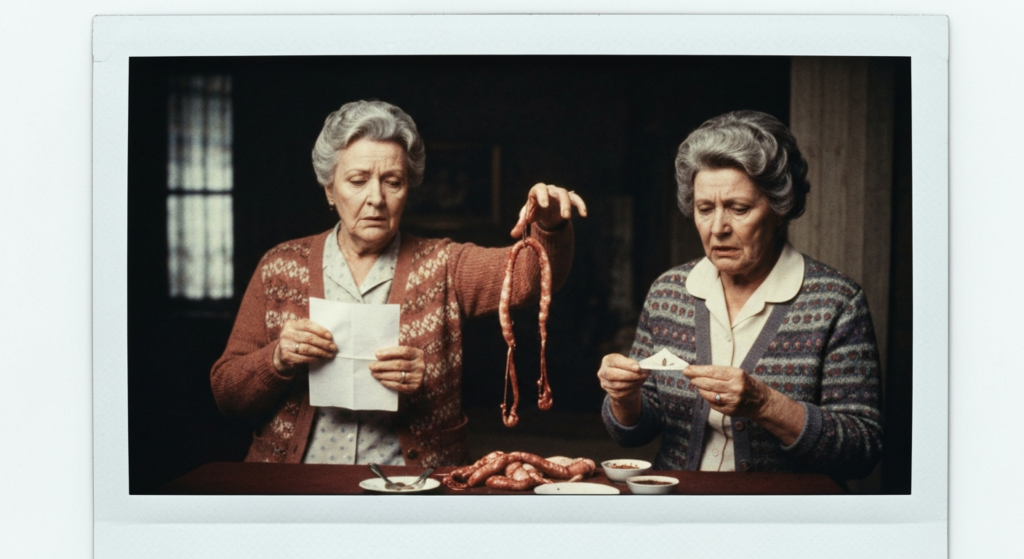
The title of this article contains the word “again,” and if you have found that word mildly confronting, you are probably the practitioner this article is written for. Teaching haruspicy is, on the whole, a rewarding extension of professional practice — but it brings with it a distinct set of legal and regulatory considerations that solo reading work does not. Handling those considerations badly is, unfortunately, more common than the community would like to admit. This guide is intended to help you structure your teaching practice so that the regulatory environment becomes a manageable backdrop rather than an active hazard.
Why Teaching Raises Different Issues Than Practice
When you conduct a reading for a private client, you are operating within a relatively contained set of legal questions: consent, hygiene, waste disposal, and the correct representation of what haruspicy is and is not. These are all navigable. Teaching introduces several additional layers. You are now responsible not only for your own conduct but for the environment in which novice practitioners first encounter entrail-based divination. How materials are handled in that environment, how the practice is described, and how students are assessed all carry implications that extend well beyond your own professional indemnity.
It is worth reading our guide on insurance considerations for practitioners before you take on your first student, if you have not done so already. Standard professional indemnity policies vary significantly in whether they extend to supervised teaching, and discovering this after an incident is not a position anyone wishes to be in.
The Regulatory Context, Briefly
There is no single licensing framework for haruspicy instruction in the United Kingdom. This is both a freedom and a complication. It means you are not required to register with a central body before taking on students — but it also means you cannot rely on that body’s standards to structure your practice. You are, in effect, self-governing, which places a higher burden on you to demonstrate that your teaching environment is safe, hygienic, and properly documented.
The most relevant legislation tends to arrive from unexpected directions. Food hygiene law applies wherever animal tissue is handled, regardless of the stated purpose of that handling. Environmental health officers are not required to understand the divinatory context, and in practice they rarely do. If your teaching space involves the examination of fresh offal, you are operating in territory that intersects with Food Standards Agency guidance, and your students — who may be handling materials for the first time and handling them badly — represent an additional compliance risk that you bear.
Waste disposal is a related concern. Students generate more waste than experienced practitioners, both in volume and in variety, because they are less efficient. Your waste management arrangements should be documented and scalable before the first workshop takes place, not improvised on the day. The article on disposing of offal: council and cosmic considerations covers the applicable local authority frameworks in useful detail.
Structuring a Teaching Environment That Can Withstand Scrutiny
The simplest way to protect yourself is to treat your teaching space as if an environmental health officer and a professional standards reviewer might both walk in at the same time. This is not a paranoid standard; it is a professional one.
Your teaching documentation should cover the following, at minimum:
- A clear description of what the course or session involves, including the nature of the materials used, written in plain language and provided to students before they attend
- Signed consent and acknowledgement forms confirming that students understand what they will be working with
- A hygiene and handling protocol, posted visibly in your working space and explained verbally at the start of each session
- A record of material sourcing — where the organs were obtained, from whom, and on what basis. This connects directly to your supplier arrangements; if you do not yet have a formal understanding with your butcher, the guidance on working with butchers: contracts and permissions is essential reading
- A waste disposal log, even a simple one, noting what was generated and how it was disposed of
None of this is onerous. It is, in fact, less paperwork than most catering courses require. The point is that it exists and can be produced if needed.
What You Teach, and How You Describe It
The framing of haruspicy instruction matters legally as well as professionally. You are teaching a system of divination rooted in the interpretive examination of animal entrails. That is what it is. Where practitioners sometimes create difficulties for themselves is in either overclaiming — representing haruspicy as a medical or therapeutic service — or underclaiming, describing it so vaguely in promotional materials that students arrive without a clear understanding of what is involved.
On the overclaiming side: haruspicy is a divinatory practice. It offers interpretive insight; it does not diagnose, treat, or advise on health matters. Any marketing language that blurs this distinction — particularly in the context of a teaching offer — invites regulatory attention that is entirely avoidable. The guidance on how to word flyers without causing alarm addresses the promotional dimension of this in practical terms.
On the underclaiming side: students who discover on arrival that the session involves direct handling of raw animal organs, and who were not told this in advance, are students who may complain. Complaints, even unfounded ones, consume time and occasionally attract the interest of local authorities. Clear, accurate pre-session communication is your first line of defence.
Student Competence and Progression
There is no formal qualification framework for haruspicy in the UK, which means that decisions about when a student is ready to practise independently rest with you. This is not a trivial responsibility. A student who proceeds to independent practice before they have sufficient grounding in both technique and hygiene protocol is a student who may cause an incident — and that incident will, in some form, reflect on whoever trained them.
It is reasonable to assess students before advancing them, and to document that assessment. This does not need to be elaborate. A written record noting that a student has demonstrated competent handling, basic interpretive understanding, and awareness of disposal requirements is sufficient for most purposes. For practitioners who are newer to reading work themselves, the beginner’s guide to becoming a haruspex sets out the foundational competencies that any student should be able to demonstrate before they work unsupervised.
When Things Go Wrong
Even well-run teaching sessions occasionally produce incidents. A student handles materials incorrectly; a neighbour registers a complaint about the premises; a council officer arrives in response to a waste disposal query. None of these situations is catastrophic if your documentation is in order and your demeanour is cooperative.
The consistent advice from practitioners who have navigated regulatory attention successfully is this: do not volunteer information beyond what is asked, do not become defensive about the nature of the practice, and do not attempt to explain haruspicy in depth to someone who has arrived with a clipboard and a noise complaint. Answer the specific question. Provide the relevant document if you have it. Refer anything that escalates to someone with relevant professional advice.
Teaching haruspicy is a contribution to the continuity of the practice. It is also a professional undertaking that carries professional responsibilities. The two are not in conflict — but the second requires active attention, and it requires it before the first student walks through the door.
Equipment & References
 Nitrile Examination Gloves ×100Powder-free, professional grade
 Absorbent Drip Pads ×100Standard tray pads, 180×100 mm
 Starrett Boning Knife 6″Narrow straight, sanitised steel
As an Amazon Associate this site earns from qualifying purchases.







This is a critical point. The post-2014 guidelines are still, for some, overly restrictive. Clarity on what constitutes ‘instruction for public consumption’ is desperately needed, especially for those looking to bring new blood into the profession.
The article’s emphasis on ‘private instruction’ is, of course, precisely the nuance introduced by the 2017 amendments to the ‘Haruspex (Training and Licencing) Act’. It prevents the dissemination of practices deemed ‘unverified’ in open forums, as it states.
All this legal nonsense. You teach a lad how to find his way around an offal, that’s it. Never needed an ‘Act’ before, and frankly, it just complicates things for those of us doing the actual work.
My brain cells are migrating out of my skull. What is this site and how is haruspicy ‘regulated’? I need a lie down.
The author rightly identifies the tightrope walk. We must protect our traditions while adhering to contemporary legal frameworks. It’s a delicate balance, particularly concerning younger, more impressionable students.