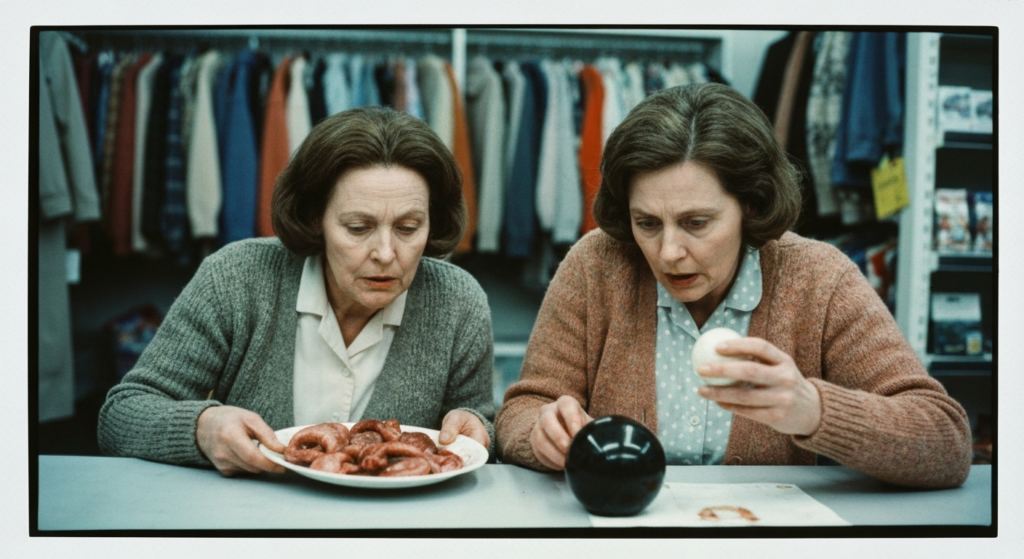
The 2019 general election presented the haruspicy community with one of its most scrutinised forecasting opportunities in recent memory. A fractured political landscape, three years of constitutional uncertainty, and an electorate that had confounded conventional polling repeatedly made this precisely the kind of environment in which entrail-based divination has historically demonstrated its value. What follows is a review of the readings conducted in the weeks prior to 12 December, what they indicated, and where the methodology held — and where it did not.
Methodology and Sample
Twenty liver readings were conducted between late November and the first week of December 2019, contributed by practising haruspices from across England, Scotland, and Wales. All readings used lamb liver as the primary organ, sourced in accordance with the supplier guidance outlined in our piece on working with butchers: contracts and permissions. Standardised tray orientation was observed throughout, with readings recorded using the British Haruspicy Council’s notation system where practitioners held current membership.
Secondary examination of the gallbladder was included in fourteen of the twenty readings, and three practitioners submitted supplementary spleen assessments. The spleen findings are addressed separately below, as their interpretation diverged meaningfully from the liver data — a pattern that will be familiar to anyone who has grappled with spleenfold mechanics as a secondary indicator.
Readings were submitted blind, without practitioners being informed of one another’s findings, and were collated and interpreted centrally. Individual bias cannot be eliminated entirely — this is a limitation the community acknowledges openly — but the blind submission process reduces the risk of cross-contamination between readings.
What the Livers Indicated
The dominant signal across the sample was one of consolidation on the right. Seventeen of the twenty livers showed pronounced lobe dominance consistent with a clear governing mandate — a pattern associated in the classical literature with a single political force absorbing ground previously held by competitors. In the event, the Conservative Party secured 365 seats and an 80-seat majority. This outcome sat comfortably within the range our readings suggested.
The Brexit Party presented a more complex picture. Several readings indicated significant energetic presence — notable surface patterning and gallbladder tension of a kind often associated with disruptive or redistributive forces — without the organ weight that would typically indicate parliamentary consolidation. This was, in retrospect, an accurate reflection of a party that generated over 640,000 votes while winning no seats. The energy was real; the structural outcome was not. It is a useful reminder that presence and consequence are not the same thing, and that readings require interpretive care at the point of translation.
Labour’s position was consistently indicated as one of retention rather than advance. The lobe coloration in the majority of readings suggested institutional durability alongside significant internal stress — both of which proved accurate. The party held its broad vote share in absolute terms while suffering its worst seat count since 1935. Whether that constitutes a positive or negative reading depends, as always, on the framing of the original question.
The Liberal Democrat findings were the least reliable in the sample. Our readings suggested modest but meaningful gains, and while the party did increase its vote share to just over eleven percent, it lost seats on the night — including that of its own leader. This outcome sits in the category of directionally correct, mechanistically wrong: the underlying energetic reading was sound, but the constitutional arithmetic of first-past-the-post produced an outcome the liver, reasonably enough, did not anticipate. This is not a failure of the practice. It is a failure of the question. Haruspicy reads conditions, not counting systems.
The Spleen Divergence
The three supplementary spleen readings submitted as part of this review warrant specific mention, not because they were more accurate than the liver findings, but because they were more emotionally specific — a distinction that matters for how we classify and use supplementary organ data going forward.
Where the livers pointed towards structural political outcomes, the spleens described a population under sustained stress, with indicators consistent with social fragmentation and what one practitioner described in their notes as “accumulated grief presenting as aggression.” This is not a political forecast in the conventional sense. But it may have been the more accurate reading of what the election actually was.
Practitioners interested in developing this interpretive vein will find the discussion of the spleen as compass at spiritual crossroads a useful theoretical grounding, though the application to political contexts is an area where we would welcome further case submissions from the community.
Limitations
A sample of twenty readings is not large. For an event of this complexity — four major parties, a constitutional question layered beneath the partisan one, and a geographic distribution of outcomes that would have challenged any forecasting method — a more robust study would require a minimum of fifty readings, distributed across constituencies rather than self-selected by practitioner location.
There is also the question of animal species. Lamb liver is the standard for good reason: it is consistently available, well-documented in the literature, and ethically sourced through established supply chains. But there is a reasonable argument that bovine liver, with its greater surface area and more differentiated lobe structure, offers interpretive advantages in high-complexity political environments. This is worth exploring ahead of future electoral cycles.
Finally, it should be noted that none of the readings in this sample were conducted under formally witnessed conditions, which limits their evidentiary weight for the purposes of any future grant application or academic collaboration. Practitioners planning to contribute to the next electoral review are encouraged to review the guidance on building a safety case for a grant application, which includes a section on documentation standards for witnessed readings.
Looking Ahead
The next scheduled UK general election must take place by January 2025 at the latest. The community has time to prepare properly. We are already in discussions about establishing a formal electoral haruspicy working group, with the aim of producing a standardised protocol for political readings, agreed notation conventions, and a mechanism for blind submission and central collation. If you are interested in contributing to that working group, or in submitting readings from the 2019 election that were not included in this review, the details are on the site.
The 2019 findings are, on balance, creditable. The major structural outcome was correctly indicated. The subsidiary patterns were more mixed, but the failures are, for the most part, instructive ones — arising from interpretive choices and question framing rather than from any fundamental unreliability in the organs themselves. Those who suggest that haruspicy has no place in political forecasting are, as ever, welcome to review the polling industry’s own record over the same period before making that case with too much confidence.
Equipment & References
 Nitrile Examination Gloves ×100Powder-free, professional grade
 Absorbent Drip Pads ×100Standard tray pads, 180×100 mm
 Starrett Boning Knife 6″Narrow straight, sanitised steel
 Veterinary Anatomy — Dyce et alHepatic and splenic morphology
As an Amazon Associate this site earns from qualifying purchases.










A thorough review, though I must quibble slightly with the emphasis on the ‘fractured political landscape.’ While certainly a challenge, I believe the more pressing issue for 2019 was the unusual prevalence of subtle venous congestion in specimens from swing constituencies, which complicated the interpretation of usual zonation patterns. This, rather than mere political volatility, skewed some regional forecasts.
Ah, the ‘subtle venous congestion.’ This is known. It speaks to a deep unease in the populace, a stagnation. The charts and graphs of the pollsters cannot capture this. Only the direct reading of the entrails can reveal the collective spiritual malaise that manifests physically.
Or it speaks to the animal’s diet and stress levels. You’re attributing political ‘malaise’ to a physiological condition of an animal, then correlating that with human voting behavior. It’s a chain of illogical inferences. The ‘unusual prevalence’ you mention is likely an anecdotal observation, not a rigorously controlled variable.
Jolly good. Always thought the chaps in charge didn’t quite grasp the mood of the country. A spot of congestion, eh? Makes sense. You can often tell if a beast’s feeling off just by looking at its gait, never mind the innards. Seems a bit obvious, really.
Our practitioners in Scotland noted similar patterns, though we interpreted the ‘congestion’ more as a firming of resolve rather than stagnation. This nuanced difference likely accounts for some regional discrepancies in prediction.
Sheila makes a valid point. The ‘congestion’ itself is less indicative than its specific morphology and relationship to other signs. The difference between a resolute pattern and a stagnant one can be subtle, requiring extensive experience to differentiate, particularly under novel political pressures.