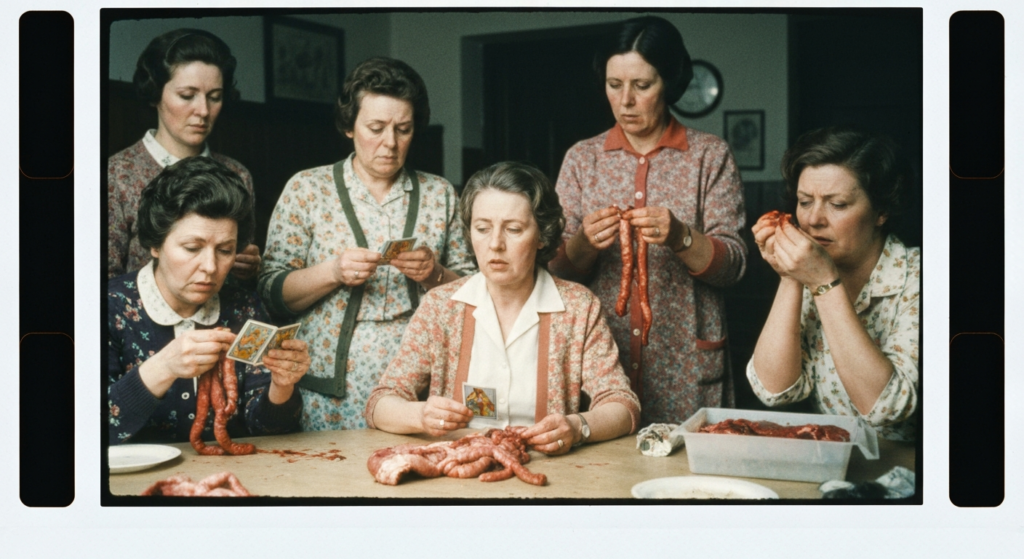
Wedding Readings and Their Consequences
The wedding reading occupies a particular place in the haruspex’s calendar — prestigious, emotionally charged, and, if handled poorly, professionally damaging in ways that a routine consultation rarely is. Couples approach the practice at one of the most significant moments of their lives, and they bring with them expectations that are not always realistic, timelines that are rarely ideal, and a degree of emotional investment that can complicate even a technically sound reading. Understanding what can go wrong, and why, is not a counsel of pessimism. It is the foundation of good practice.
Why Wedding Readings Carry Elevated Risk
Most readings involve a client who, whatever their circumstances, is seeking information about a situation with some degree of detachment. The wedding reading is different. By definition, the couple has already committed — emotionally, socially, and often financially — to a course of action. They are not asking whether to proceed. They are asking for confirmation, for framing, for a sense of what lies ahead. This creates a dynamic that places unusual pressure on the practitioner to deliver clarity, and unusual pressure on the reading itself to provide it.
Organs examined under these conditions are not necessarily less informative, but they require more careful handling. A liver read in haste, in a cramped venue anteroom with a photographer waiting outside and the mother of the bride attempting to observe proceedings, is not a liver being read under optimal conditions. The information is present. The environment works against you.
This is worth stating plainly, because the single most common cause of a wedding reading going badly wrong is not interpretive error — it is inadequate preparation. If you have not yet read the guidance on meditation before and after divination, a wedding booking is the moment to take that seriously.
Preparation Is Not Optional
Before any wedding reading, the practitioner should establish several things with the couple well in advance of the day itself. What are they hoping to learn? What anxieties are they carrying into the reading? Are there specific areas of concern — financial, familial, geographical — that should be prioritised in the interpretation? These conversations are not merely pastoral. They are diagnostic. They allow you to approach the organs with a focused interpretive framework rather than casting about for significance in what may be a dense and multi-layered specimen.
Organ selection also warrants more care than in a standard consultation. For readings concerning long-term partnership, the liver remains the primary organ, but practitioners working with more complete specimens should give serious consideration to the spleen, which can surface information about resilience and relational endurance that the liver alone may not foreground clearly. The site on the spleen as compass covers the relevant interpretive territory in detail.
Logistics matter too. If you are travelling to a venue, confirm in advance that you will have a private, well-lit space with a suitable surface and adequate time. Forty minutes is a minimum. Ninety is preferable. Any venue that cannot accommodate this is not, in practice, a venue that is ready to host a reading, and it is entirely reasonable to say so.
The Consequences of a Reading Gone Wrong
When preparation is insufficient or conditions are poor, the consequences tend to fall into one of three categories, none of them comfortable.
The first is interpretive error — a misreading of the organ that produces predictions or guidance that turn out to be inaccurate, internally contradictory, or simply unhelpful. This is the most visible failure, and the one most likely to damage your reputation if the couple discusses the reading with others in their network. Practitioners who work in communities where haruspicy has a foothold — rural areas, certain cultural groups, the more serious end of the wellness sector — will understand that word travels. A botched wedding reading has a long half-life.
The second category is ambiguity delivered as certainty. This is in some respects worse than outright error, because the couple acts on guidance that was never firm enough to support action. A reading in which the bile distribution was unclear, the lobar texture ambiguous, and the colour gradient inconclusive is a reading that should be communicated as such. Dressing uncertain findings in confident language — usually under social pressure from the occasion — is a professional failure even if the predictions happen to prove accurate.
The third is the reading that is technically competent but emotionally mishandled. Weddings surface difficult material. If the organs indicate strain, conflict, or a period of significant challenge ahead, the manner in which this is communicated is as important as the accuracy of the interpretation. Practitioners who have not considered how to deliver difficult findings with care and sensitivity should do so before accepting wedding bookings. This is an area where your professional indemnity insurance may be relevant, but it is better addressed through practice than policy.
A Note on Client Expectations
It is worth addressing directly the question of what couples are actually purchasing when they commission a wedding reading. They are not purchasing a guarantee. They are not purchasing permission to proceed, nor confirmation that everything will go well. They are purchasing an informed reading of the available material, communicated with honesty and professional care.
Making this explicit — in writing, before the booking is confirmed — protects both parties. It allows the couple to engage with the reading on appropriate terms, and it protects you from the aftermath of a reading that, however accurately interpreted, did not tell them what they hoped to hear. A brief terms document is not excessive for a booking of this significance. If anything, its absence is.
Practitioners who work regularly in the wedding and partnership sector may also wish to consider how they present their credentials. If you are relatively new to practice, the beginner’s guide to becoming a haruspex covers the foundational competencies you should be confident in before taking on high-stakes consultations. Wedding readings are not the context in which to consolidate basic technique.
When to Decline
There are circumstances in which the most professional course of action is to decline a wedding booking, or to postpone a reading that has already been arranged. If the specimen is in poor condition, if the environment cannot be made suitable, if the couple is too distressed or intoxicated to engage meaningfully with the process, or if you yourself are not in a state of sufficient focus — these are all legitimate grounds for deferral. The ethical obligations here are no different from those in any other professional consultation. A reading conducted under conditions that compromise its quality is not a service. It is a performance, and that is not what the couple has commissioned.
The broader obligations around minimising the risk of legal reprisal are also worth reviewing if you are considering expanding into the wedding market in any structured way. Events involving significant personal decisions, emotional vulnerability, and other vendors who may later be asked to account for what happened during the day create a distinct set of professional considerations.
Wedding readings, done well, represent some of the most meaningful work a practitioner can undertake. Done poorly, they are among the most consequential errors in the professional calendar. The difference, in most cases, is not talent. It is preparation, honesty, and the willingness to say when the conditions are not yet right.
Equipment & References
 Nitrile Examination Gloves ×100Powder-free, professional grade
 Absorbent Drip Pads ×100Standard tray pads, 180×100 mm
 Starrett Boning Knife 6″Narrow straight, sanitised steel
 Veterinary Anatomy — Dyce et alHepatic and splenic morphology
As an Amazon Associate this site earns from qualifying purchases.





An excellent summation of a deeply challenging, yet ultimately rewarding, specialisation. The key, as always, lies in managing client expectations, which are often clouded by sentimentality in such matters. One must be precise, yet empathetic; clear, yet gentle. The liver’s pronouncements on connubial harmony are rarely simple ‘yes’ or ‘no’ affairs, but complex tapestries of potential.
You guys are doing WHAT for weddings? Is this some kind of performance art? Please tell me this isn’t real. Peering into entrails for a wedding. My brain hurts.
Wtf_isthis has clearly never attended a true Balkan wedding. The sacrifice and subsequent reading are often the most solemn and anticipated part of the entire ceremony, for the fortunes of the couple and their progeny are revealed. It is a profound honour, not mere ‘performance art’. Though I concede, some British sensibilities may find it… direct.
Sounds rather a jolly good way to start a marriage, I must say. Gives one a proper sense of occasion. Though I imagine finding a suitable beast that’s both pristine and available on short notice could be a tricky business these days. Always had difficulty sourcing good offal for the annual Hunt Ball raffle, let alone a wedding.
The matrimonial bond, consecrated by the celestial patterns mirrored in the earthly entrails, holds profound karmic weight. To undertake such a reading is to accept the stewardship of nascent destinies. Only the purest of hearts and keenest of insights may interpret such delicate auguries without taint. The consequences, indeed, are vast.
‘What greater joy, than to embark upon the journey of life with the gods’ favour revealed through the most ancient rites?’ — Seneca, *Epistulae Morales ad Lucilium*, adapted. A fitting sentiment for such an occasion.
Just to be clear: you are implying that the success or failure of a marriage, a complex human interaction, can be predicted or even influenced by the appearance of animal organs? This is utterly absurd. The only ‘consequences’ here are likely financial for the ‘haruspex’ and emotional disappointment for the gullible couple.