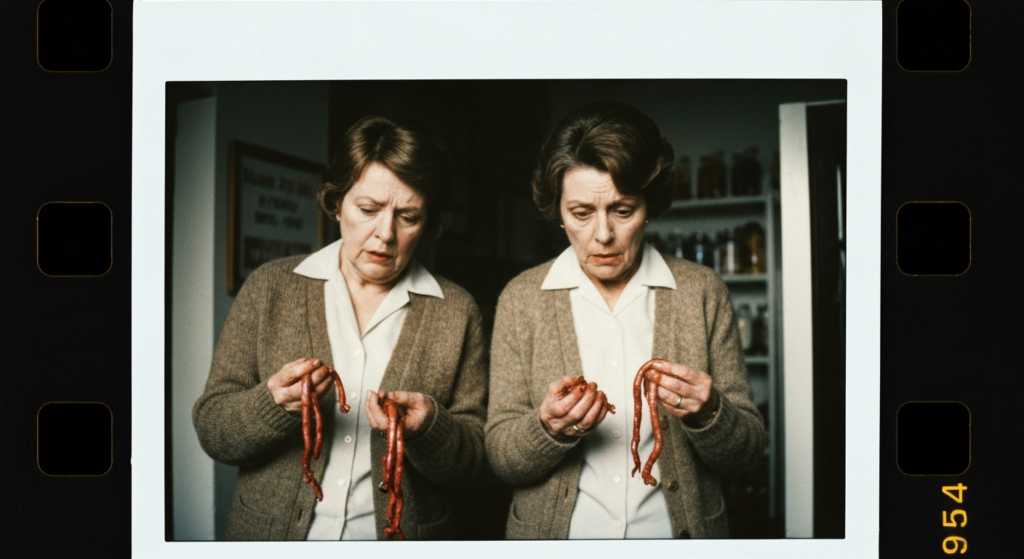
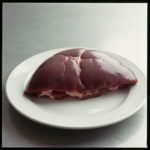
The liver has never been a simple organ. In the haruspical tradition, it serves as the primary locus of divinatory reading — the organ most directly implicated in questions of fate, decision, and consequence. But the interpretive frameworks brought to that reading vary considerably across traditions, and there is much that a practising haruspex can learn from examining how other cultures have mapped the liver’s energetic and symbolic terrain.
This is not an exercise in cultural tourism. The practical value of cross-cultural liver mapping lies in what it reveals about the assumptions embedded in any single tradition. If you trained in a broadly Western European framework, certain configurations will read as significant almost automatically — the lobar divisions, the gallbladder’s position, the texture of the caudate lobe. Exposure to other systems does not undermine that training. It sharpens it, by making visible what you had taken for granted.
The Mesopotamian Foundation
Any serious engagement with cross-cultural liver maps begins in Mesopotamia. The clay liver models recovered from the ancient Near East — particularly the Babylonian models used for bārûtu, the formal art of extispicy — represent the oldest surviving attempts to systematise liver reading. These models divided the liver into named regions, each associated with specific deities, directional forces, and categories of outcome. The left lobe carried different weight to the right; the various lobes were understood as corresponding to different aspects of the question being posed.
What is immediately striking, for a modern practitioner, is the degree of institutional rigour. The Babylonian tradition was professional in a way that should feel familiar: standardised notation, apprenticeship structures, recorded precedents. The maps themselves were teaching tools as much as interpretive guides. That combination of the systematic and the symbolic remains a useful model, and practitioners interested in formalising their own interpretive frameworks may find it worth examining in detail.
Chinese Medicine and the Liver as Emotional Organ
Traditional Chinese medicine positions the liver differently — not as a site for reading external fate, but as a seat of internal energetic states, particularly those related to decision-making, frustration, and the capacity for forward movement. The concept of qi stagnation in the liver is associated with blocked intention, with the kind of indecision or suppressed anger that colours a client’s presenting questions.
For the practising haruspex, this framework offers a useful supplementary lens. Where the Mesopotamian model asks what the organ reveals about the world, the Chinese model asks what the organ reveals about the person. Both questions are legitimate. A reading that attends only to external omens while overlooking the client’s internal state is an incomplete reading, and a number of practitioners have found that integrating the Chinese liver’s emotional correlations into their interpretive vocabulary produces more nuanced consultations. This is discussed further in our piece on Unreliable Organs: When the Heart Gets in the Way, which touches on the complications that arise when emotional state interferes with divinatory clarity.
Mesoamerican Traditions and the Organ in Cosmological Context
In several Mesoamerican traditions, internal organs were understood within a cosmological system in which the body mirrored the structure of the world. The liver occupied a specific position within this schema — not always the primary divinatory site, but consistently associated with vitality, temporal cycles, and the relationship between the individual and the larger forces governing time and fate.
The directional symbolism in these traditions is particularly interesting. Where Babylonian maps frequently oriented the liver in relation to cardinal directions as external markers — north, south, east, west corresponding to political or geographic outcomes — some Mesoamerican frameworks used the directions as internal markers, indicating the flow of energy through the organ itself. The practical implication, if one chooses to adopt it, is a more dynamic reading practice: rather than identifying regions of the liver as fixed containers of meaning, the practitioner tracks movement, tendency, and direction of development.
What Variation Teaches the Working Practitioner
Setting these traditions side by side, several useful observations emerge.
First, every sustained tradition of liver reading has developed some version of regional mapping — a way of dividing the organ into zones and assigning differential significance to each. The specifics vary; the underlying impulse to systematise does not. If you are working from an unsystematised personal practice, this near-universal feature of the professional traditions is worth taking seriously. The spleenfold mechanics discussion on this site makes a parallel argument about the dangers of treating secondary organs as interpretively uniform.
Second, every tradition embeds its liver map within a broader cosmological or energetic framework. The map does not stand alone. The Babylonian lobe corresponds to a deity; the Chinese region corresponds to an energetic function; the Mesoamerican zone corresponds to a directional force. The meaning of a feature in the liver is always relational — it means something because it stands in relationship to other things. Practitioners who read without a coherent underlying framework tend to produce readings that feel technically proficient but interpretively thin. The map is only as useful as the territory it represents.
Third, the emotional and psychological dimensions of liver reading are not a modern addition or a dilution of classical practice. They are present, in various forms, across traditions that developed independently of one another. This convergence is worth noting. Whether one attributes it to something inherent in the organ’s divinatory character, or simply to the fact that clients bring their inner states to every consultation, the implication for practice is the same: attend to both the external indication and the internal context.
Integrating Cross-Cultural Frameworks Without Losing Coherence
A word of caution is appropriate here. The fact that other traditions offer useful supplementary frameworks does not mean that eclecticism is without cost. A practitioner who has absorbed Babylonian regional mapping, Chinese emotional correlations, and Mesoamerican directional dynamics without integrating them into a coherent personal system will find that in a live reading — particularly one in which the presentation is complex or the client is distressed — the frameworks compete rather than combine. Contradiction under pressure is not illuminating. It is simply confusing.
The more productive approach is to treat cross-cultural liver maps as a body of evidence from which you draw considered conclusions, rather than a menu of options to be applied situationally. Study them seriously. Note where they converge. Note where they diverge, and ask why. Then, over time, allow that engagement to refine and deepen your own framework, rather than replace it.
Those who are still in the earlier stages of developing that framework may find it worth revisiting A Beginner’s Guide to Becoming a Haruspex before engaging too deeply with comparative tradition — not because the material here is inaccessible, but because the comparative work is most productive when there is already a settled interpretive home to return to.
The liver has been read across cultures and centuries because it repays attention. The different maps that attention has produced are not competing claims about a single truth. They are different instruments brought to the same task. Used well, they expand what is audible.
Equipment & References
 The Divine Liver — EllisonThe standard contemporary reference
 Veterinary Anatomy — Dyce et alHepatic and splenic morphology
 De Divinatione — CiceroFoundational text, ebook edition
As an Amazon Associate this site earns from qualifying purchases.





Ah, the wisdom of the liver! In the Carpathian mountains, our maps are complex, reflecting centuries of unbroken tradition. It is a pity the UK has such fragmented knowledge of these ‘energetic maps’; much has been lost here, I fear.
One need only examine the Mesopotamian clay liver models, replete with their cuneiform inscriptions mapping regions of destiny, prosperity, and malediction, to grasp the antiquity and universality of these energetic frameworks. The Babylonian tablet known as the ‘Bronze Liver of Piacenza’ (though Etruscan, it reflects earlier influences) is an exquisite example.
Indeed, the Piacenza Liver is a marvel. Its division into 16 sections, each corresponding to a deity and a celestial quadrant, speaks volumes about the interconnectedness of haruspicy with cosmology. Modern practitioners would do well to study these older maps; they offer a depth of interpretation largely absent from current, often simplified, approaches.
In Cork, there’s an old, largely oral tradition of ‘reading the dark spots’ on the lesser lobe, which are said to indicate ancestral burdens. Never seen a formal ‘map’ of it, but the principles seem similar.
These ‘energetic’ maps – what precisely does ‘energetic’ mean here? Is there a measurable energy field, or is this simply metaphorical? Are there peer-reviewed studies mapping these alleged energy flows to physiological structures?
‘The_rationalist’, ‘energetic’ in this context refers to the symbolic and divinatory significance, the ‘life force’ or spiritual resonance attributed to various regions, not a quantifiable physical energy. It’s about the flow of cosmic influence and fate as understood by ancient systems, not electromagnetism. It’s a conceptual map, not a diagnostic one.