Rodent haruspicy occupies a particular niche within the broader discipline — one that attracts practitioners either by necessity (space, budget, urban living) or by genuine conviction that smaller animals offer a distinct and valuable divinatory signal. Whatever your reason for pursuing it, the practice deserves the same rigour and preparation you would bring to any reading. This guide covers the essential considerations: organ selection and interpretation, behavioural observation, sourcing, and the practical realities of working at a smaller scale.
Understanding the Scope of Rodent Haruspicy
Traditional haruspicy draws primarily on the organs of larger animals — sheep, cattle, and pig liver being the classical mainstays. Rodent haruspicy works with the same interpretive principles but applies them to considerably smaller anatomical structures. The liver, lungs, spleen, and intestinal mass of a mouse or rat are all readable, though the reduced scale demands both sharper tools and a more disciplined eye. This is not a shortcut to haruspicy; it is a distinct application of it.
It is worth acknowledging that some practitioners remain sceptical of rodent readings, arguing that the signal-to-noise ratio is less favourable in smaller organs and that minor physical variation — which would be unremarkable in a sheep liver — can be misread as significant in a mouse. These are fair concerns, and the careful haruspex should weigh them. That said, rodent haruspicy has a documented history, a committed practitioner base, and a body of interpretive literature that repays serious study. For those working in limited spaces or on constrained budgets, it may also be the most practical available option.
A Brief Historical Note
The use of small animals in divination is attested across a number of ancient traditions, though rodent-specific haruspicy has historically been a secondary or supplementary practice rather than a primary one. There is evidence from Roman domestic contexts of small-animal readings being used for household-level queries — matters of the immediate future rather than affairs of state. This reflects what many modern practitioners find: rodent haruspicy tends to be well-suited to personal, near-term questions, and less reliably informative on large-scale or long-horizon concerns. Whether this is a function of the animal’s size, its nervous system, or simply the weight of interpretive tradition is a matter of ongoing discussion — see our piece on Sacred Entrails in the Modern Age for a broader treatment of how interpretive context shapes the reading.
Sourcing and Ethical Considerations
This is where many practitioners encounter their first serious difficulty, and it is worth addressing directly. Rodents intended for haruspicic use should be sourced from reputable suppliers — typically those operating within the laboratory or reptile-feed supply chain, where animal welfare standards and health documentation are routine. You should not use animals that have died of unknown causes, have been caught in the wild without health screening, or show signs of illness prior to the reading. A compromised animal produces a compromised reading, and there is also the matter of zoonotic disease risk, which is not negligible when you are working in close physical contact with internal organs.
Practitioners who source through the reptile trade will find that frozen feeder rodents — mice and rats in various sizes — are widely available, properly handled, and represent a pragmatic option for those not in a position to source fresh. There is a persistent view in some quarters that frozen-and-thawed organs are divinatorily inferior to fresh. The evidence for this is, to be candid, largely anecdotal. If you are working with frozen stock, ensure the animal is fully thawed at a consistent temperature before examination, and allow it to reach approximately room temperature before the reading begins.
For questions of supplier contracts and the paperwork involved in regular sourcing arrangements, Working With Butchers: Contracts and Permissions covers the general principles, many of which transfer to rodent suppliers in the laboratory and pet trade sectors.
Equipment and Preparation
You will need sharper, finer tools than those used in larger-animal haruspicy. A standard set of dissecting instruments — scalpel with exchangeable blades, fine-tipped scissors, blunt-ended probe — is appropriate. These are available from laboratory supply companies and do not require any specialist licensing to purchase. A well-lit, clean work surface is essential; the fine detail work involved in reading a mouse liver under poor lighting is genuinely difficult and invites error.
Gloves are non-negotiable. The guidance in The Safe Use of Gloves and Aprons in Readings applies fully here — if anything, the higher disease-transmission risk associated with rodents makes adherence more rather than less important. Nitrile examination gloves in a close-fitting size will give you sufficient tactile sensitivity for fine work while maintaining the necessary barrier.
Sanitise your tray and instruments before and after each reading. This is both a hygiene requirement and, for many practitioners, a ritual one — the two are not in conflict.
The Organs and What They Offer
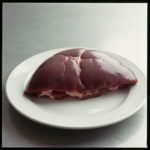
The liver remains the primary organ of interpretation, as in classical haruspicy. In mice and rats, it is a multi-lobed structure and easier to access than in some other small animals. The lobes should be examined for colour consistency, surface texture, and any lesions or discolouration. Pale or mottled patches, unexpected firmness, and irregular margins all carry interpretive weight. Practitioners familiar with larger-animal liver reading should be cautious about direct size-scaling of their interpretive frameworks — the relative proportions of the lobes differ, and what constitutes a significant marginal variation in a sheep liver may not translate directly.
The spleen, though small, is worth examining and is often overlooked in introductory guides. Its position relative to the stomach and its surface condition can provide confirmatory or qualifying information for the liver reading. Those wishing to develop their spleen interpretation work may find The Spleen as Compass: Navigating Spiritual Crossroads a useful companion text, bearing in mind that some of the positional frameworks described there require adaptation for rodent anatomy.
The lungs and intestinal arrangement can also be read, though they require more experience to interpret reliably in this scale. Beginners would do well to focus on the liver and spleen until a confident baseline is established. The intestinal mass in particular — while covered in depth in works addressing larger-animal haruspicy — presents specific challenges at rodent scale, not least because the coiling patterns are compressed and the margins between meaningful arrangement and simple post-mortem settling are easy to misjudge.
Behavioural Observation: A Note of Caution
Some practitioners incorporate pre-mortem behavioural observation into their rodent haruspicy — watching the animal’s movement, posture, and responsiveness before the reading proper. This is a legitimate supplementary technique with its own interpretive tradition. However, it should be understood as supplementary. A reading grounded primarily in behavioural observation rather than organ examination is moving away from haruspicy and towards a different divinatory discipline. There is nothing wrong with that, but it is worth being clear about what you are practising. The organ reading is the haruspicy; the behaviour is context.
Disposal and Aftercare
Post-reading disposal of rodent remains falls under the same framework as other biological waste from haruspicic practice. The guidance in Disposing of Offal: Council and Cosmic Considerations is directly applicable, though the volumes involved are considerably smaller. Double-bag, seal, and dispose of with general household waste unless your local authority specifies otherwise. Do not dispose of remains via domestic composting. Clean and sanitise your tray and instruments immediately after the reading.
Rodent haruspicy rewards patience and precision. The smaller scale removes some of the physical demands of larger-animal practice but replaces them with demands on attention and interpretive care. For practitioners willing to develop that care, it is a genuinely capable divinatory form — and one that opens the practice to contexts where working with larger animals would simply not be feasible.
Equipment & References
 Starrett Boning Knife 6″Narrow straight, sanitised steel
 Nitrile Examination Gloves ×100Powder-free, professional grade
 Absorbent Drip Pads ×100Standard tray pads, 180×100 mm
 The Divine Liver — EllisonThe standard contemporary reference
 Veterinary Anatomy — Dyce et alHepatic and splenic morphology
As an Amazon Associate this site earns from qualifying purchases.