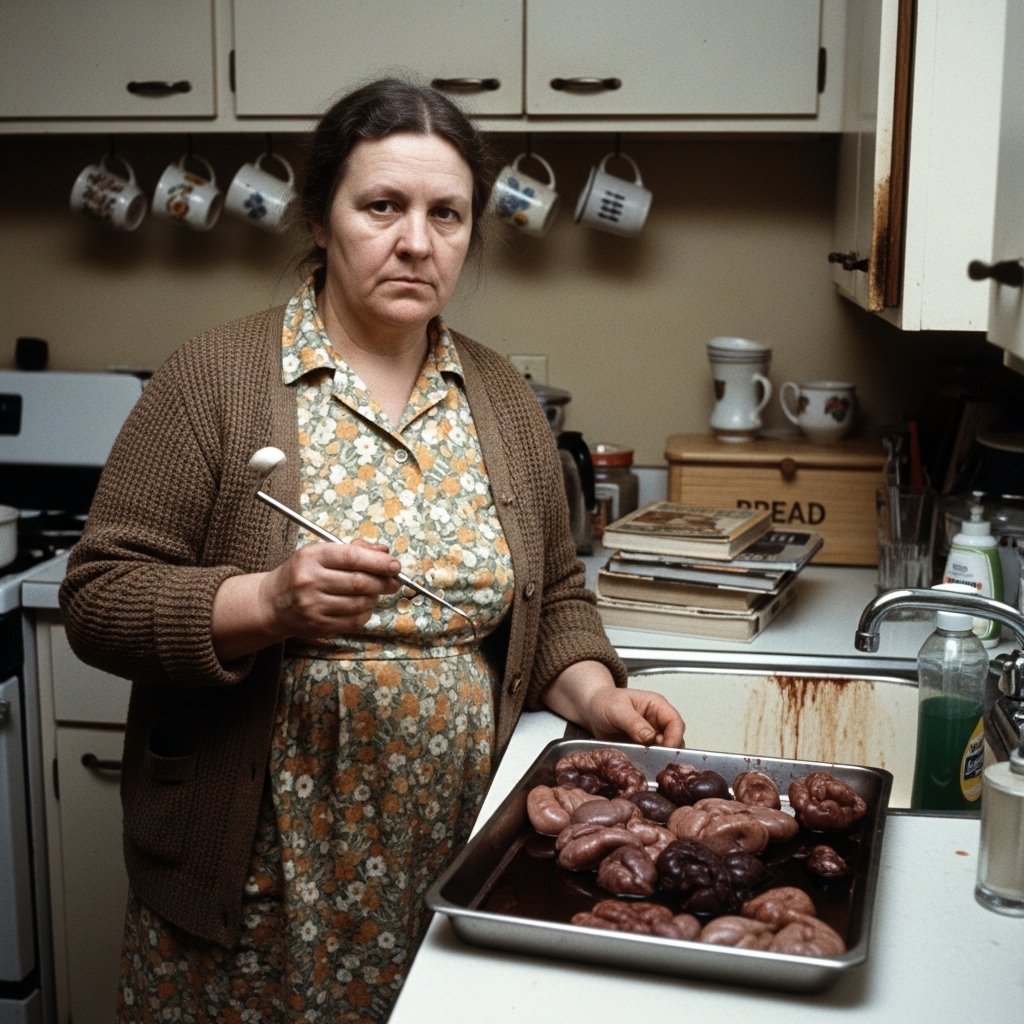
What You Actually Need Before You Begin
Most practitioners, looking back, will admit that they started with too much equipment and too little method. The beginner’s toolkit for haruspicy does not need to be elaborate, but it does need to be considered. What you wear on your hands, what you use to open the cavity, and how you approach the reading itself are not separate concerns — they form a single, integrated practice. Getting the fundamentals right at the outset will save you considerable difficulty later, both in the quality of your readings and in your dealings with the various bodies who may take an interest in how you conduct them. If you are still at the stage of deciding whether this is the path for you, A Beginner’s Guide to Becoming a Haruspex covers the broader picture well. This article concerns itself with the practical specifics.
Gloves: Protection, Compliance, and Working Comfort
The choice of glove is not a minor administrative matter. It affects your grip, your sensitivity, your compliance with food-handling standards, and — should you ever find yourself explaining your practice to an official — your ability to demonstrate that you take hygiene seriously. That last point is worth more than it might initially appear. A practitioner who produces a box of properly rated, powder-free nitrile examination gloves inspires a different kind of conversation than one who does not.
As an Amazon Associate this site earns from qualifying purchases; the equipment links in this article open on Amazon.
Nitrile is the material of choice for most working haruspices. It offers adequate chemical resistance, is free of the latex proteins that cause reactions in some clients, and is available in a range of thicknesses. For most readings, a 4–6 mil glove provides the right balance between protection and tactile sensitivity. Thicker gloves — the kind sold for industrial use — will blunt your feel for the tissue in ways that matter when you are distinguishing between, for example, a firm hepatic lobe and one showing early signs of congestion associated with obstructed fortune.
A note on fit: gloves that are too loose will bunch at the fingertips and create drag during fine examination work. Too tight, and you will find your hands fatiguing quickly during longer sessions. Most practitioners settle on a half-size up from their measured hand size. Textured fingertips help with grip on wet surfaces and are widely available in standard examination-grade products.
Double-gloving — wearing two pairs simultaneously — is occasionally recommended for novices who are still developing their confidence with tissue handling, though most experienced practitioners find it unnecessary. It does, however, provide useful reassurance during your first few sessions, and there is nothing professionally wrong with it. The full guidance on protective equipment during readings covers aprons and eye protection as well, and is worth reading before your first formal session.
Knives: What to Buy and Why It Matters
The haruspical knife — or secespita, to use the classical term — is the tool most likely to draw comment from people who do not understand your work. For that reason alone, it is worth choosing with some care. A large, aggressive-looking blade creates an unnecessary impression. A scalpel-style handle with replaceable blades is both more practical and considerably less alarming to anyone who might observe you setting up.
For most beginner work, a fixed-blade knife with a 10–15 cm blade is appropriate. The steel should hold an edge through repeated use without requiring professional sharpening after every session — high-carbon stainless steel is the standard recommendation. The handle should allow a full grip without the fingers cramping, and the blade should be thin enough at the spine to allow controlled entry rather than tearing.
A folding knife is a reasonable choice for practitioners who work in mobile settings or travel to clients. The practical trade-off is stability: a folding blade will flex slightly under lateral pressure in a way that a fixed blade will not. For reading work specifically — where you are making careful incisions to expose structure rather than doing sustained cutting — this is rarely a significant problem. If you are registering a mobile operation, the guidance on mobile reading units addresses how your tools should be stored and transported in a way that minimises difficulty at checkpoints or in shared premises.
Keep your knife clean, keep it sharp, and keep it in a sheath or roll when not in use. These are not merely hygienic practices — they are the small signals that communicate to any observer that you are a professional rather than an enthusiast.
The Working Surface and Supporting Equipment
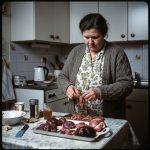
The two items above receive most of the attention in conversations about beginner equipment, but the working surface is equally important and more often neglected. A reading tray — ideally stainless steel or a food-grade plastic equivalent — should be large enough to accommodate the organs without crowding. Crowding disrupts spatial reading. The classical positions of the liver, gallbladder, and associated structures in relation to one another carry interpretive weight; if your tray is forcing everything to one side, you are working with compromised information from the outset.
A lip of at least 2 cm around the edge of the tray prevents fluid runoff onto the reading surface beneath, and a supply of absorbent tray pads laid under the organ will catch what the lip does not. This matters practically, and it matters when you consider disposal obligations. The guidance on offal disposal is clear that contained handling from the start simplifies the end-of-session process considerably.
Other items worth having from the outset: a good light source — natural light is preferable for colour reading, but a daylight-balanced LED lamp will serve for indoor and evening sessions — and a set of small stainless probes or blunt-ended instruments for moving tissue without disturbing its orientation. Forceps of the kind used in basic dissection are widely available and entirely appropriate for this purpose.
Developing Your Interpretive Foundation
Equipment accounts for perhaps a third of what it takes to conduct a competent reading. The remainder is interpretive knowledge, and this is where many beginners underinvest their time. There is a tendency — understandable, but worth correcting early — to assume that the reading will reveal itself intuitively once you have the physical components in place. It rarely does, and the gap between what the organs are showing and what a trained practitioner can see in them is substantial.
The classical literature on hepatoscopic method — the Babylonian and Etruscan traditions in particular — provides the foundational framework that most contemporary practice is built on, and is gathered for the modern reader in Ellison’s The Divine Liver, the standard one-volume reference. The liver, as the primary organ of reading in most traditions, is conventionally divided into sections corresponding to different domains of inquiry, and the correspondence between anomalies in specific zones and specific interpretive conclusions is a body of knowledge that requires genuine study to apply reliably. The cross-cultural energetic liver maps available elsewhere on this site offer a useful comparative overview for practitioners who want to understand how different traditions approach this structure.
Alongside the technical study, a regular reflective practice — whatever form suits you — is worth establishing early. Many experienced haruspices find that their interpretive accuracy is closely related to their mental clarity at the time of reading. Fatigue, distraction, and unresolved emotional material all affect the quality of attention that careful organ reading requires. This is not a mystical claim; it is the same observation that any skilled diagnostician in any field would make about the relationship between practitioner state and practitioner performance.
Starting Well
The beginner’s toolkit, properly understood, is not a list of purchases. It is a set of interconnected commitments: to working hygienically, to using well-maintained tools, to understanding your working environment, and to approaching the interpretive dimension of the practice with the same seriousness as the physical one. Practitioners who establish these habits from their first session find that the rest of the practice builds more naturally around them. Those who do not tend to find themselves correcting foundational gaps at a much later and more inconvenient stage.
Source your materials carefully, keep your equipment in good order, and allow yourself adequate time to study before you commit to reading for others. The practice rewards patience — and the organs, as any experienced haruspex will tell you, are rarely forgiving of a hurried approach.
Subscribe to The Monthly Augury
A monthly reading of the entrails: our finest satire, curios and questionable prophecies, delivered once a moon.
Double opt-in — we'll email you one link to confirm. No spam, unsubscribe any time.
Equipment & References
 Starrett Boning Knife 6″Narrow straight, sanitised steel
 Nitrile Examination Gloves ×100Powder-free, professional grade
 Absorbent Drip Pads ×100Standard tray pads, 180×100 mm
 The Divine Liver — EllisonThe standard contemporary reference
 Veterinary Anatomy — Dyce et alHepatic and splenic morphology
As an Amazon Associate this site earns from qualifying purchases.