Understanding Spleen Shadows in the Context of Regional Practice
Spleen shadows—the fine gradations of colour, density, and surface texture observable across the splenic capsule during examination—are among the more nuanced indicators available to a working haruspex. They are also among the most misread, largely because practitioners underestimate how significantly regional factors bear on their interpretation. A shadow pattern that suggests emotional suppression in a client from the East Midlands may carry entirely different weight for someone raised on the west coast of Scotland. Getting this wrong does not merely reduce the accuracy of a reading; it risks producing interpretations that are not only incorrect but actively misleading. This article examines what spleen shadows are, why regional context matters, and how to adjust your interpretive framework accordingly.
What Spleen Shadows Actually Are
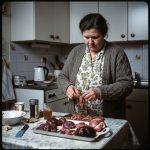
The term “spleen shadow” refers to the visible markings, tonal variations, and textural anomalies that appear on the outer surface of the spleen when it is properly presented for examination. These are distinct from the deeper structural indicators—lobar definition, capsular tension, relative weight—which fall under a separate interpretive category. Spleen shadows are, by their nature, surface phenomena, and they are considerably more susceptible to external influence than the organ’s internal architecture.
They manifest in several recognisable forms: a generalised darkening across the anterior surface, localised patches of pallor, fine striation along the splenic notch, and the characteristic mottled grey-brown patterning that practitioners sometimes refer to as umbral banding. Each of these has an established interpretive meaning within classical haruspical tradition, but that tradition largely emerged from a Mediterranean context—and applying it without adjustment to contemporary British practice is, frankly, a source of persistent error in the field.
The Regional Variable: Why It Cannot Be Ignored
Regional influence on spleen shadow formation is well-documented in the practitioner literature, though it remains underemphasised in introductory training. The spleen is, of all the major divinatory organs, the most responsive to what might be described as ambient energetic conditions—the accumulated character of a place as shaped by its history, its geological substrate, its climate, and the density and nature of the human activity that has occurred there over time.
This is not a vague or metaphorical claim. Practitioners working regularly in specific localities will notice, over time, consistent baseline characteristics in the spleen shadows of clients from those areas. Urban industrial regions frequently produce a denser, more compressed shadow patterning. Coastal areas—particularly in the north and west of England, and across much of Wales and Scotland—tend toward a more diffuse and variable shadow distribution. Rural agricultural communities often show markings that classical texts would describe as steady, though this can be complicated by proximity to specific geological formations, particularly those with a documented history of ritual or liminal significance.
Those working near significant sacred sites or ancient monuments should be particularly attentive to this. The energetic character of such locations has a measurable influence on splenic presentation, and a practitioner unfamiliar with this effect may mistake regionally-inflected shadow patterns for personal indicators specific to the client. For a broader discussion of how geography intersects with divinatory reading, the article on Cross-Cultural Energetic Liver Maps provides useful comparative context, even where the organ in question differs.
Calibrating Your Interpretive Framework by Region
The practical implication is that a haruspex should maintain, over time, a working regional baseline—an internal (or ideally documented) understanding of what “normal” spleen shadow presentation looks like for clients from a given area. Deviations from that baseline become meaningful; the baseline itself does not.
This requires a degree of systematic record-keeping that many practitioners resist on the grounds that it feels clinical or at odds with the intuitive nature of the work. That resistance is understandable but ultimately counterproductive. A regional reference log—even a simple notebook noting shadow characteristics, client origin, and any relevant contextual factors—will, within a year of consistent use, become one of the most valuable tools in your practice. It is worth noting that practitioners applying for grants or institutional recognition have found such documentation useful in demonstrating methodological rigour; the article on Building a Safety Case for a Grant Application touches on this in some detail.
When working with a new client from an unfamiliar region, the responsible approach is to treat the first reading as partly diagnostic—gathering baseline information about their shadow presentation before drawing firm interpretive conclusions. This is not a limitation; it is good practice, and most clients respond well to a practitioner who explains that an initial reading establishes a personal and regional context that will make subsequent sessions more precise.
Specific Patterns and Their Regional Variants
A few examples of how shadow interpretation shifts with regional context may be useful here.
Dense anterior darkening is classically associated with accumulated grief or unprocessed emotional weight. In clients from post-industrial areas in the North of England or South Wales, this presentation is sufficiently common as to function almost as a baseline characteristic. Interpreting it as acute personal distress in such clients, without corroborating indicators elsewhere in the presentation, is likely to produce an over-diagnosis. The shadow is real; the question is what proportion of it belongs to the individual and what proportion is environmental inheritance.
Fine striation along the splenic notch is generally read as a marker of indecision or competing obligations. In clients from areas with strong intergenerational community ties—certain urban South Asian communities, rural Irish border regions, and parts of the Scottish Highlands with active crofting traditions—this pattern appears with unusual frequency and should be weighted accordingly. It may reflect the genuine lived condition of those communities rather than an individual pathology of will.
Pallor patches, particularly when bilateral, warrant careful attention to regional factors before any conclusion is drawn. In some coastal areas, particularly those with a history of fishing or maritime industry, bilateral pallor is so common as to be unremarkable. The same presentation in a client from a landlocked urban area carries considerably more interpretive weight. The relationship between splenic presentation and the broader range of abdominal indicators is worth reviewing—practitioners interested in the comparative picture may find the discussion in Spleenfold Mechanics: An Overlooked Indicator a useful supplement to the shadow-specific material covered here.
Working Across Regional Lines
An increasingly common situation—particularly for practitioners based in cities—is the client who has moved, sometimes repeatedly, and carries the energetic residue of multiple regions within a single splenic presentation. This produces layered shadow patterns that can initially appear contradictory. A dense baseline characteristic of industrial heritage combined with diffuse coastal patterning is not an error in the reading; it is an accurate reflection of a life lived across different energetic environments.
In these cases, a brief intake conversation about the client’s residential history is not merely good client relations—it is a methodological necessity. Attempting to resolve a genuinely layered shadow presentation without that contextual information is likely to produce a reading that is technically competent but interpretively incomplete. As with most aspects of haruspical practice, the discipline of the work lies not in the examination itself but in the quality of attention brought to the full context surrounding it.
For practitioners who are still building familiarity with the broader range of abdominal indicators and how they interact with splenic shadow patterns, the Beginner’s Guide to Becoming a Haruspex provides a grounding in the foundational relationships between organs—though the regional dimension covered here goes somewhat beyond that introductory scope. Similarly, those interested in how other organs register environmental and cultural factors may find the piece on Unreliable Organs: When the Heart Gets in the Way a useful point of comparison, as the heart presents its own distinct challenges in regionally variable contexts.
Spleen shadow interpretation is not, ultimately, a more difficult skill than any other aspect of haruspical reading. It is simply one that rewards the practitioner who has taken the time to understand that the organ does not exist in isolation from the world around it—and neither does the client.
Subscribe to The Monthly Augury
A monthly reading of the entrails: our finest satire, curios and questionable prophecies, delivered once a moon.
Double opt-in — we'll email you one link to confirm. No spam, unsubscribe any time.
Equipment & References
 The Divine Liver — EllisonThe standard contemporary reference
 Veterinary Anatomy — Dyce et alHepatic and splenic morphology
 De Divinatione — CiceroFoundational text, ebook edition
As an Amazon Associate this site earns from qualifying purchases.