The question surfaces reliably at introductory workshops, in correspondence from newly qualified practitioners, and occasionally in more experienced circles during the quieter end of a conference. Does the size of the mammal matter? Specifically: do larger animals produce more truthful readings? It is a reasonable thing to wonder. It is also, on close examination, a question that reveals a great deal about how a practitioner is thinking about the practice — and where that thinking may need to be adjusted.
This article does not offer a definitive answer because the evidence does not support one. What it does offer is a framework for thinking about mammal size as a variable, alongside the other variables that actually drive interpretive quality.
Where the Assumption Comes From
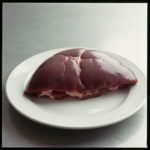
The intuition that larger mammals yield more truthful or accurate readings is not without a logic to it. Larger animals tend to have more developed visceral architecture — more differentiated hepatic lobes, more elaborate mesenteric folds, a greater volume of material across which patterns can emerge. When working with a lamb’s liver versus a rabbit’s, the surface’s legibility differs. There is more to read. The spatial relationships between structures are more pronounced.
This has led some practitioners — particularly those trained in traditions that prioritise the liver as the primary divinatory organ — to conclude that scale confers clarity. And in a narrow, mechanical sense, it does. A larger organ offers more real estate. But legibility is not the same as truthfulness, and this is where the assumption begins to unravel.
Truthfulness — by which we mean the degree to which an entrail reading accurately reflects the condition being queried — is a function of signal quality, not signal volume. A large organ can be voluminous and ambiguous. A smaller organ, properly sourced and correctly approached, can be precise. The two variables are related but not equivalent.
What the Research Actually Suggests
There is a persistent reference in practitioner circles to a study on rabbit entrails — one that is frequently cited but rarely produced in full — which supposedly demonstrated that larger rabbits yielded more detailed and accurate readings due to more developed gut flora. If this study exists in any rigorous form, we have not been able to locate it. Practitioners would do well to treat second-hand citations with the same scepticism they would apply to an unusually clean gallbladder: interesting, but requiring further investigation before drawing conclusions.
What we do have is accumulated field experience, and that experience consistently points to the same finding: breed, diet, and rearing conditions are substantially stronger predictors of interpretive quality than body mass alone. A large animal raised in conditions of chronic stress will typically present with adrenal-adjacent indicators that muddy a reading considerably. A smaller animal raised in low-stress conditions, on a consistent diet, slaughtered humanely, and sourced through a known and trusted supplier will often produce cleaner material to work with. Anyone who has worked through a formal supply agreement with a butcher and specified rearing conditions will have noticed this difference in practice.
The Role of Digestive Complexity
There is a defensible argument that more complex digestive systems produce more nuanced readings — and this is worth taking seriously, even if it does not resolve cleanly into a “larger is better” conclusion. Ruminants, for example, offer a qualitatively different reading experience from monogastric animals, not because they are larger per se, but because their digestive process is more elaborate. The layered fermentation that precedes digestion in cattle and sheep leaves traces in the visceral material that a practitioner trained in ruminant interpretation will find interpretively rich.
This is discussed at greater length in the context of cross-cultural energetic liver maps, which document how different traditions have favoured different species based on this kind of digestive complexity — not simply on body size. The Babylonian preference for sheep liver, for instance, had as much to do with the animal’s alimentary profile as with its availability.
The practical implication here is that a practitioner interested in maximising interpretive richness should think about species and husbandry, not primarily about weight.
Smaller Animals and Their Uses
It would be equally mistaken to conclude from the above that smaller mammals are interpretively inferior across the board. Smaller animals tend to present with less hepatic redundancy — the liver is compact, the lobes less differentiated — which can make certain kinds of reading more direct, if less expansive. Practitioners working on focused, single-question readings sometimes find that a smaller organ removes the noise that a larger specimen might introduce.
There is also the matter of energetic lineage. Certain smaller mammal strains used in established reading practice carry strong interpretive reputations that have nothing to do with their mass. A practitioner dismissing these animals purely on the basis of size would be operating on an assumption, not evidence.
This connects to a broader point about how we assess reliability in organs. As noted in the discussion of unreliable organs, the heart is widely considered a poor primary divinatory organ not because of the animal’s size but because of the organ’s own functional properties and the interpretive noise they introduce. The same principle applies here: organ type and condition matter more than the animal’s dimensions.
Standardising Your Practice
If you are working to develop a consistent, reliable practice, the most productive approach is to standardise the variables you can control and document the outcomes carefully. This means working with a consistent species and, where possible, a consistent supply chain. It means recording not just the reading but the animal’s provenance, age, diet, and condition at the point of examination. Over time, this produces a body of personal evidence that is far more useful than any generalisation about mammal size.
Practitioners in the early stages of building this kind of evidential base will find the guidance in the beginner’s guide useful for establishing documentation habits that will serve them well as their practice matures. The discipline of recording is not glamorous, but it is what separates a practitioner who is genuinely refining their interpretive accuracy from one who is simply accumulating impressions.
It is also worth noting that the question of size interacts with the question of which organs you are working with. Practitioners who incorporate spleen readings — an area covered in some depth in the material on spleenfold mechanics — will find that the scaling relationship between spleen mass and body mass varies considerably across species, and that this has direct implications for how spleenfold patterns should be read in animals of different sizes.
A More Useful Question
The question “does size correlate with truthfulness” is, in the end, less useful than asking: what conditions produce the most legible and reliable material to work with? That reframing opens onto a much more productive set of enquiries — about sourcing, species selection, rearing conditions, interpretive method, and the practitioner’s own skill and attentiveness.
Mammal size is one variable among many. It is not without relevance — a practitioner working exclusively with very small mammals may find themselves limited in certain kinds of expansive, multi-question readings — but it should not be accorded the interpretive significance that the received wisdom sometimes gives it. The liver does not know how large the animal was. It only knows what it has to show.
The most experienced practitioners tend to reach this conclusion eventually, usually after a period of working across species and sizes with genuine attention to outcomes. Getting there sooner simply requires the willingness to question an assumption that feels intuitive but does not, on examination, hold up.
Equipment & References
 The Divine Liver — EllisonThe standard contemporary reference
 Veterinary Anatomy — Dyce et alHepatic and splenic morphology
 De Divinatione — CiceroFoundational text, ebook edition
As an Amazon Associate this site earns from qualifying purchases.