Working With Supermarket Offal: A Practical Overview
Budget constraints are a reality for most independent practitioners, and there is nothing professionally compromising about sourcing your working materials from a supermarket rather than directly from a slaughterhouse or specialist supplier. Supermarket offal is inspected, traceable, consistently available, and — in many cases — better suited to a home or mobile practice than fresh-from-the-abattoir material, which brings its own logistical demands. The question is not whether supermarket sourcing is legitimate, but how to do it well.
What Supermarkets Actually Stock
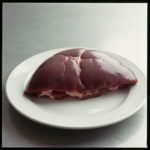
The range varies considerably depending on where you shop and where you live. In areas with strong South Asian, Eastern European, or West African communities, larger supermarkets will often carry lamb liver, ox liver, kidney, heart, and occasionally lung as standard shelf items. Elsewhere, you may find yourself limited to chicken livers — widely available, inexpensive, and perfectly serviceable for most reading formats, particularly hepatoscopy.
Lamb liver remains the material of choice for practitioners working within the classical tradition, and it is worth noting that it appears reliably in most major supermarket chains throughout the year, rather than being subject to the seasonal availability that affects some specialist suppliers. For guidance on what different liver formations indicate across interpretive traditions, the overview in Cross-Cultural Energetic Liver Maps provides a useful comparative framework.
Pre-packaged offal trays — which typically contain a mixed selection of liver, kidney, and heart — are occasionally available near the butchery counter and can represent reasonable value for practitioners who work with multiple organs in a single session. Handle the packaging carefully before purchase: check that the tray is intact and within its use-by date, and inspect the material through the film where possible. Discolouration consistent with poor storage conditions will affect the integrity of the reading.
On the Question of Sausages and Processed Meat
This comes up repeatedly, and it deserves a direct answer: processed meat products — sausages, meatballs, haggis, and similar preparations — are not appropriate materials for a haruspical reading. The issue is not philosophical but structural. The processing and manufacturing stages fragment, homogenise, and reorient the organ tissue in ways that destroy the spatial relationships the haruspex is attempting to read. You are not reading a liver; you are reading an emulsion of unspecified provenance that has been extruded into a casing. The informational value is negligible.
Practitioners who have reported using sausages in readings are, in most cases, either students working on basic pattern-recognition exercises where material quality is less critical, or practitioners working within highly experimental frameworks that most of the field does not yet accept as methodologically sound. For everyday client work, whole organs only.
Preparation and Handling
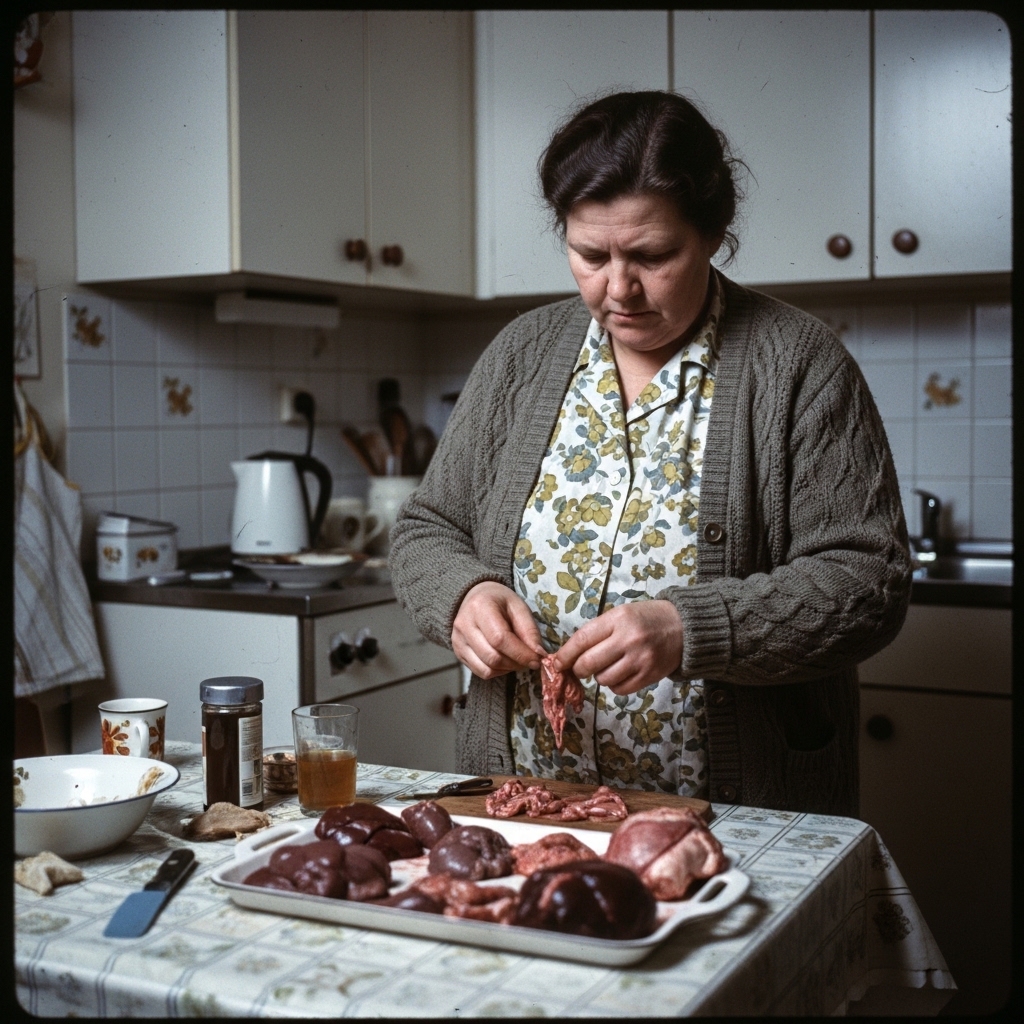
Supermarket offal should be removed from its packaging and rinsed under cold water before use. Pat dry with clean paper towel rather than cloth, which can leave fibres. Allow the material to reach room temperature before beginning — cold organs present differently under examination, and the surface detail that is central to accurate hepatoscopic work is less legible at refrigerator temperature.
Your workspace should be clean, well-lit, and cleared of extraneous materials before you begin. This is standard practice regardless of your sourcing method, but it is worth reiterating here because practitioners who are newer to supermarket-sourced material sometimes assume that the lower cost implies lower standards. It does not. The same hygiene protocols apply as with any other sourcing route, and your use of gloves and aprons should be consistent across all sessions.
If you are working from home, the additional consideration is cross-contamination with domestic food preparation areas. The simplest solution is a dedicated tray — reserved exclusively for readings — which never enters the food preparation rotation. Labelling this clearly is advisable, both for your own household and in the event that you receive an unannounced visit. For guidance on labelling ritual and working materials correctly, see Correct Labelling for Ritual Waste Bins.
Storage Before and After a Reading
Purchase material as close to the intended reading date as possible. Supermarket offal carries a use-by date, and while most practitioners will not use material that is obviously past its best, there is a subtler issue worth noting: liver in particular changes texture and surface quality as it ages even within date, and this can introduce ambiguity into readings that would otherwise be clear. Where possible, same-day purchase is preferable.
Post-reading storage and disposal should follow the same protocols as any other working material. The question of disposal — both practically and in terms of the material’s continued energetic state — is covered in detail in Disposing of Offal: Council and Cosmic Considerations, and the guidance there applies regardless of sourcing.
Budget Sourcing and Professional Standards
There is a persistent assumption, particularly among practitioners who trained in contexts where specialist supply chains were the norm, that supermarket sourcing signals a less serious practice. This position does not hold up to scrutiny. The animal welfare standards applied in major UK supermarket supply chains are subject to regulatory oversight, the material is consistently handled and traceable, and the practical accessibility of supermarket sourcing has allowed a significant number of practitioners — particularly those operating in urban areas without nearby abattoir access — to maintain consistent working practices without either financial strain or the logistical complexity of specialist supply.
If you are in the early stages of establishing your practice and navigating the broader question of supplier relationships, the article on Working With Butchers: Contracts and Permissions is worth reading alongside this one. A local butcher relationship, once established, will often give you access to fresher and more varied material than a supermarket can provide — but supermarket sourcing is an entirely adequate foundation while that relationship develops, and for many practitioners, it remains a practical mainstay throughout their working career.
The measure of a reading is in the quality of the interpretation, not the price per kilogram of the material. Work cleanly, work carefully, and know your source.
Subscribe to The Monthly Augury
A monthly reading of the entrails: our finest satire, curios and questionable prophecies, delivered once a moon.
Double opt-in — we'll email you one link to confirm. No spam, unsubscribe any time.
Equipment & References
 Starrett Boning Knife 6″Narrow straight, sanitised steel
 Nitrile Examination Gloves ×100Powder-free, professional grade
 Absorbent Drip Pads ×100Standard tray pads, 180×100 mm
 The Divine Liver — EllisonThe standard contemporary reference
 Veterinary Anatomy — Dyce et alHepatic and splenic morphology
As an Amazon Associate this site earns from qualifying purchases.