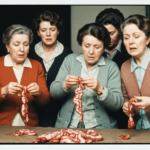
Haruspicy is the ancient art of divination by examining the entrails of a sacrificed animal — above all the liver, but also the heart, lungs, gall bladder and intestines. In one sentence, the haruspicy definition is this: the reading of an animal’s organs to interpret the will of the gods, judge the present, or forecast what is to come. The practitioner is a haruspex, and the tradition reached its most developed form in Etruscan and Roman religion.
On this page
Haruspicy meaning, in plain terms
The meaning of haruspicy rests on a single assumption: that the internal condition of a sacrificed animal is not random, but legible. A haruspex treated the surface of the liver as a kind of map, its regions corresponding to particular deities, fortunes and outcomes. A blemish, a swelling, an unusual colour or a missing lobe was not a veterinary curiosity but a message — one that could confirm a plan, forbid it, or demand that the sacrifice be repeated until the signs were clear.
Haruspicy belongs to the wider family of extispicy (the reading of entrails in general). What sets haruspicy apart is its concentration on the liver and the elaborate ritual framework the Etruscans and Romans built around it.
Where the word comes from
The English word descends from the Latin haruspex (plural haruspices). The most widely accepted derivation joins an archaic root meaning “entrail” — cognate with words for the gut found across the Indo-European languages — to the verb specere, “to look at.” A haruspex is therefore, quite literally, “one who looks at entrails.” The related noun haruspicium gives us the name of the practice itself.
How to pronounce haruspicy
Haruspicy is pronounced huh-RUSS-pih-see (IPA: /həˈrʌspɪsi/), with the stress on the second syllable and a soft -cy, as in policy. The “h” is sounded. If the word has been quietly defeating you, there is a full guide with audio: how to pronounce haruspicy.
A short history
Liver-reading is older than Rome. The Babylonians practised it through a specialist priesthood and even produced inscribed clay models of sheep livers for teaching — the ancient world’s flashcards. The Romans, however, inherited their version from the Etruscans, whose disciplina Etrusca was the acknowledged authority on reading livers, lightning and prodigies. By the late Republic, haruspicy was woven into the machinery of the Roman state. The fuller account sits in haruspicy in ancient Rome, and its arrival in Britain in the Haruspex of Londinium.
How a reading worked
In outline: a suitable animal was sacrificed, the liver and other organs were removed and presented, and the haruspex interpreted their colour, shape and markings against an established symbolic map. The famous bronze Liver of Piacenza, an Etruscan model divided into named regions, shows just how systematic this had become. The step-by-step procedure — sacrifice, inspection, interpretation, verdict — is set out in how did haruspicy work?, with the supporting organs covered in beyond the liver.
Related practices & how they differ
Haruspicy is frequently confused with its neighbours. The essential distinctions:
- Haruspicy vs augury — augury reads birds, not organs. See haruspicy vs augury.
- Haruspicy vs extispicy — extispicy is entrail-reading in general; haruspicy is its liver-led Roman branch. See haruspicy vs extispicy.
- The wider field — where it sits among bones, lots, birds and the rest is mapped in types of divination.
Does anyone still do this?
As an instrument of state, no — the official consultations ended with the Christianisation of the empire. As a living interest it persists among revivalists and hobbyists, a story told in is haruspicy still practised today? Anyone curious enough to try should begin with the beginner’s toolkit and the ethical use of supermarket offal — and should treat the whole thing as the folk and historical practice it is, rather than a substitute for advice of any kind.
In short: haruspicy is the oldest organised attempt to read meaning in a liver, and — definitions being what they are — it has comfortably outlasted most of the empires that relied on it.
Frequently asked questions
What is the meaning of haruspicy?
Haruspicy means divination by the inspection of a sacrificed animal’s entrails, especially the liver. It is the act of reading organs to interpret the will of the gods or to forecast events.
What is the difference between haruspicy and augury?
Haruspicy reads the entrails of sacrificed animals; augury reads the flight and behaviour of birds. Both were practised in ancient Rome but by different priesthoods.
How do you pronounce haruspicy?
Haruspicy is pronounced huh-RUSS-pih-see (IPA huh-RUSS-pih-see), with the stress on the second syllable and a soft -cy ending.
Is haruspicy still practised today?
Not as a state religion, but it survives among reconstructionist pagans, historical re-enactors and hobbyists who study and recreate the practice.
Subscribe to The Monthly Augury
A monthly reading of the entrails: our finest satire, curios and questionable prophecies, delivered once a moon.
Double opt-in — we'll email you one link to confirm. No spam, unsubscribe any time.
Equipment & References
 The Divine Liver — EllisonThe standard contemporary reference
 Veterinary Anatomy — Dyce et alHepatic and splenic morphology
 De Divinatione — CiceroFoundational text, ebook edition
As an Amazon Associate this site earns from qualifying purchases.