Tag

divination

Divination takes many forms, but few paths are as ancient, visceral, or legally complicated as reading the future through animal entrails. This collection of posts tagged divination brings together practical guidance for the modern haruspex — covering everything from interpreting spleenfold mechanics to navigating the surprisingly intricate world of permits, insurance, butcher contracts, and public communications. Whether you are just beginning your journey into this overlooked art or are an established practitioner trying to stay on the right side of various regulatory bodies, these articles offer grounded, honest advice. Explore the full divination archive to find the guidance you need for both the ritual and the paperwork that surrounds it.

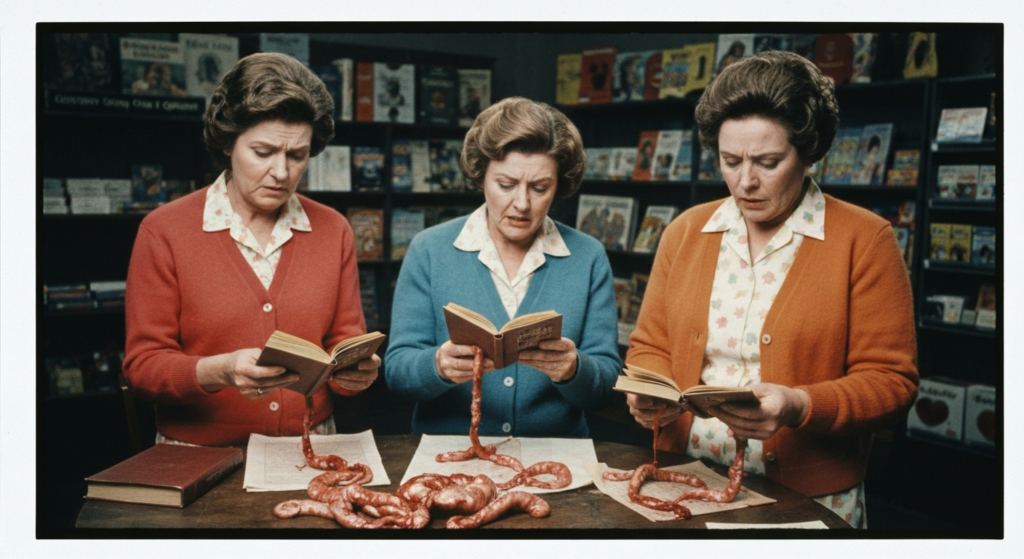
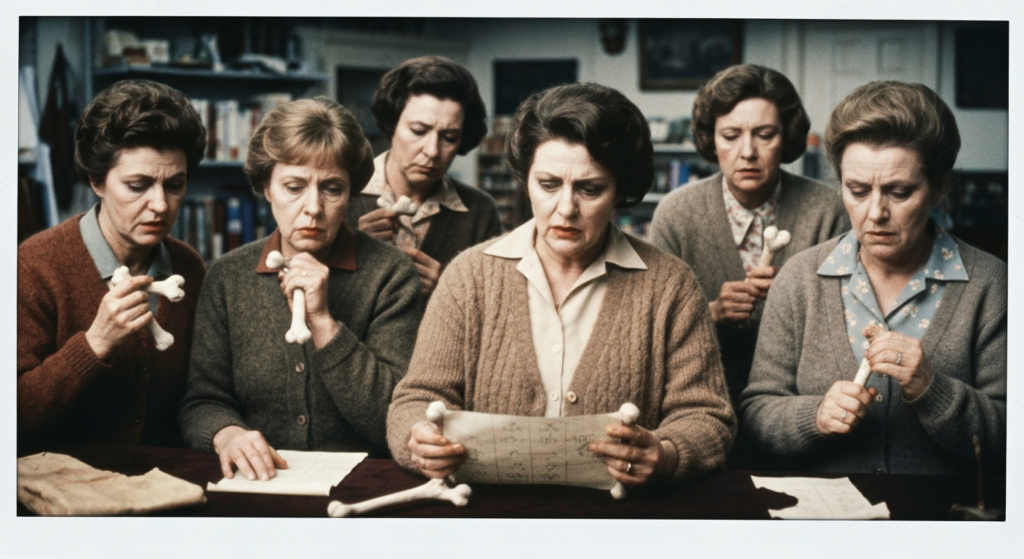
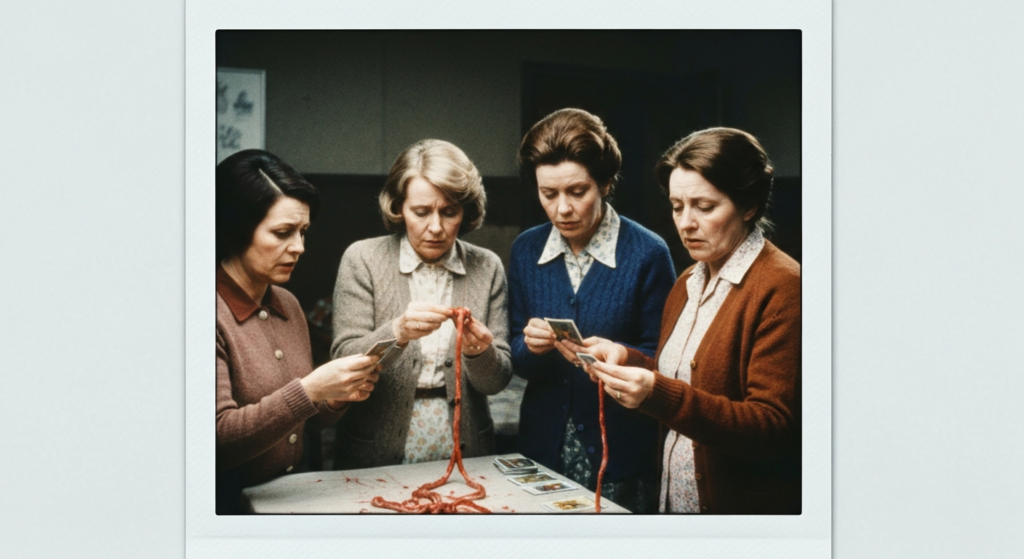
Five women study red strands and diagrams on a table, depicting a séance or haruspicy divination practice.

Haruspicy as Performance: Art or Sacrilege?

The debate over whether haruspicy constitutes a performing art has circulated in practitioner circles for some time without reaching a satisfying conclusion. This article examines the interpretive act as craft, the distinction between ritual and spectacle, and what good professional communication actually requires of a working haruspex.
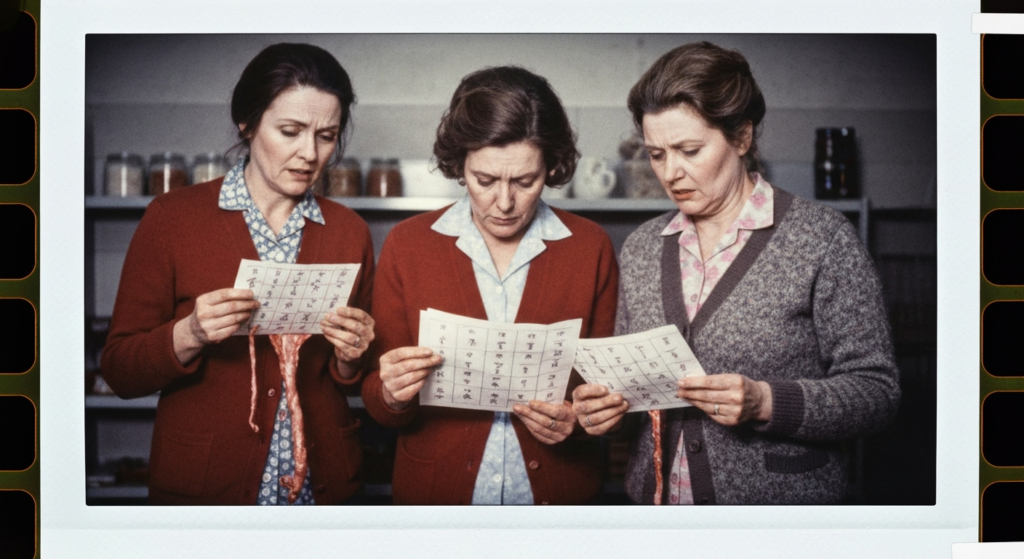
Three women in a dimly lit room examine divination slips, suggesting haruspicy.

Experimental Use of Black Pudding as a Medium

Black pudding's high blood content has made it a subject of genuine interest among practitioners seeking alternatives to primary organ reading. This article examines the field evidence, practical handling requirements, and the interpretive limitations of working with processed blood material as a medium.

Three women examine coiled animal organs and open books on a table in a library setting.

Harmonic Gut Frequencies and Inner Peace

The intestinal tract is one of the most immediate and responsive organs available to the practising haruspex, reflecting present-state well-being with a directness the liver rarely matches. This guide covers the theory, practical mechanics, and interpretive principles of gut-frequency reading, from initial assessment through to client communication. It is intended for practitioners at all levels with an interest in developing this area of their work.

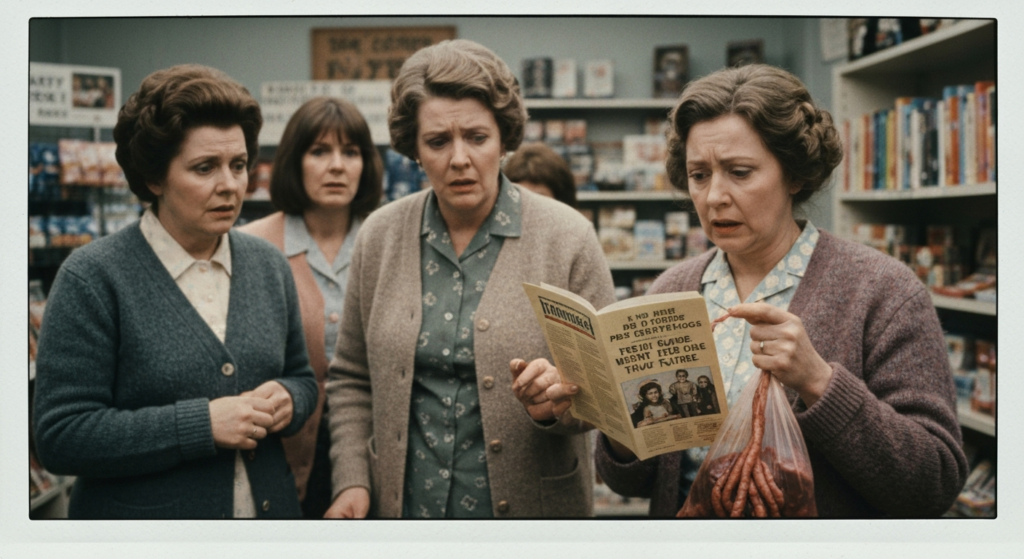
Group of women in a bookstore, one holding a book and a bag of intestines.

Reading Supermarket Sausages for Portents

Supermarket sausages are not a substitute for fresh organ material, but approached with proper method they can yield genuine portents. This guide covers selection, preparation, reading technique, and the interpretive limits of processed-meat divination for practising haruspices.

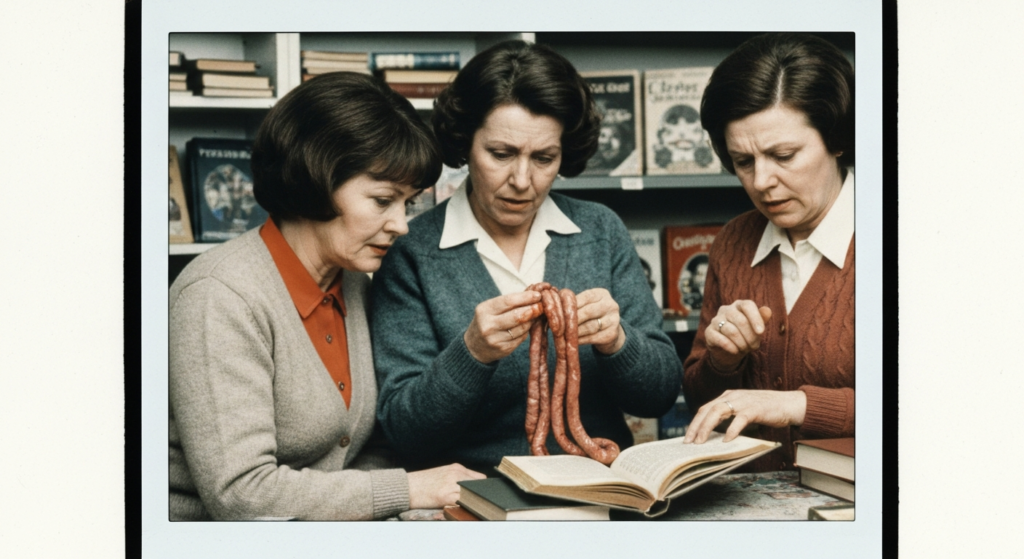
Three women examine sausages and an open book, depicting haruspicy.

The Vegan Dilemma: Spiritual Practice Without the Flesh

As more practitioners consider plant-based lifestyles, the question of whether haruspicy can continue without animal organs deserves a careful, honest answer. This article examines the three main positions within the professional community, the practicalities of material substitution, and the disclosure obligations that apply regardless of method.

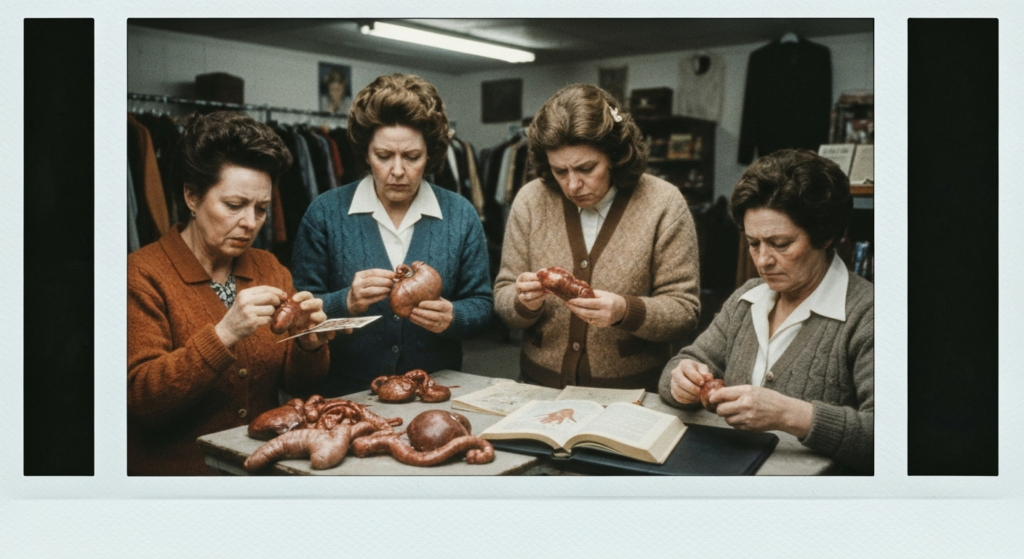
Four women examine animal organs and an open book, suggesting a séance or divination ritual.

Chakras and the Colon: Energetic Overlap

The colon is one of the most expressive organs available to the practising haruspex, yet it is consistently underused. This article outlines the energetic correspondences between the large intestine and the root and sacral chakras, with practical guidance on what to look for and how to integrate colon readings with the wider abdominal examination.

Seven women examining bones and divination materials on a table, suggesting haruspicy.

Organs That Speak in Dreams

Dreams frequently surface organ imagery that experienced haruspices will recognise from waking readings. This guide offers a working framework for interpreting what the liver, spleen, intestines, and other organs communicate in the dream state, and how to apply that material in client sessions.

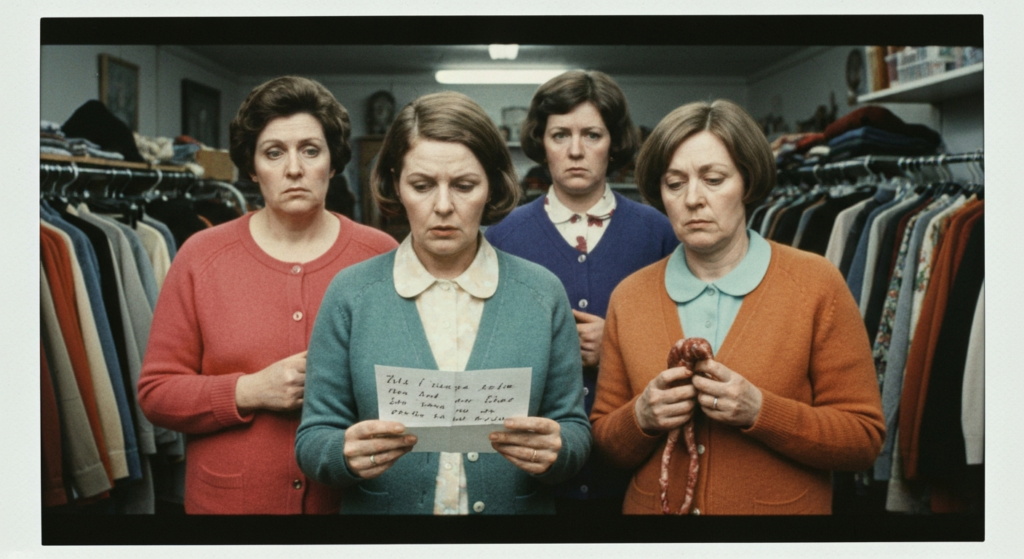
Three women in a clothing store, one holding a scroll and another holding a dried organ.

Sanitisation Procedures for Ritual Tools

Proper instrument hygiene affects both the accuracy of your readings and your standing with regulatory authorities. This guide covers the full cleaning sequence, appropriate disinfection standards, storage requirements, and the documentation practices that protect your work.

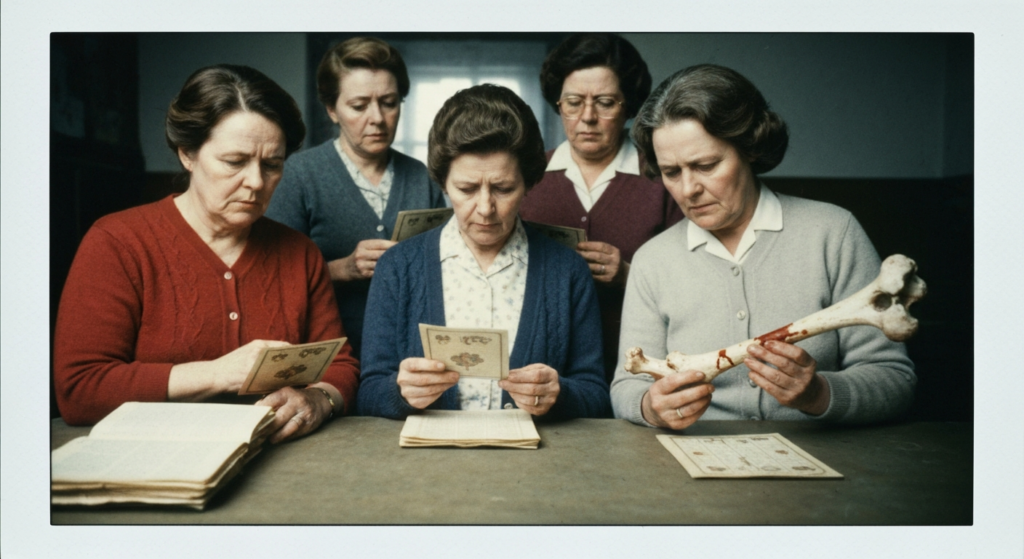
Group of women examining bones and cards, suggesting haruspicy or divination.

Post-Reading Follow-Ups: Accuracy Over Time

Post-reading follow-ups are one of the most reliable tools available for improving interpretive accuracy over time. This guide covers when to schedule them, how to structure the conversation, and how to use longitudinal records to identify and correct interpretive drift.

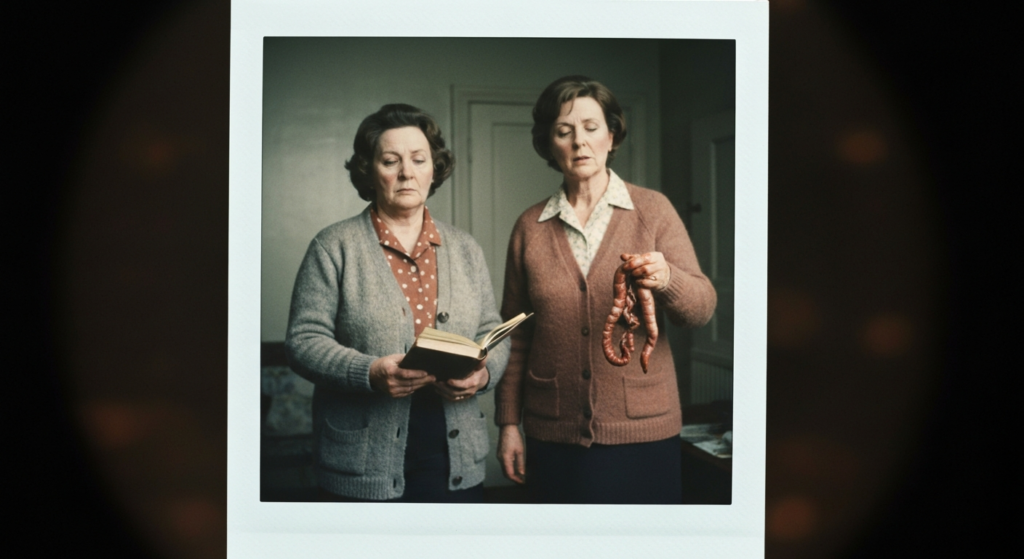
Two women in vintage clothing; one reads a book, the other holds and examines intestines.

Can Children Be Trusted With Entrails?

Whether and how to involve children in haruspicy is a question that deserves a practical, considered answer. This guide covers developmental readiness, preparation, supervision, and the first steps toward introducing young observers to technique.